
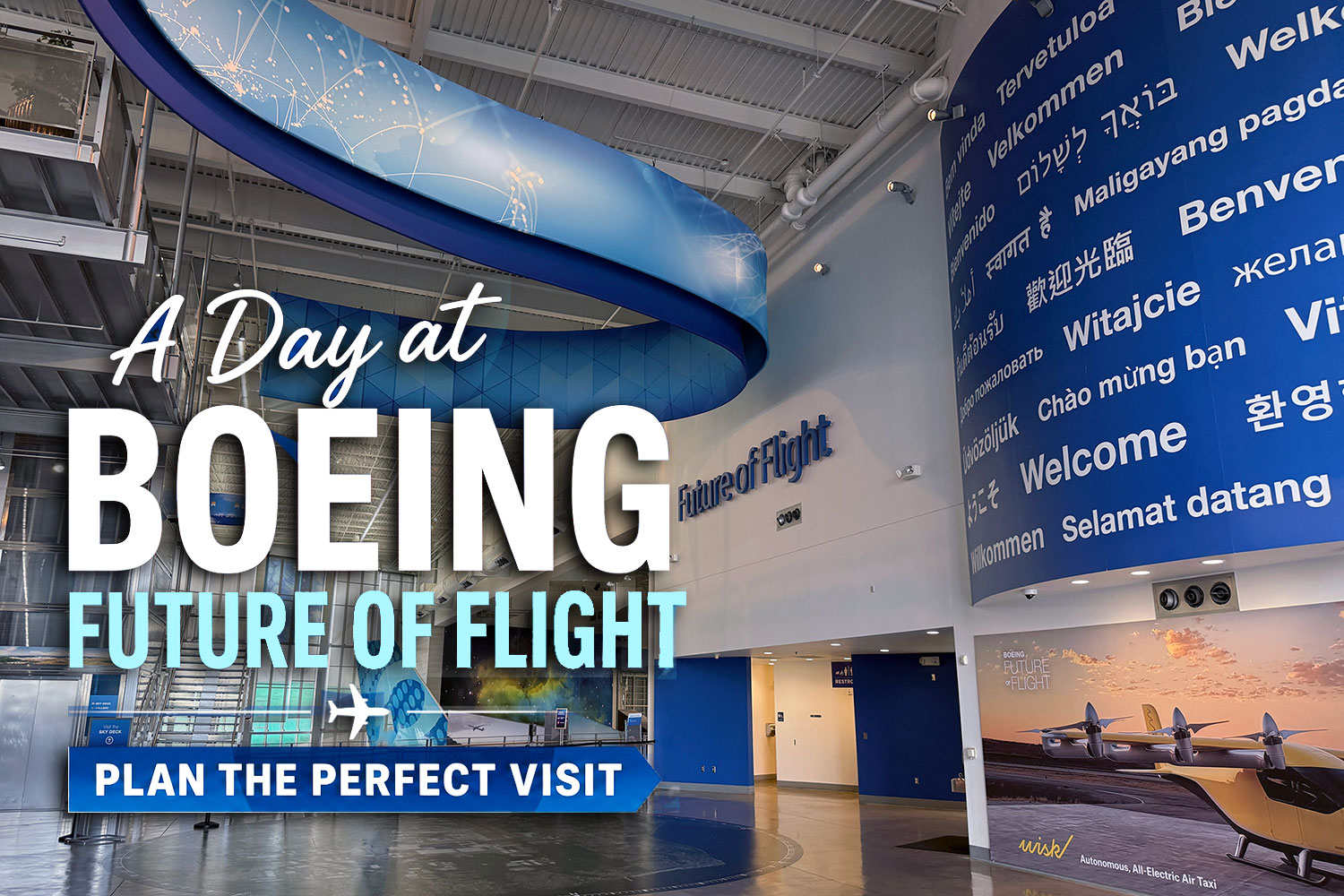
Boeing Future of Flight sits at the edge of Paine Field in Mukilteo, a quiet community north of Everett that most Seattle visitors drive past without a second thought. That’s a mistake. The 73,000-square-foot aviation center opened in 2005 and has been the gateway to the Boeing Everett Factory ever since — the single largest building by volume on the planet, covering nearly 99 acres and housing the production lines for the 767, 777, and 777X. As of 2026, the facility now runs seven days a week and has added several new exhibits, including a full-scale Wisk autonomous air taxi prototype and a Boeing Engineering Zone focused on space exploration. If you haven’t been in a few years — or have never gone at all — the timing has never been better.
Tickets, Hours & What To Know Before You Go
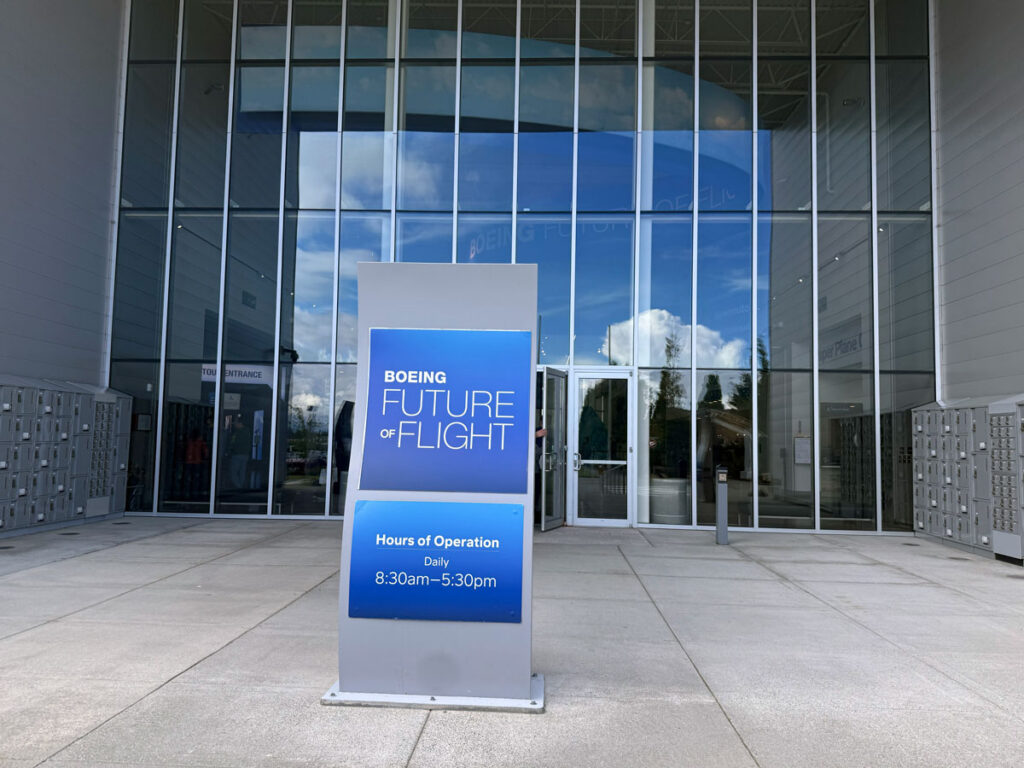
One of the best changes Boeing made going into 2026 is simple: the place is now open every single day of the week. For years, the center and factory tour were closed on Mondays and Tuesdays, which meant you had to plan around a five-day window. That changed in early 2026 when Boeing expanded to seven-day operations — Monday through Sunday, 8:30 AM to 5:30 PM. The only closures are a handful of federal holidays.
Read more: Seattle Travel Guide: The Perfect Adventure in the Emerald City
Tickets come in two flavors. Gallery and Sky Deck access is sold separately, and the factory tour is an add-on — or you can bundle both from the start, which is what most first-time visitors should do. The factory tour is the main event here; the gallery alone, while genuinely interesting, is more supporting act than headline.
| TICKET TYPE | ADULT | CHILD (UNDER 15) | NOTES |
|---|---|---|---|
| Gallery + Sky Deck Only | $14 | $14 | No factory access — great for aviation fans who want the exhibits and views |
| Boeing Everett Factory Tour | $42 | $42 | Includes gallery + Sky Deck. Must be at least 4 ft (48 in) tall |
| Guided Tours (from Seattle) | ~$125 | Varies | Third-party operators include coach pickup from downtown Seattle hotels |
Pro Tip
- Tickets sell out — especially on weekends and during summer. Book online at boeingfutureofflight.com at least a few days in advance. Walk-up availability exists on weekdays but isn’t guaranteed on weekends.
Arrive at least 30 minutes before your factory tour time. If you miss your slot, it is forfeited — Boeing does not hold groups. The tour itself runs about 80 minutes.- A great way to make your visit to the Boeing Future of Flight even more rewarding is by using CityPASS®, which can save up to 50% on Seattle’s top attractions. With one simple purchase, you get bundled access to must-see experiences like the Space Needle, Seattle Aquarium, and your choice of other top sites—helping you experience more while spending less.
The Gallery: What’s On Display Right Now
The moment you walk through the doors, the scale hits you. A full-sized aircraft model hangs from the ceiling. Display screens cycle through footage from Boeing factories around the world. Beyond the welcome desk, the gallery floor opens into a series of interconnected exhibit zones covering everything from Boeing’s 100-year history to what autonomous air travel might look like by 2035.
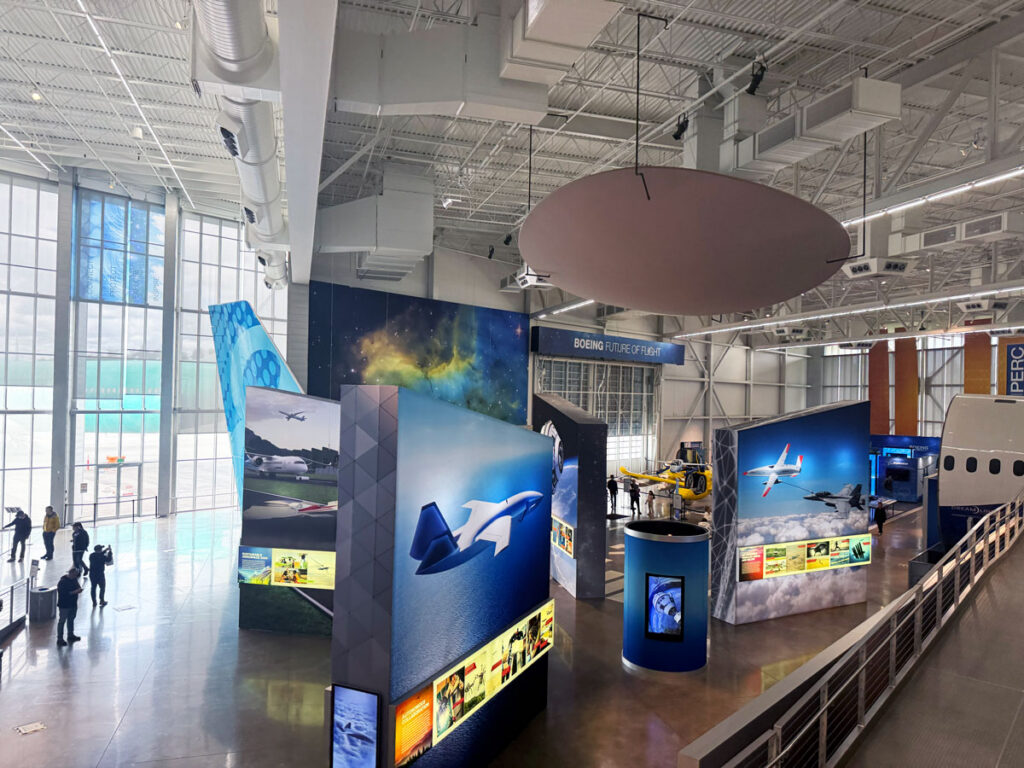
The 2026 version of the gallery is meaningfully better than a few years ago. New exhibits have been added, the layout feels less like a trade show and more like a proper museum, and the permanent collection has been refreshed with updated installations on sustainable aviation fuel and space engineering. Here is what to spend your time on.
Wisk: The Autonomous Air Taxi
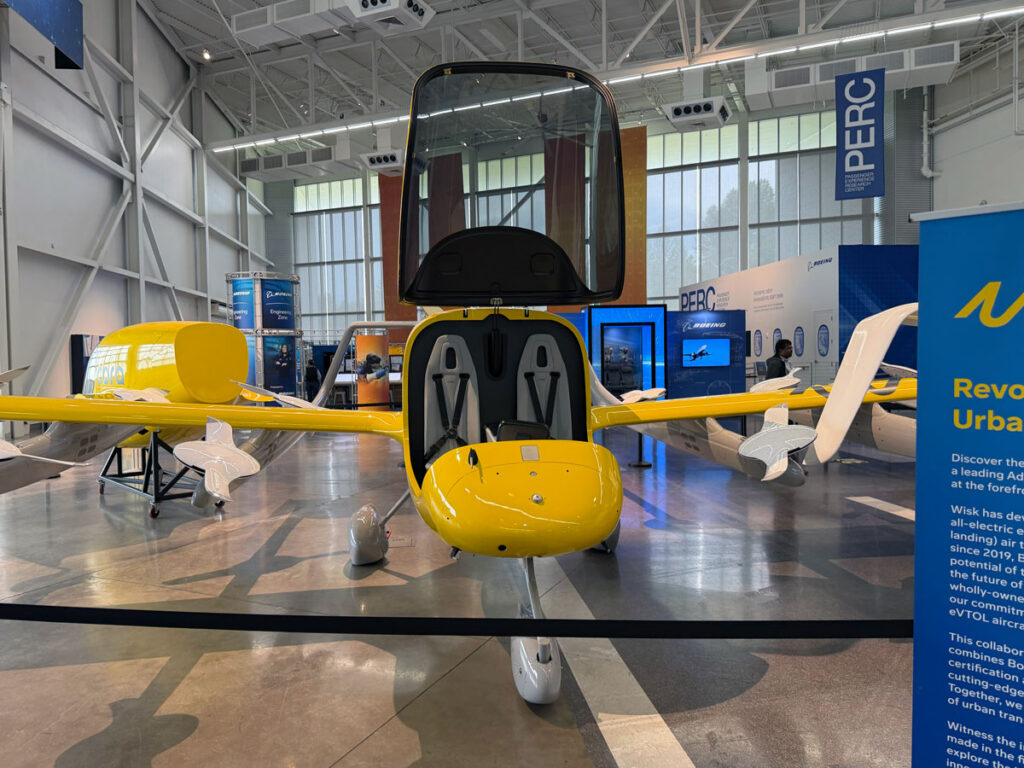
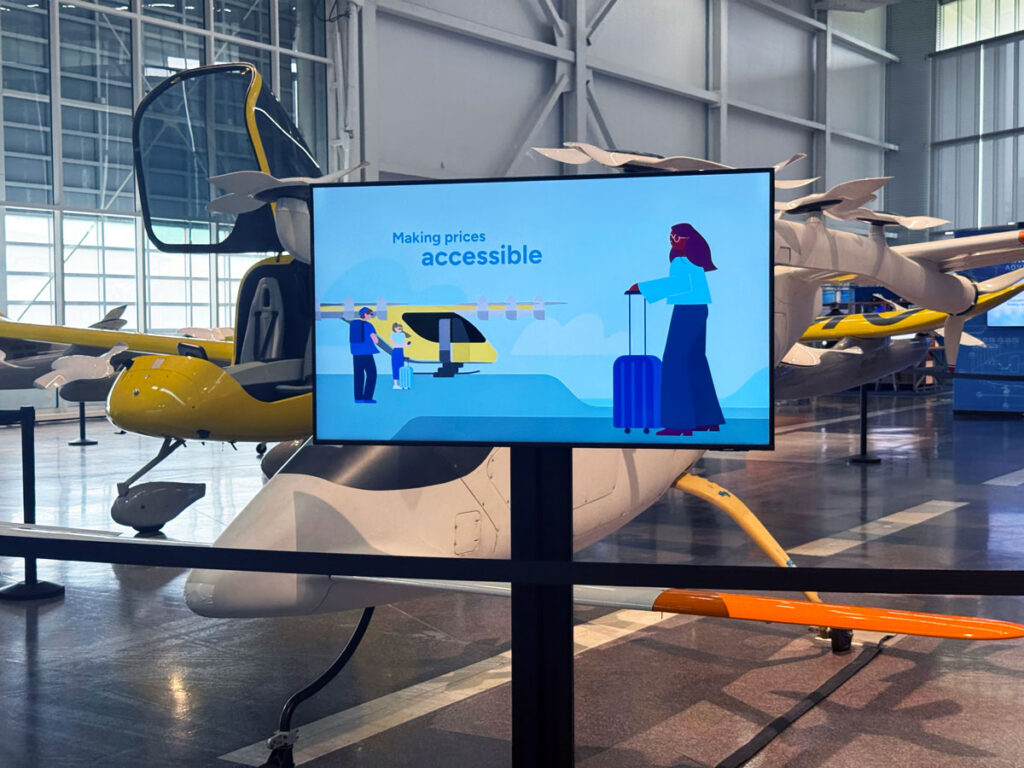
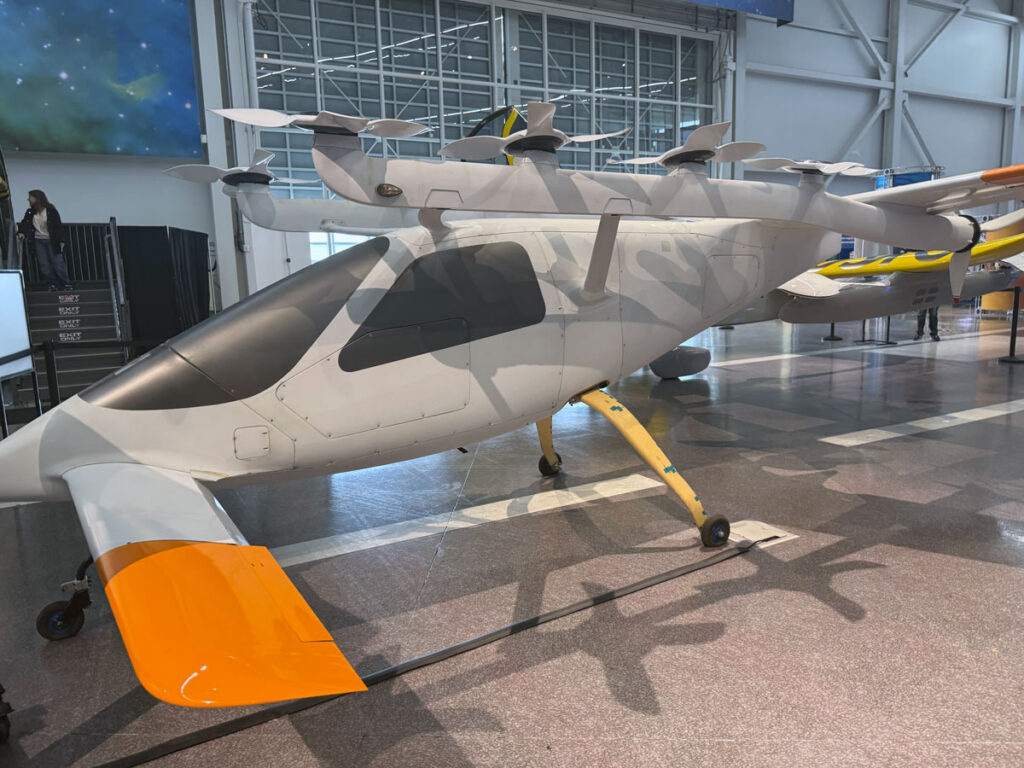
The most jaw-dropping addition to the gallery in years. Wisk Aero’s Generation 5 autonomous air taxi — a full-scale yellow prototype — stops every visitor cold. This is what Boeing is betting urban air travel looks like by the late 2020s: electric, pilotless, designed to carry two passengers over city routes without a human at the controls. Compact, surprisingly refined-looking, and almost cheerful in its yellow finish — it’s easy to imagine climbing in.
Legacy of Innovation Wall
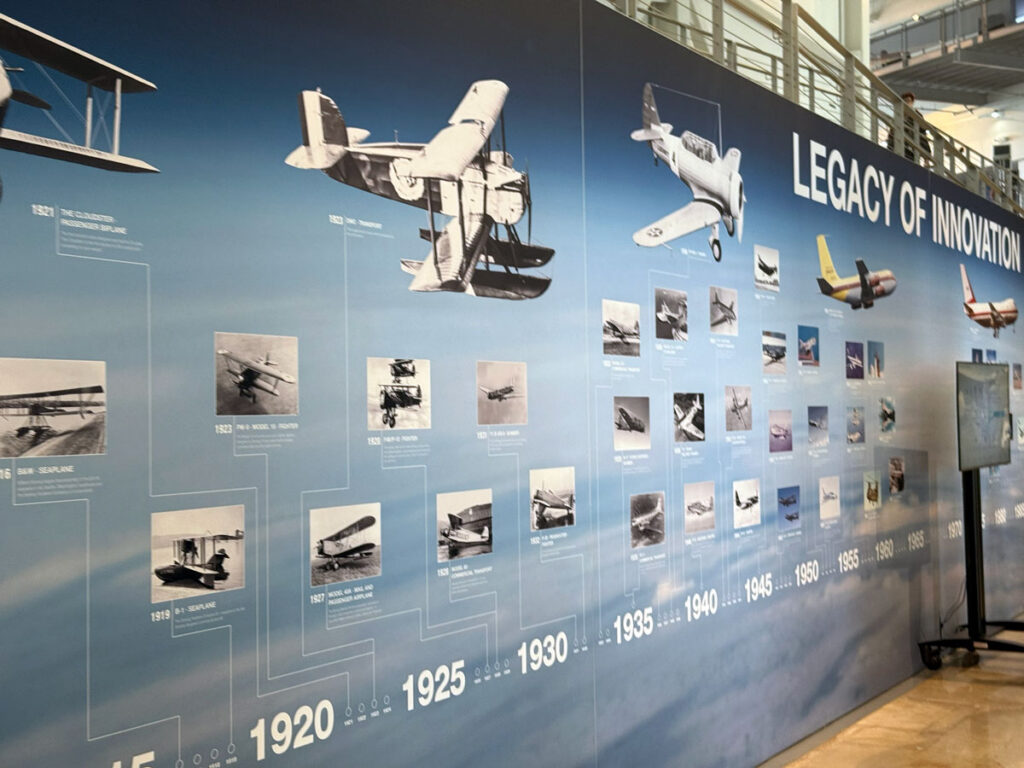
A floor-to-ceiling timeline mural running from the 1920s through today, charting every major Boeing aircraft in chronological order. It’s the kind of thing you photograph and then spend ten minutes actually reading. Particularly worth pausing on: the jump from propeller-driven commercial planes in the 1940s to the 707 jet age, and the staggering pace of change from 1960 to 1980.
Flight Simulators & Aerospace Adventure
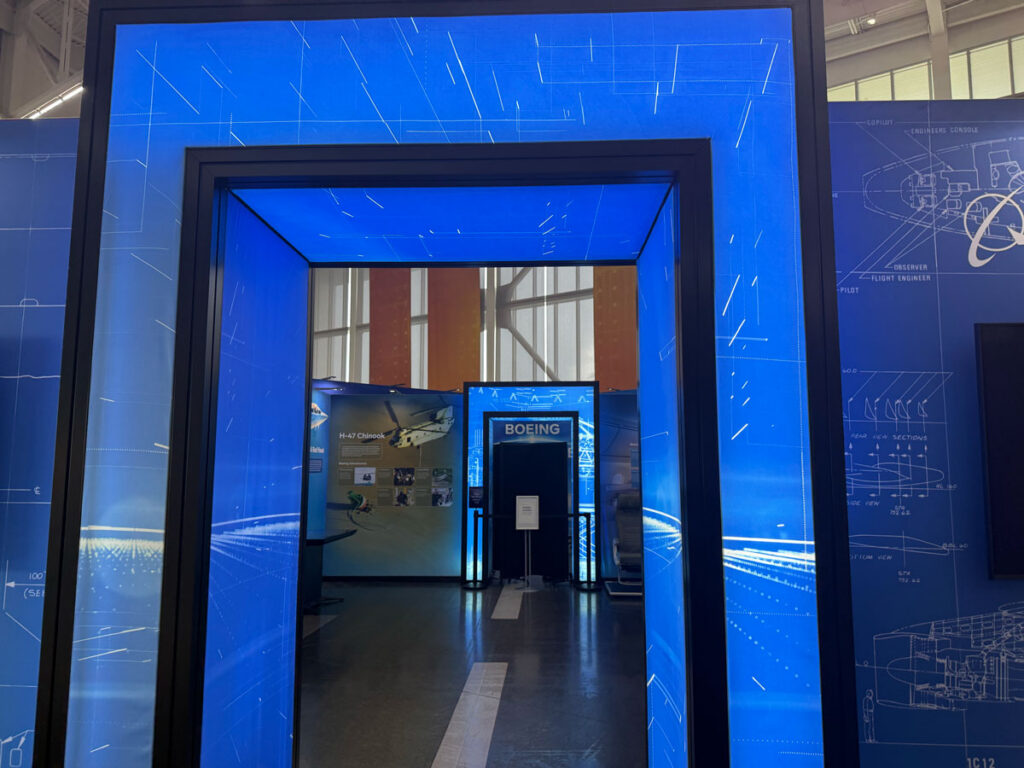
The electric-blue portal entrance is hard to miss, and what’s inside delivers. Flight simulators let you take the controls of a 787 Dreamliner or an F/A-18 Super Hornet — available for ages 12 and up. The broader exhibit is built around thinking like a Boeing engineer: designing an aircraft from scratch, understanding the tradeoffs between range, fuel efficiency, and capacity. Consistently crowded for good reason.
Boeing Engineering Zone
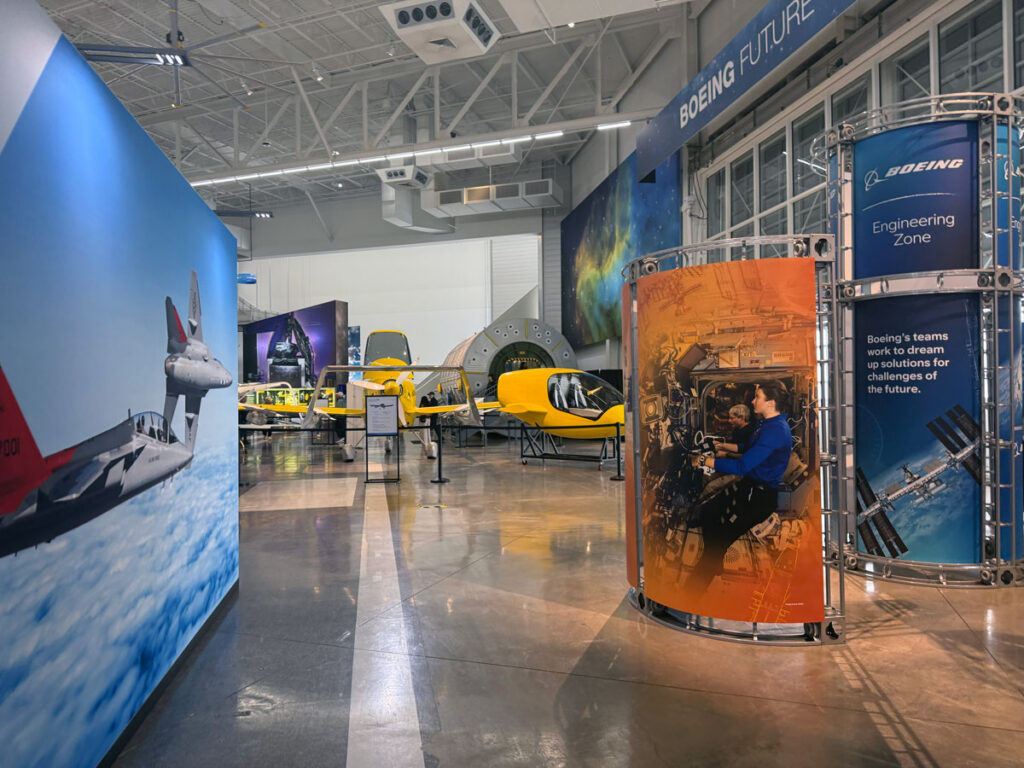
The newest family-oriented exhibit focuses on Boeing’s work in space exploration — specifically the engineering challenges of living on the International Space Station. Hands-on stations let kids explore growing food in microgravity, managing water systems on long missions, and testing materials in extreme conditions. Thoughtfully calibrated for middle-school visitors and genuinely interesting for adults too.
Sustainable Aviation Fuel Exhibit
A surprisingly substantive look at what the aviation industry is actually doing about emissions — honest engineering storytelling rather than greenwashing. The exhibit walks through how SAF is made, how it performs versus conventional jet fuel, and what scaling production would require. Boeing’s ecoDemonstrator program features prominently, including test flights run on a 30/70 SAF blend.
Unmanned Aerial Systems Gallery
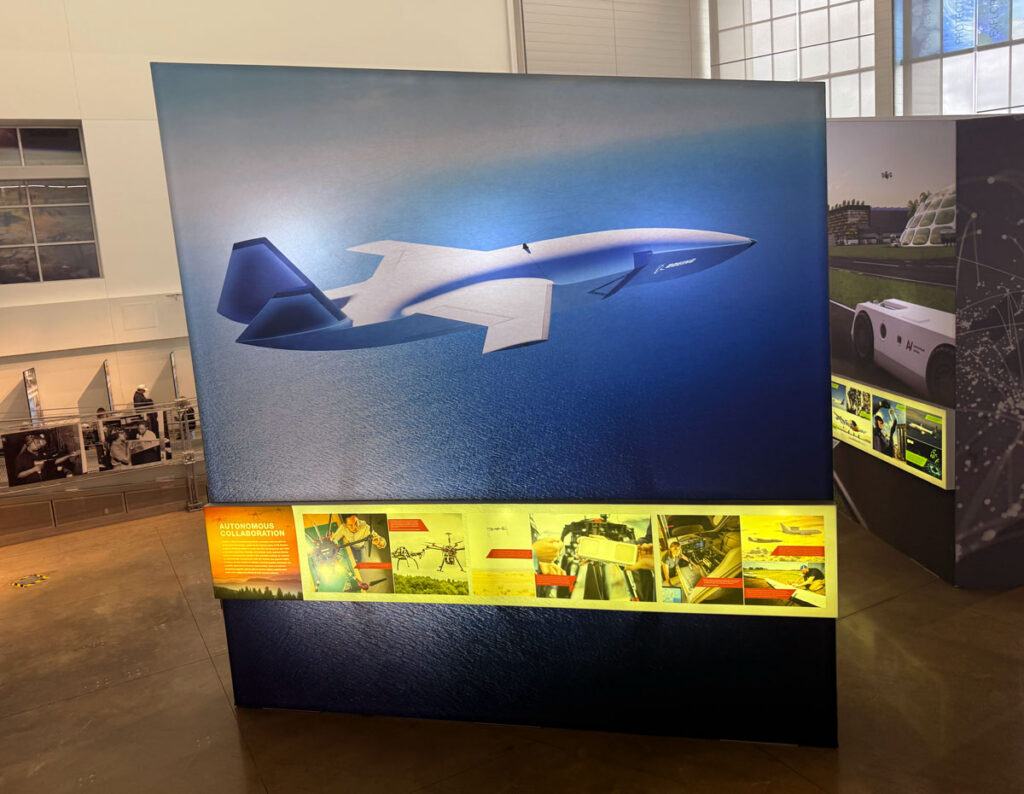
Physical aircraft and drone models displayed alongside large-format imagery of Boeing’s autonomous aircraft programs — including the MQ-25 Stingray tanker drone and hypersonic research vehicles. The placard information here is unusually detailed compared to most aviation museums, and the range of vehicles on display, from small agricultural UAVs to defense-grade autonomous systems, makes the connections between them obvious when they’re sitting next to each other.
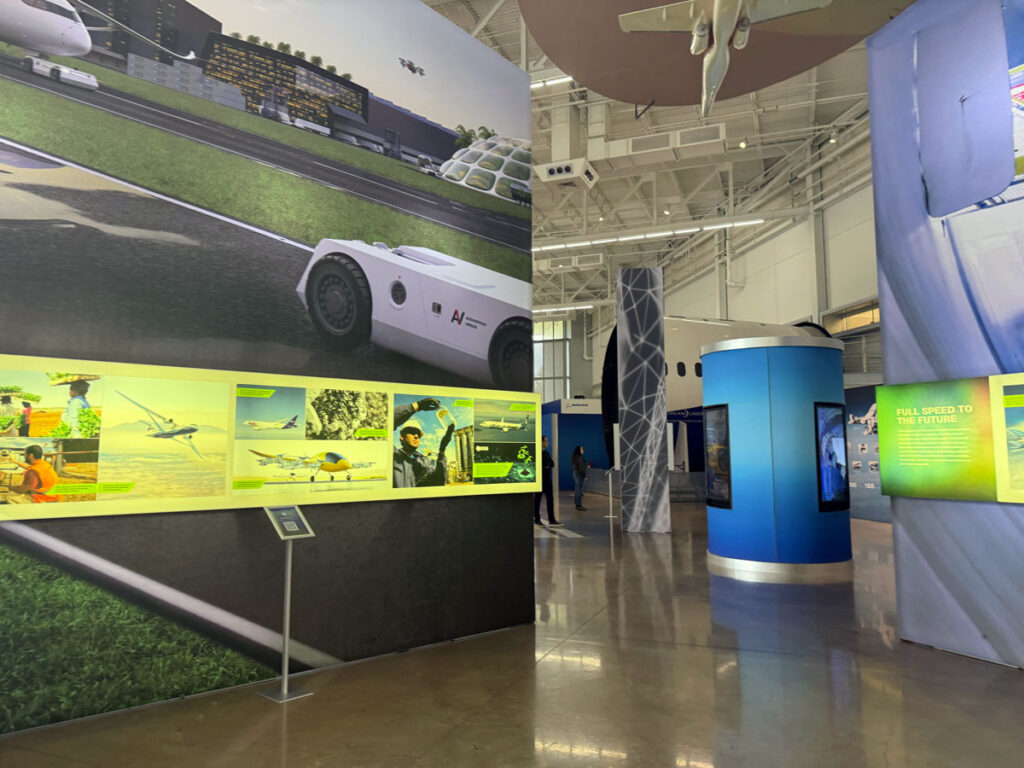
The display aircraft vary from quadcopter-sized research vehicles to fixed-wing aircraft with wingspans of fifteen feet or more. What makes the section work is the range — you see the continuum from recreational drone technology through defense-grade autonomous systems in a single walk-through.
The History Exhibits: Boeing’s Century Of Flight
Before you get to the futuristic stuff — air taxis, hypersonic concepts, autonomous drones — the gallery has a grounding section on where all of this came from. The James S. McDonnell Prologue Room and surrounding history exhibits cover Boeing’s origins in the Puget Sound region from the early 1900s, through the jet age, through the 747’s introduction in 1969, and into the modern widebody era.
Display cases hold original artifacts, letters, and engineering diagrams from Boeing’s earliest years. Old photos show the factory as it looked before it became the size of a small town. If you have any interest in manufacturing history or industrial design, this section rewards more time than most visitors give it. The story of how one company turned the Pacific Northwest into the aerospace capital of the world is genuinely fascinating, and it’s told well here.
THE MAIN EVENT
The Boeing Everett Factory Tour: What To Expect
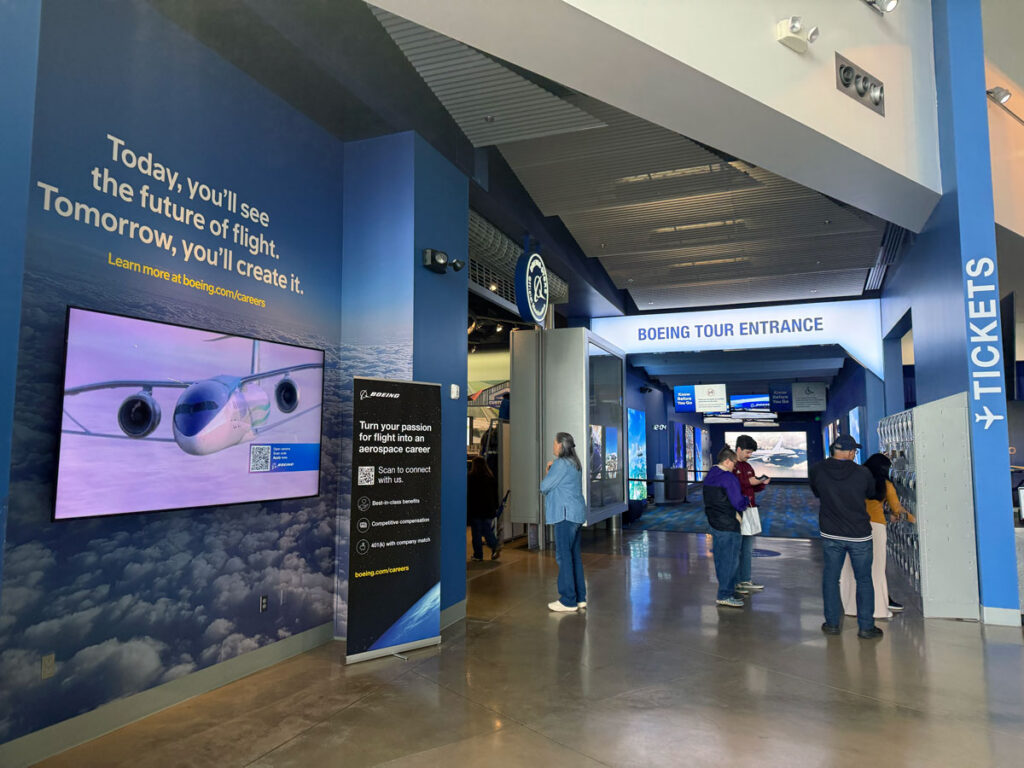
Everything in the gallery is good. The factory tour is why you drove here. It’s an 80-minute guided experience inside the Boeing Everett Factory — 472 million cubic feet, 98.7 acres under one roof, with its own fire station, restaurants, and banks. More than 30,000 people work here across a 24-hour production cycle. When the doors open and you walk in, the scale is simply incomprehensible at first.
The tour follows a raised walkway balcony above the production floor, where you look down at the 777 and 777X assembly lines — planes in various states of completion, from bare fuselage sections to nearly finished aircraft being prepared for customer delivery. The guides are knowledgeable and enthusiastic, and the information density is high for 80 minutes. You’ll come away understanding things about how a modern jetliner is built that you never expected to know.
- Check In at the Ticket Desk — 30 Minutes Early
Tours depart on a fixed schedule and won’t wait. Arrive at least 30 minutes before your tour time, check in at the ticket desk, and store any belongings in the complimentary lockers. No bags, phones, cameras, or electronics are allowed on the factory floor — this is an active production facility under FAA and Boeing security protocols. - Bus Transfer to the Factory
You board a dedicated bus that carries the tour group from the Future of Flight center to the factory entrance. The ride takes a few minutes and your guide starts contextualizing what you’re about to see. The factory is adjacent but secured; the bus is the only public access point. - The Factory Floor — Walkway Above the 777/777X Line
The tour route runs along a catwalk above the main production floor. Below you: 777 and 777X widebody jets in multiple stages of final assembly. You’ll see fuselage sections being joined, wings being mated, engines installed, and interior components fitted. A nearly complete 777X may be sitting 40 feet below you with its distinctive folding wingtips deployed. Photography is not permitted once inside the factory itself. - The Sky Deck — Plane-Spotting at Paine Field
Back at the Future of Flight center, the Sky Deck offers unobstructed views of Paine Field — one of the busiest general aviation airports on the West Coast, and the airfield where completed Boeing jets make their first flights. On a clear day you can see the North Cascades and Mount Baker. On any day, you can watch widebodies being towed across the tarmac and occasional test flights departing directly in front of you.
What You’ll See On The Factory Floor (2026)
The current Everett production lines include:
- Boeing 777 / 777X — The primary tour attraction. The 777X, with its carbon-fiber composite wings and folding wingtips, is in active production here.
- Boeing 767 — Commercial production winding down but still active; also built here in freighter configuration for FedEx and UPS.
- Boeing 737 MAX North Line — A new fourth assembly line expected to come online mid-2026, which may be visible from the tour route once operational.
Specific aircraft visible depend on the production schedule the day you visit. You may see a nearly complete airline-liveried jet on the final line — or a bare fuselage just starting its build sequence.
📋 Factory Tour Rules — Know These Before You Go
- Minimum height: 4 feet (48 inches / 122 cm). Children under this height cannot enter. No exceptions.
- No bags, purses, backpacks, waist pouches, or handbags on the tour.
- No phones, cameras, tablets, or any electronics. Free lockers available at the center.
- No food or drinks, no weapons, no smoking or vaping.
- Children under 16 must be accompanied by an adult at all times.
- The tour requires walking approximately 0.3 miles round-trip. Elevators are available; contact the center in advance to arrange the wheelchair-accessible bus route.
- Refunds require at least 2 hours advance notice. If you miss your tour time, you forfeit the ticket.
Paper Plane Café: What to Eat & What It Costs
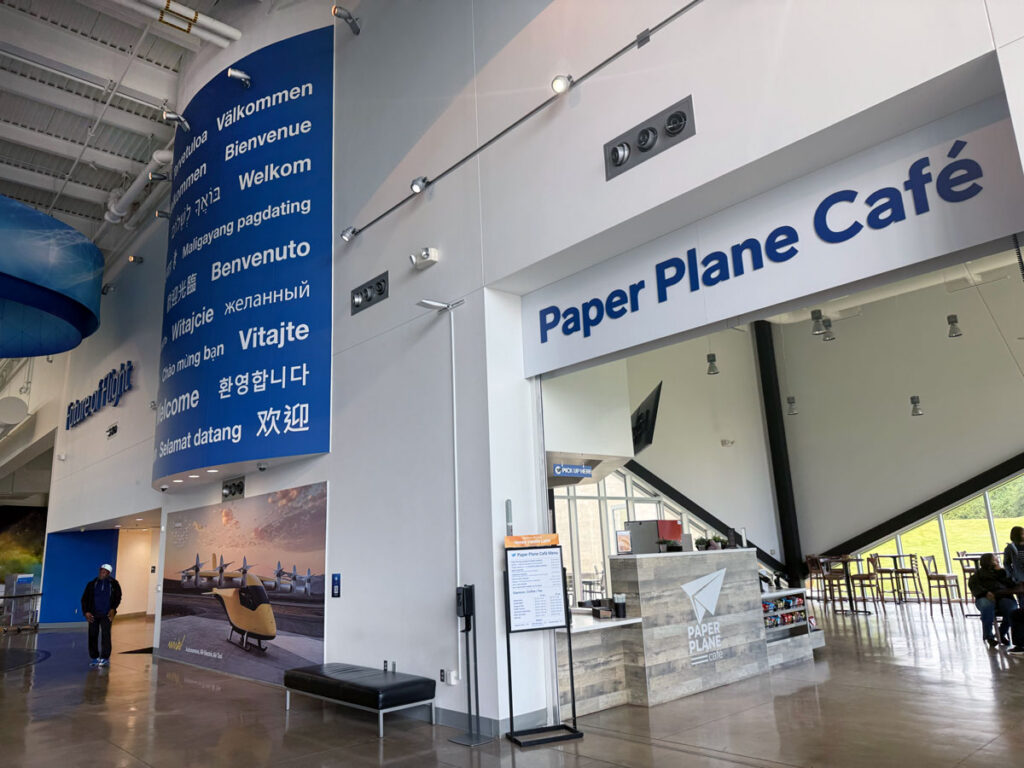
The Paper Plane Café sits just inside the main entrance — you walk past it before you even reach the exhibits. It’s a proper café, not a vending machine situation, and it’s worth knowing what’s available before you arrive hungry after a long drive from Seattle.
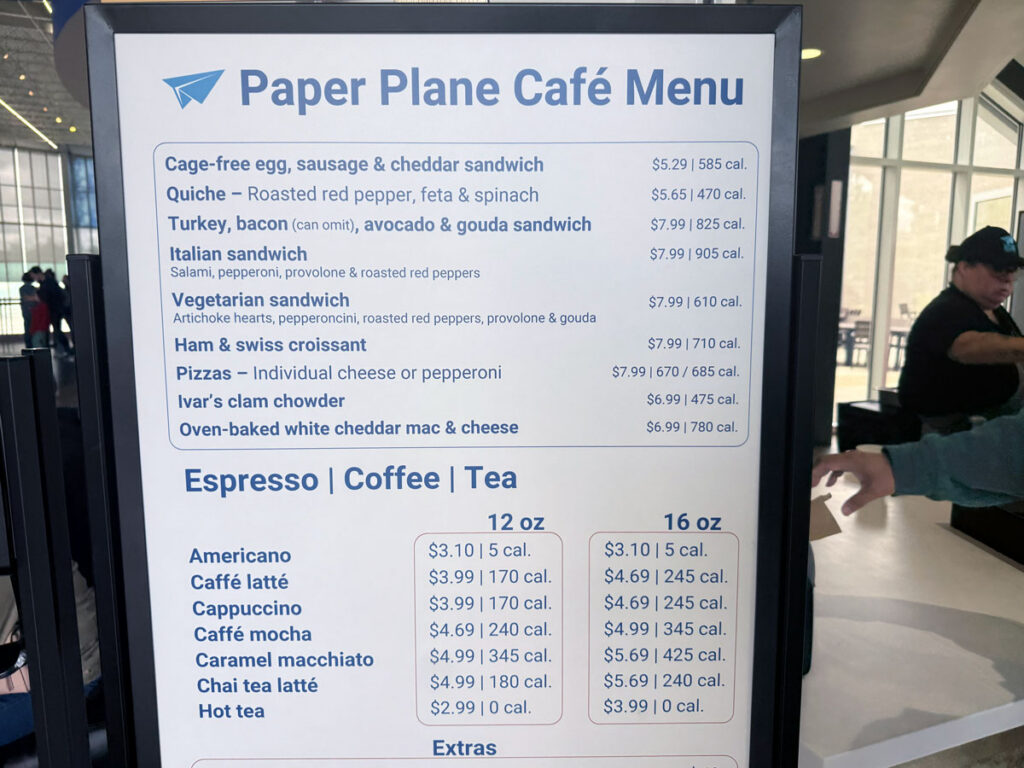
The menu runs sandwiches (cage-free egg, turkey, caprese, and a few others), salads, and pastries, alongside a full espresso bar. Sandwiches run roughly $10–$12. Coffee drinks start around $5.50. Nothing revolutionary, but everything is fresh and service is quick even when the center is busy. If you’re coming for a full day that includes both the gallery and the factory tour, it makes more sense to eat here than to leave the property mid-visit.
Read more: Sedona Weekend Getaway: Top Things to Do
The Boeing Store: Flagship Location
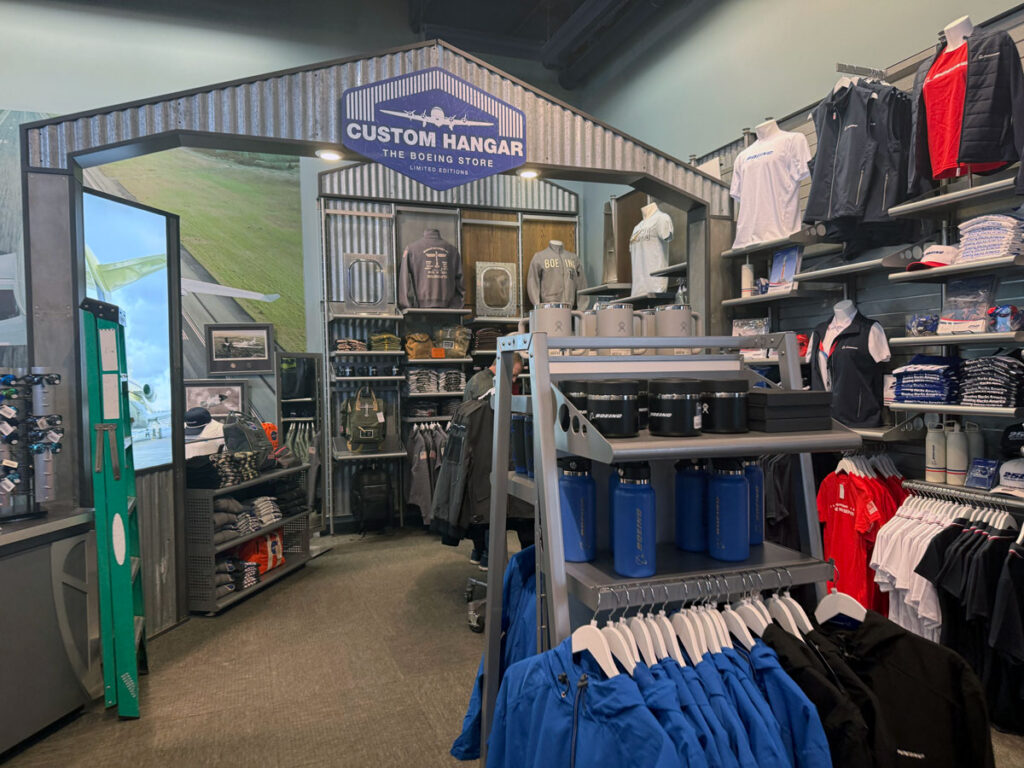
The Boeing Store at Future of Flight is the flagship retail location — the largest and best-stocked Boeing merchandise shop anywhere, and one of the better aviation gift shops in the country. Even if you’re not typically a branded-merchandise person, this place has a way of changing that. The selection is genuinely extensive.
Boeing Store Quick Picks:
- Best gift under $25: Boeing-branded mug, pin set, or small die-cast model — easy to pack and widely appreciated by aviation fans
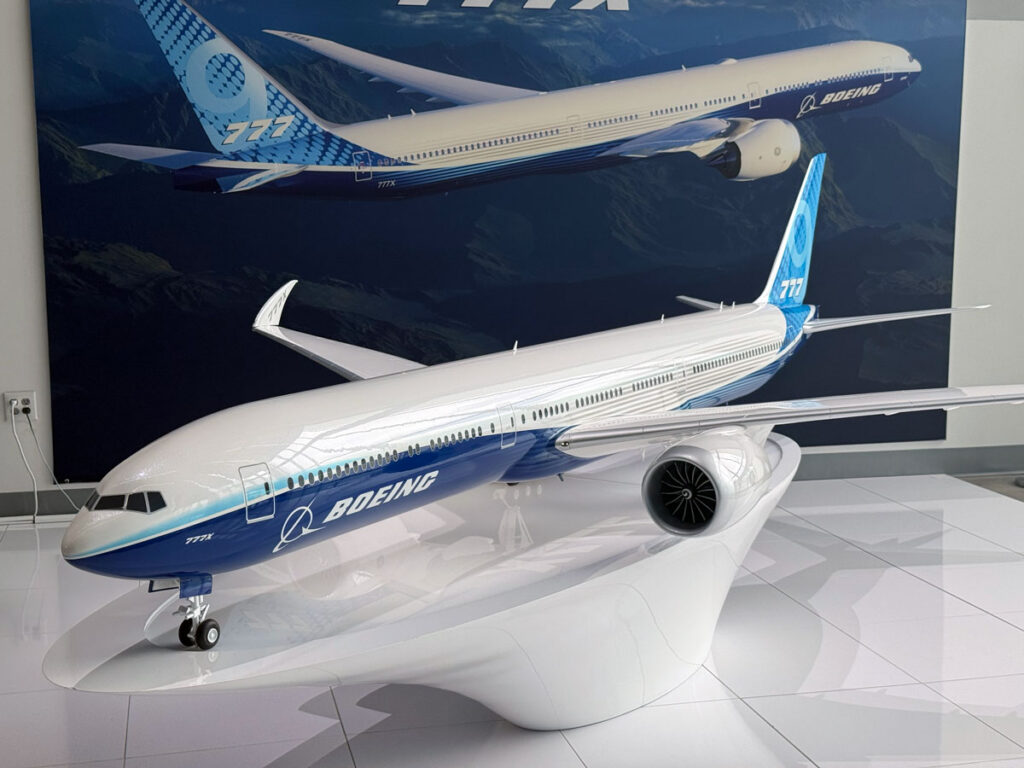
- Best splurge: Large-format 1:100 scale 777 or 787 model (~$80–$150 depending on detail level)
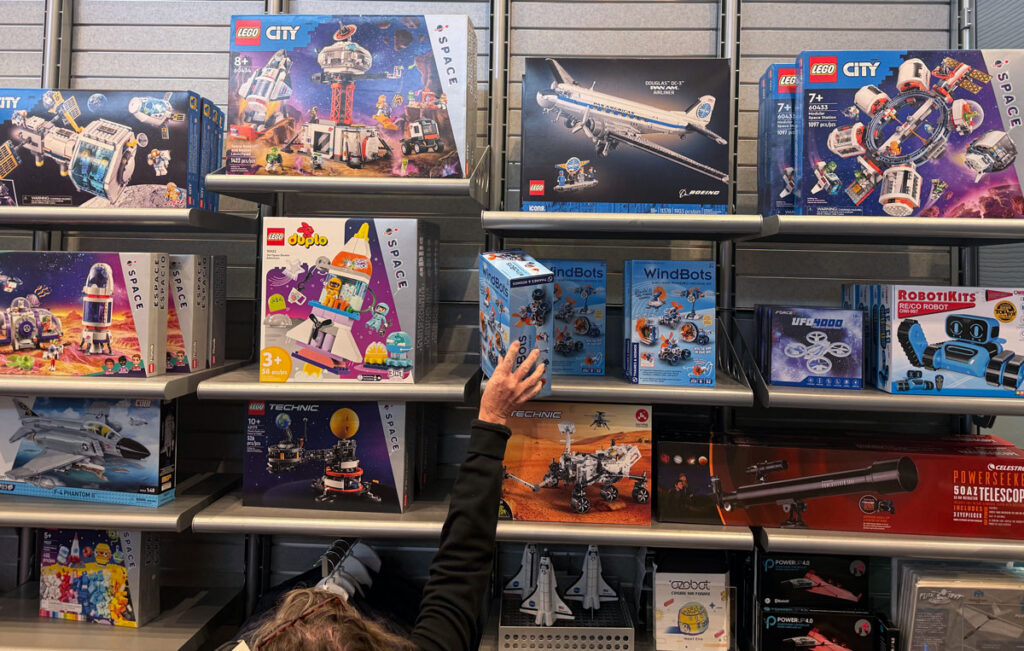
- Best for kids: Activity books, LEGO aviation sets, or the patch collection
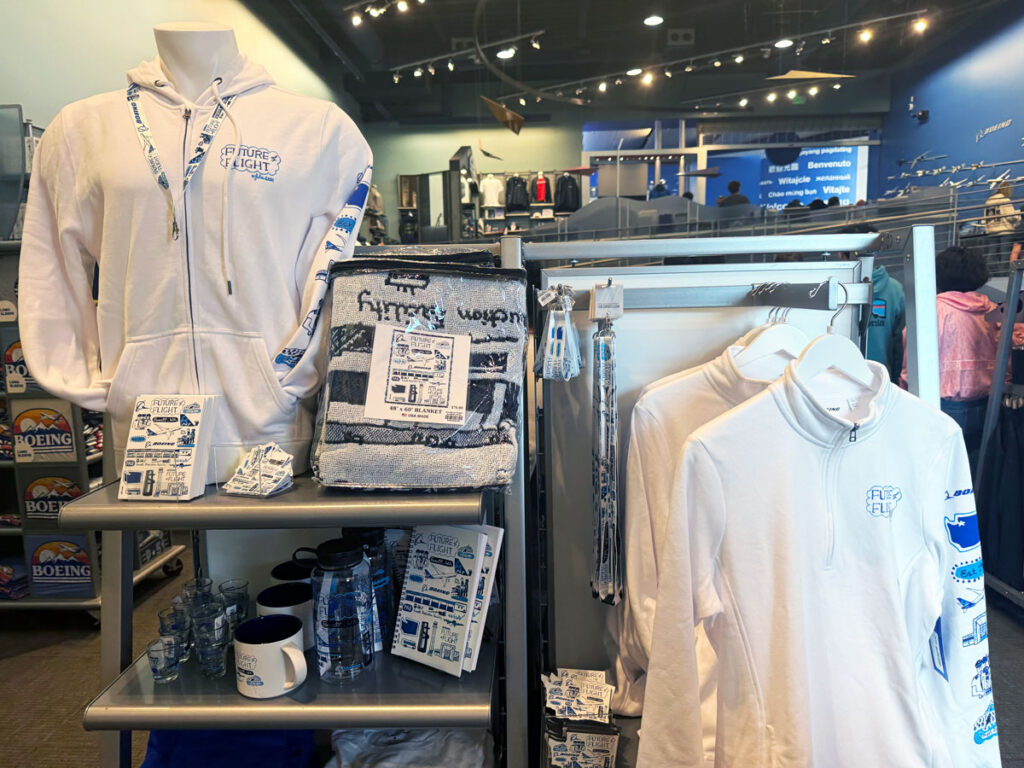
- Best wearable: The Boeing quarter-zip — understated, well made, available in multiple colors
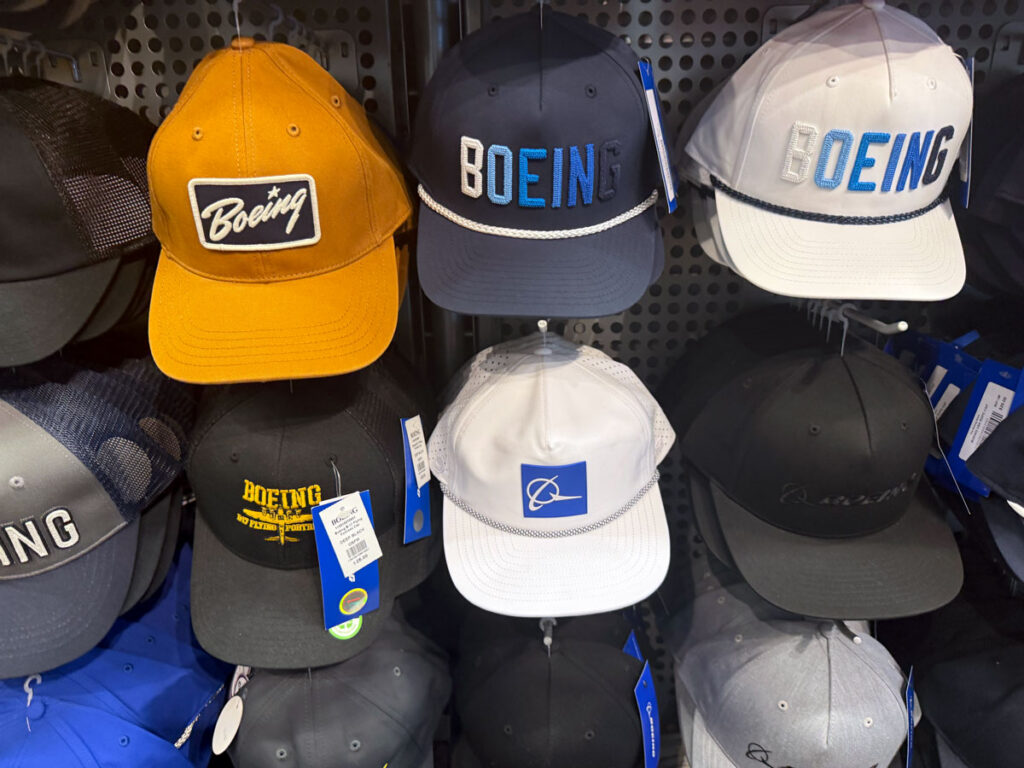
- Can’t-miss section: The hat wall — possibly the most comprehensive collection of Boeing caps in existence
15 Tips For Getting the Most Out of Your Visit
TIMING & PLANNING
- Book the factory tour online in advance. Tours sell out, especially Friday through Sunday and every day during summer. The gallery has more walk-up flexibility; the factory doesn’t.
- Weekday mornings are the sweet spot. Monday through Wednesday between 9 and 11 AM sees the lightest crowds and the most attentive guides. If you can swing a weekday, it’s a meaningfully better experience.
- Plan for a full half-day minimum. Gallery plus factory tour plus store plus Sky Deck is easily 4–5 hours if you’re engaged. If you rush, you’ll regret it.
- Check for holiday closures before you drive. The center closes on Nov 27, Dec 24, Dec 25, Dec 31, and Jan 1. Verify at boeingfutureofflight.com for any additions.
Read more: A Perfect 48 Hours at Wynn Las Vegas
BRINGING KIDS
- The 48-inch height requirement for the factory tour is firm. Measure your child before you leave home — the center enforces it, and there are no exceptions.
- Kids’ Zone and indoor drone flying are genuinely excellent. Younger kids can fly miniature quadcopters in the indoor drone cages and try hands-on aerodynamics experiments. It’s not an afterthought — it’s well designed for elementary school age.
- The Engineering Zone is perfect for middle schoolers. The space engineering exhibit is calibrated well for 11–14 year olds interested in STEM. Pair it with the flight simulator section for maximum engagement.
PHOTOGRAPHY TIPS
- Photograph everything in the gallery — you won’t be able to inside the factory. The Wisk air taxi, the Legacy of Innovation wall, the drone displays, and the aircraft models are all photo-permitted in the gallery areas.
- The Sky Deck is great for plane-spotting photos. Bring a longer lens if you have one — you can get good shots of aircraft on the Paine Field ramp and occasional test flights from the observation area.
- Best light for exterior photos is morning, when the facade faces the light and the entrance sign is well lit without harsh shadows.
Read more: 10 Sneaky Tricks to Take Stunning Travel Photos with Your Phone (No Fancy Gear Needed)
GETTING THERE FROM SEATTLE
- Drive north on I-5 to Exit 182 (WA-526 West), then follow signs to Paine Field Blvd. Total drive from downtown Seattle is 30–40 minutes without traffic; 50–60 during weekday rush hour.
- Parking is free and plentiful. Large surface lot directly at the center — no parking anxiety, no fee.
- Third-party tours from Seattle are worth considering if you prefer not to drive. Operators on Viator and GetYourGuide offer coach pickup from downtown Seattle hotels for around $125 per person — guide commentary included on the ride up.
- Combine with Paine Field plane spotting. The public viewing area near the runway is free and just minutes away. If you’re an aviation enthusiast, this is worth the extra 30 minutes — you may catch a test flight or a freshly painted 777 making its first departure.