
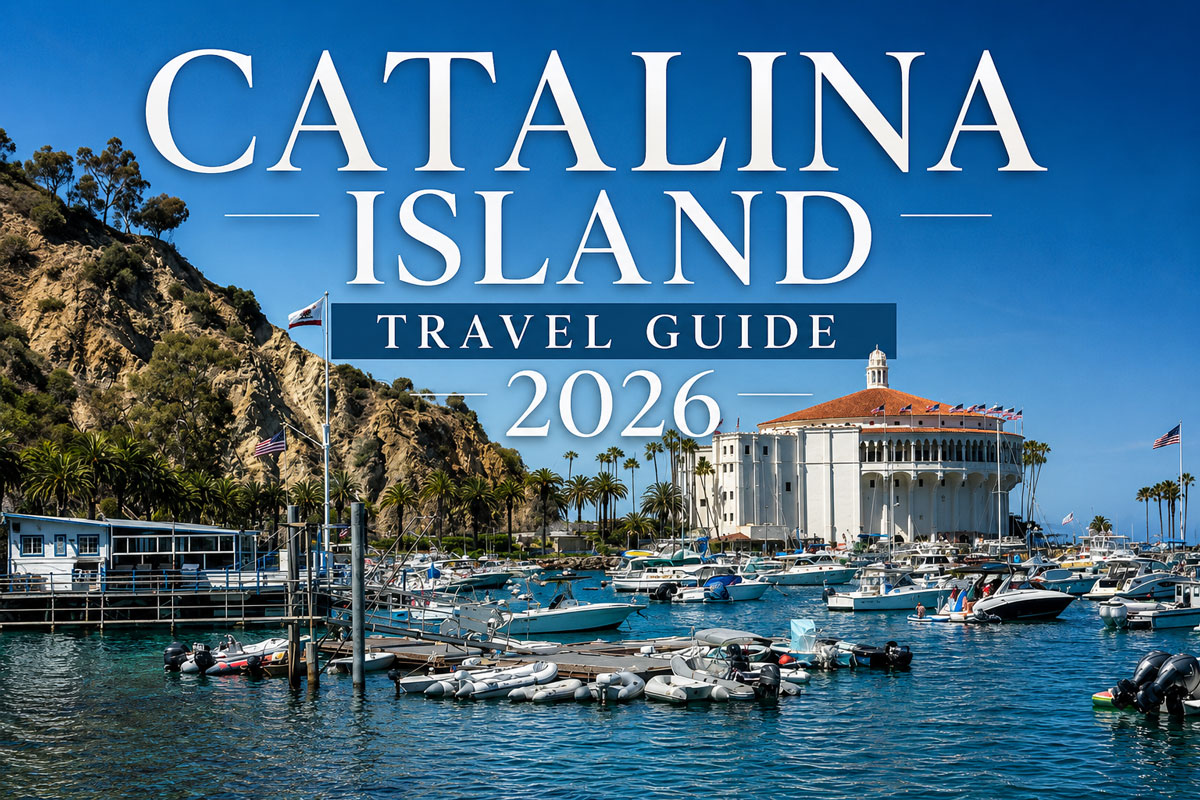
Catalina Island has a strange kind of split personality. It’s technically part of Los Angeles County, just 22 miles off the coast, and it’s also nothing like the mainland at all — a compact harbor town where golf carts outnumber cars, the main landmark is a Great Gatsby-era dance hall, and the water in the harbor is clear enough to watch fish swim under the docks. Most visitors come for a single day trip from Long Beach or San Pedro; plenty end up wishing they’d booked a night.
Catalina Island at a Glance
- Distance from the mainland: About 22 miles off the coast of Long Beach/San Pedro
- How most people get there: The Catalina Express ferry, about 1 hour from Long Beach or San Pedro
- Ferry price: Roughly $42+ one-way per adult, plus an island wharfage fee and tax (about $85–90 round-trip all-in)
- Getting around Avalon: On foot, or by rented golf cart — the town is genuinely walkable at about 1 square mile
- Best day-trip season: Late spring through early fall for calm seas and warm weather; fall brings the JazzTrax Festival and smaller crowds
- Realistic day-trip budget: $150–220 per person including ferry, food, and one paid activity
Getting to Catalina Island: The Ferry, By the Numbers
Unless you’re flying into the Airport in the Sky by private plane, the Catalina Express ferry is how nearly everyone gets to the island. It departs from Long Beach, San Pedro, and Dana Point, with the Long Beach and San Pedro routes taking about an hour and landing in Avalon. One-way adult fares start around $42, with seniors and children discounted slightly; round-trip tickets run roughly $85–90 once the island wharfage fee and tax are added in.
Tip:
Sit on the upper deck if you want the best shot at spotting dolphins or whales on the crossing — it’s colder and windier up there, so bring a layer even on a warm day.
There’s also the Catalina Flyer from Newport Beach, a slightly longer crossing at about 75 minutes, and seasonal service that sometimes runs to Two Harbors on the island’s quieter west end. Parking at the mainland terminals isn’t free — expect roughly $25–27 per day at the Long Beach lot — so factor that into your total if you’re driving in.
Flying In Instead
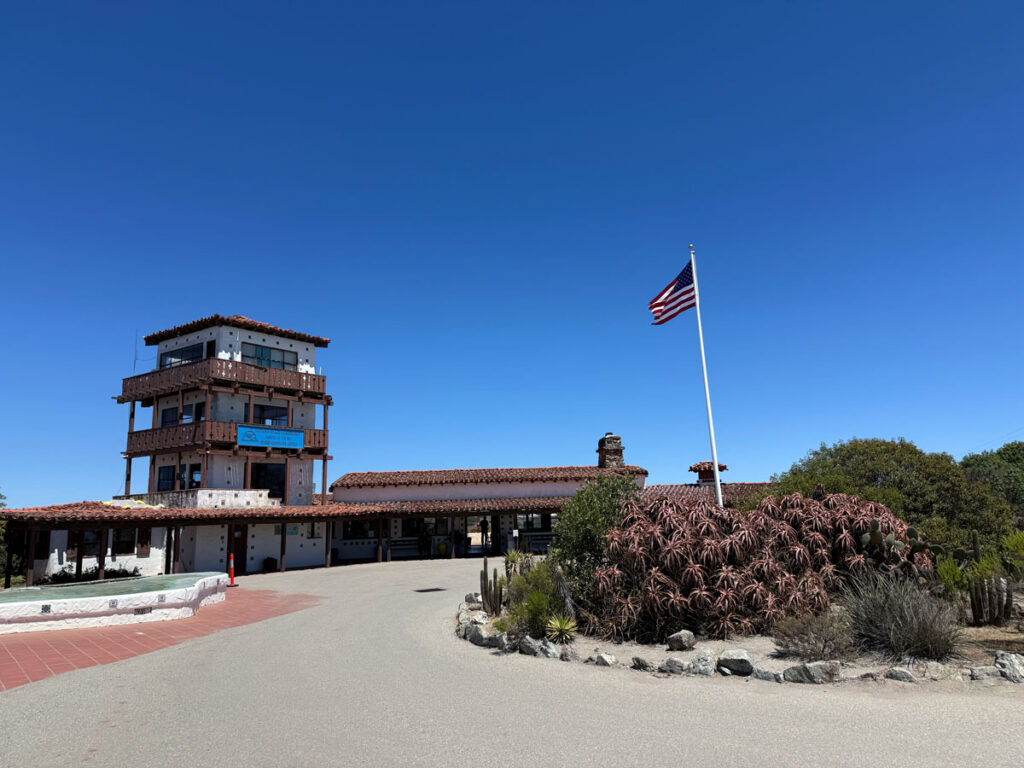
A smaller number of visitors skip the boat entirely and fly into the island’s own airstrip, the Airport in the Sky, located in the island’s interior rather than in Avalon itself. It’s a private-plane and small-aircraft airport rather than a commercial one, so it’s a niche option for most travelers.
Piecing together the ferry, a hotel, and everything else? Up to 60% Off with Last-Minute Travel Deals at Expedia is worth a look if your dates are flexible — bundling the ferry with an overnight stay can bring the per-person cost down noticeably compared to booking each piece separately, especially if you’re deciding at the last minute.
Getting Around Avalon Without a Car
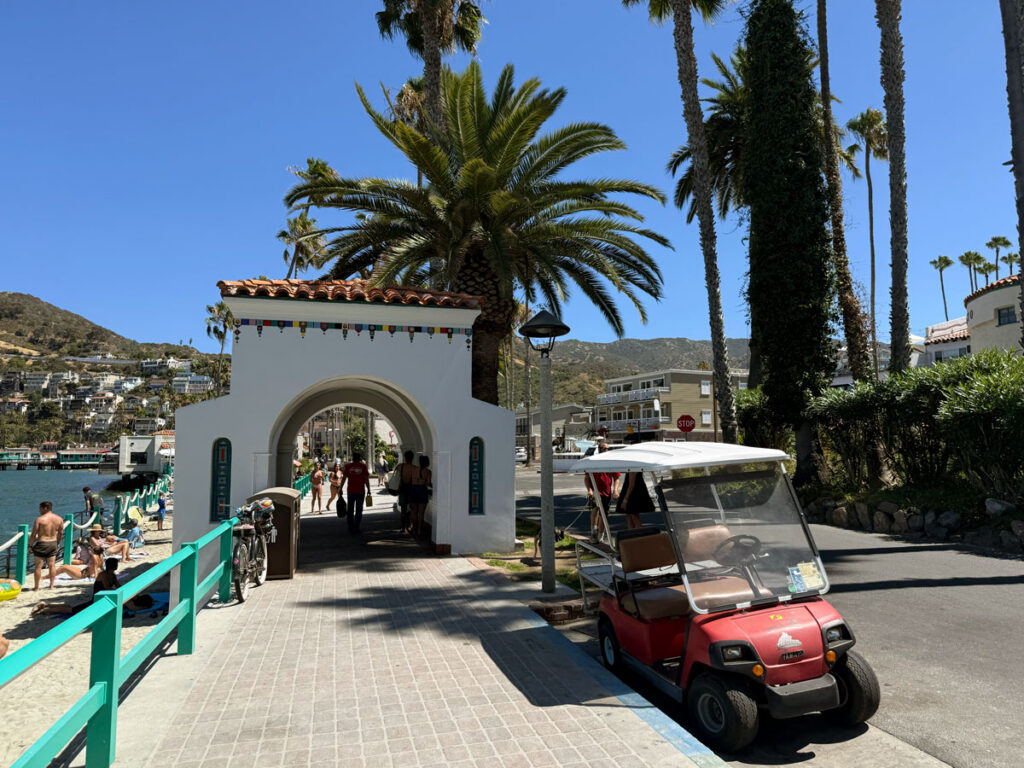
Here’s the detail that surprises most first-time visitors: Avalon effectively doesn’t allow regular cars. The city caps full-size vehicle permits with a waiting list that reportedly stretches more than 20 years, so almost everyone in town gets around by golf cart, on foot, or by taxi. It’s part of what gives the town its unhurried, small-scale feel.
Read more: Lido Isle: How to Experience Newport Beach’s Most Exclusive Island
Since the whole town is only about a square mile, walking covers most of what a day-tripper needs. If you want to see the hillside neighborhoods and viewpoints above the harbor, renting a golf cart is the move — expect around $65–70 per hour with a 2-hour maximum rental (no daily or overnight rentals are offered), plus a refundable cash deposit. Drivers generally need to be 25 or older with a valid license.
Tip:
Golf cart rentals are limited to Avalon’s city limits and can’t be taken into the island’s interior. If you want to reach the Wrigley Botanical Garden or hillside overlooks, ask your rental company for their suggested scenic route — most provide one that covers the highlights in about an hour.
The Catalina Casino: The Island’s Real Landmark
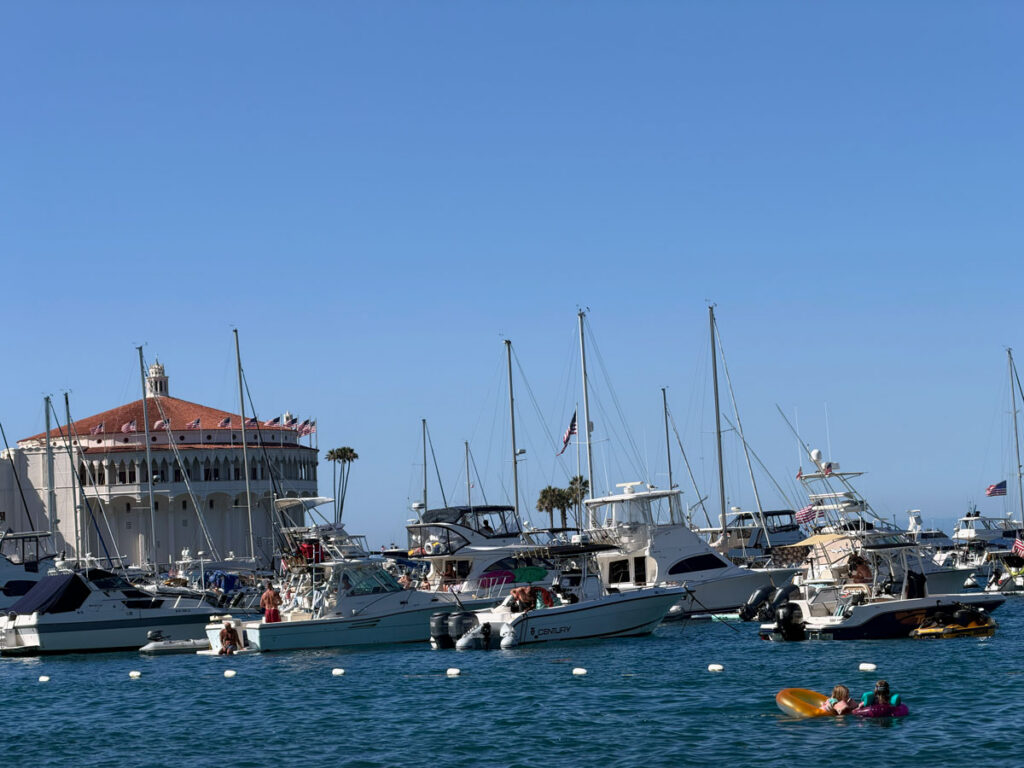
Despite the name, nobody has ever gambled here. Built in 1929 by chewing-gum magnate William Wrigley Jr. at a cost of $2 million, the Catalina Casino is Italian for “gathering place,” and it’s the building that appears on basically every postcard of the island — a round, Art Deco structure rising the equivalent of about 12 stories right on the edge of Avalon Bay.
Read more: San Francisco Bay Cruises: Prices, Best Tours & What’s Worth It
Inside, the building holds two things: the Avalon Theatre, one of the first movie theaters in the world purpose-built for “talkies” in 1929, with hand-painted Art Deco murals and acoustics so good they were later studied by the designers of Radio City Music Hall; and, on the upper floor, the Casino Ballroom — at 20,000 square feet, the largest circular ballroom in the world without any supporting pillars, where big bands like Glenn Miller once played to as many as 3,000 dancers a night.
General admission tours run daily and typically include the theatre, the ballroom, the Marine Bar, and the Ocean Promenade circling the building, with sweeping views back over Avalon.
On the Water: Kayaking, Snorkeling, and Glass-Bottom Boats
Catalina’s water clarity is the other headline draw, and Avalon’s harbor is set up to get you into or onto it without much planning.
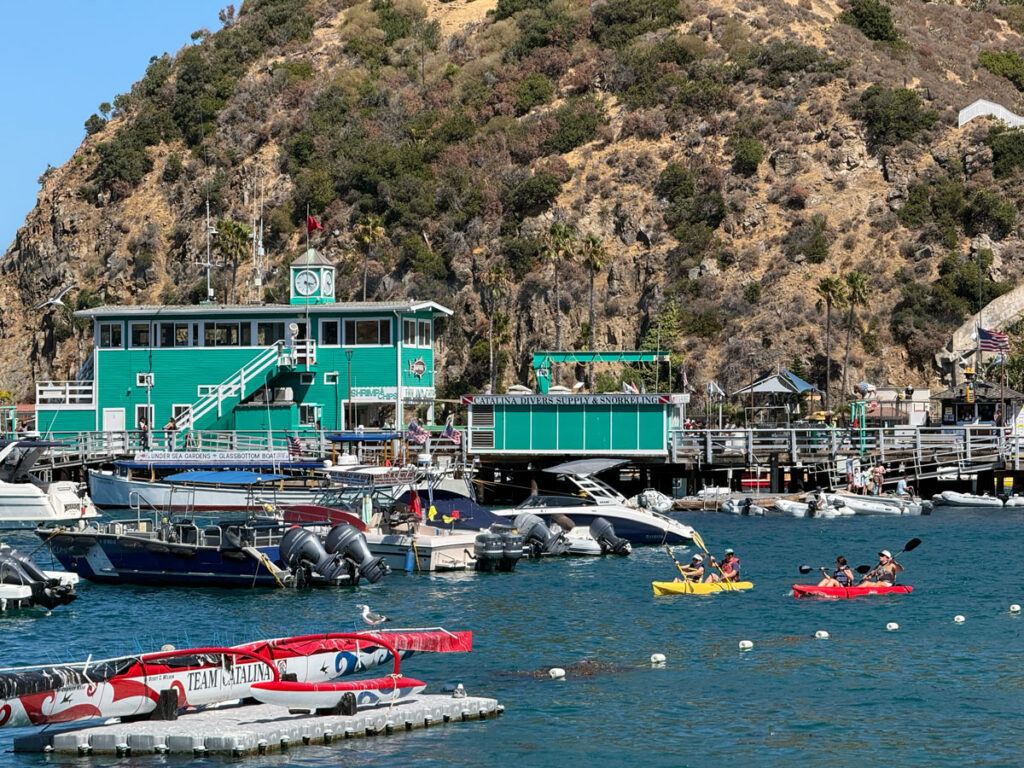
Right off the Green Pleasure Pier, outfitters rent kayaks, snorkel gear, and paddleboards, and run glass-bottom boat and semi-submersible “undersea” tours for people who’d rather stay dry while still seeing the kelp forests and fish below. Given the water’s clarity, even a basic rented snorkel set over one of the harbor’s protected coves can turn up garibaldi (California’s bright orange state marine fish) and plenty of smaller reef fish.
Avalon’s Waterfront and Green Pleasure Pier
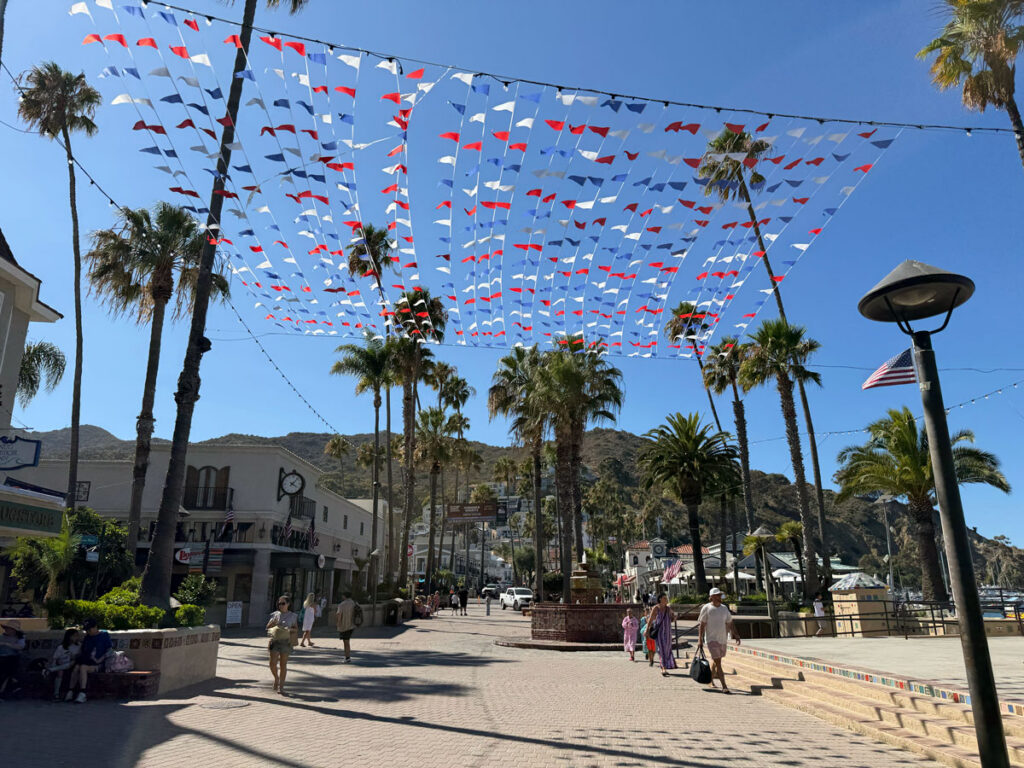
The waterfront promenade, Crescent Avenue, is where most of Avalon’s life happens — restaurants, shops, and the ferry landing all string along the curve of the bay, with the Casino anchoring one end.
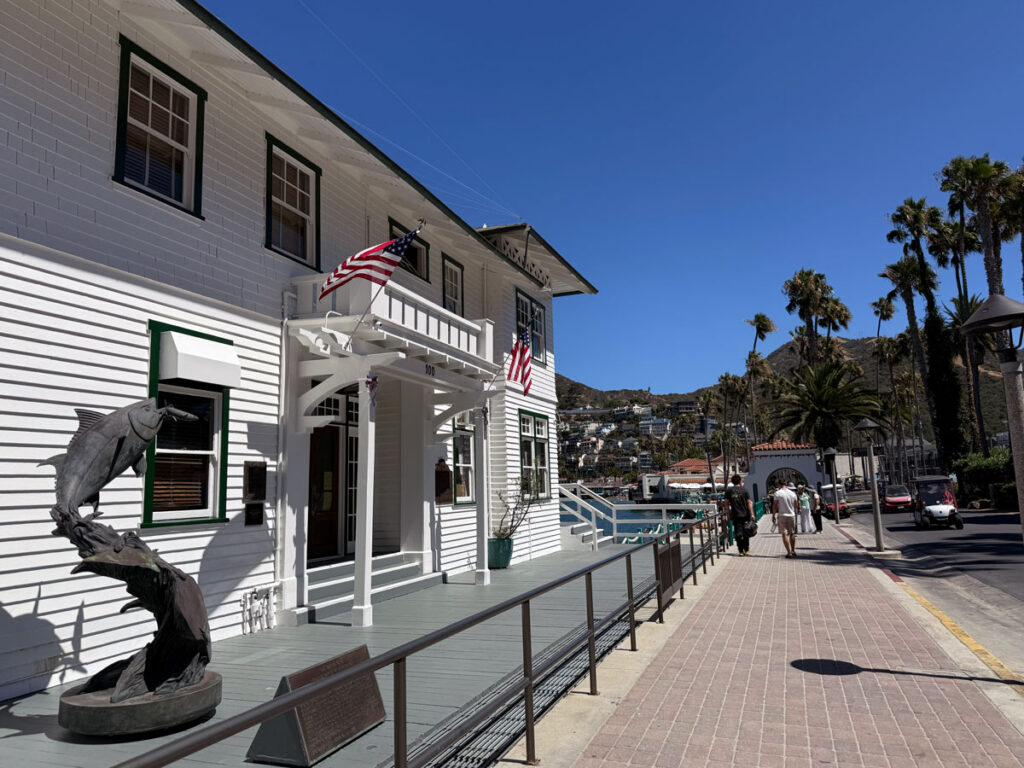
Near the middle of the promenade, keep an eye out for the Tuna Club building, marked by a leaping marlin sculpture out front — a reminder that Avalon has a long, genuine history as a big-game sport fishing destination going back over a century.
Read more: Best Free Things to Do in San Francisco + Attractions Worth Paying For
Where to Eat
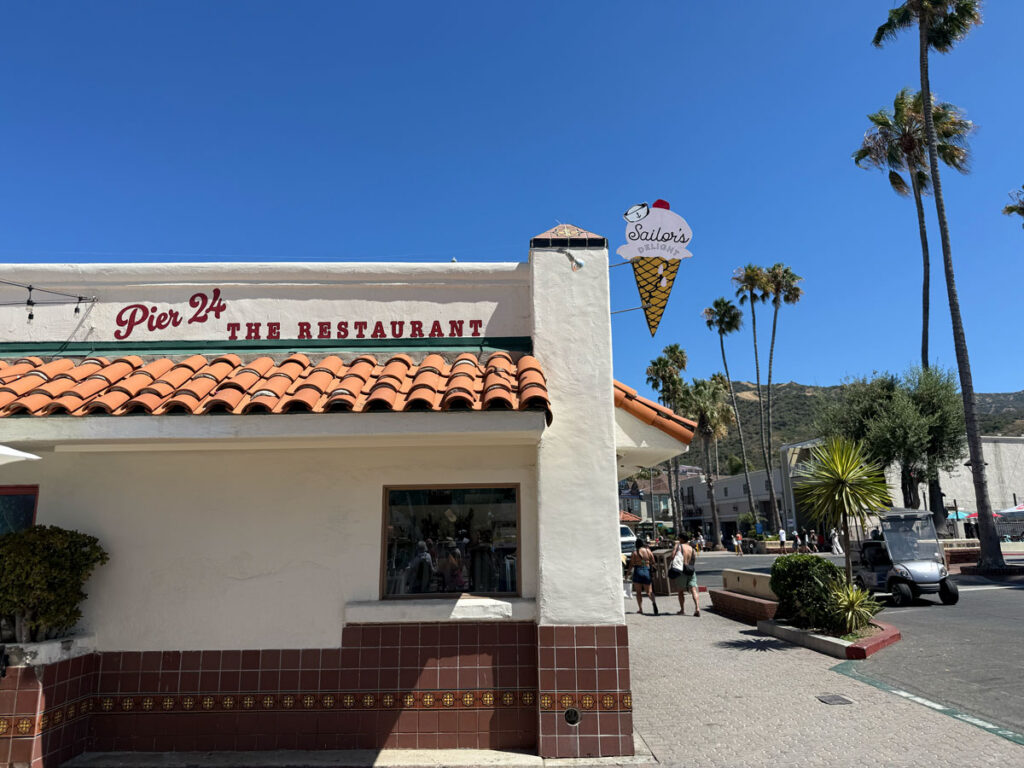
Avalon’s food scene leans casual and harborside: think baskets of fried seafood, lobster rolls, and burger stands, most with a water view built in.
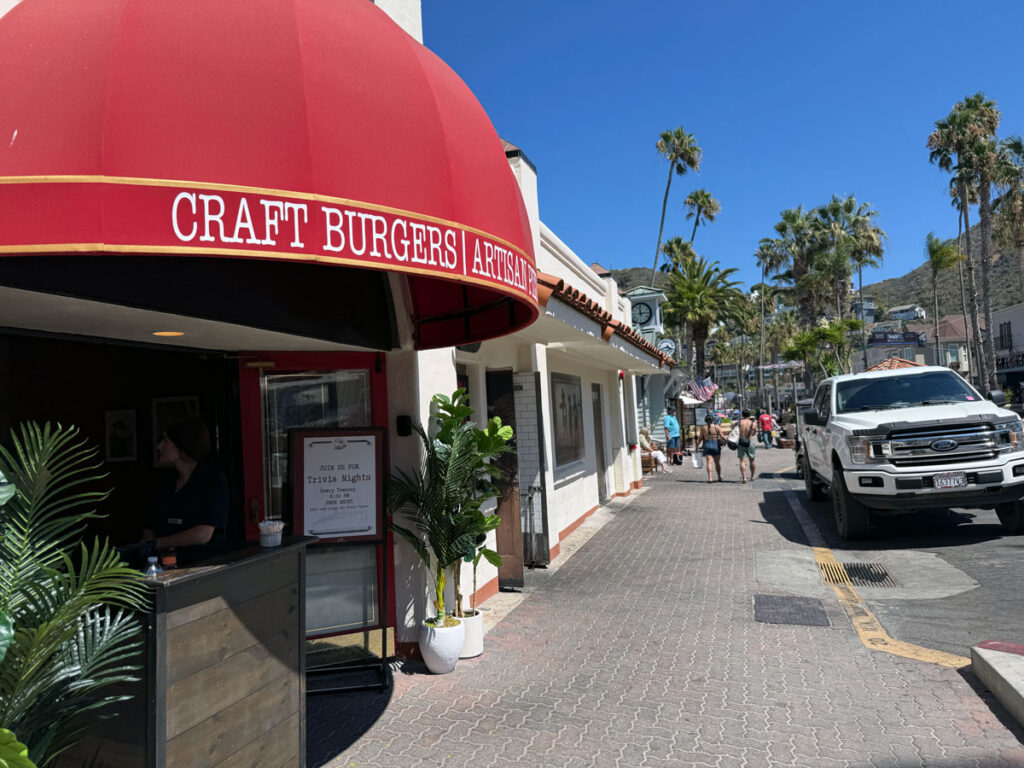
A basket meal (a sandwich or roll plus fries) at a casual harborside spot typically runs $18–28 per person; sit-down seafood dinners with a full bay view climb higher, especially at restaurants directly on Crescent Avenue. Ice cream stands and quick-service counters near the pier are the better bet for a cheap snack between activities.
Festivals and Events Worth Planning Around
Catalina runs a genuinely busy annual events calendar, mostly centered on Avalon and the more remote village of Two Harbors on the island’s west end.
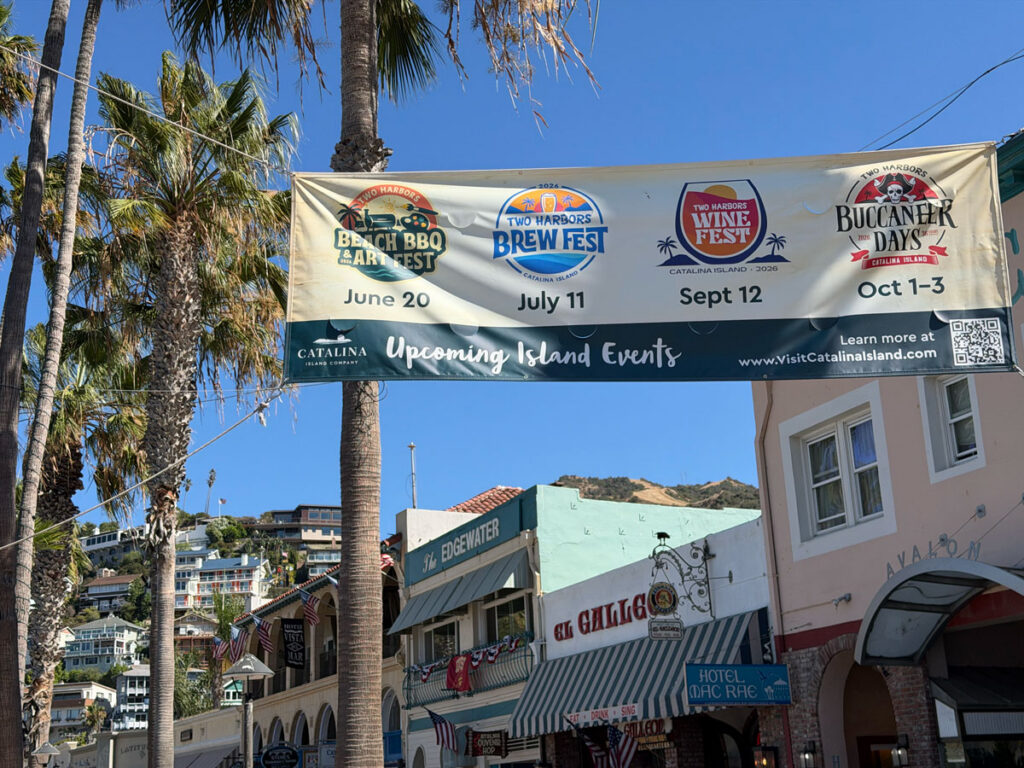
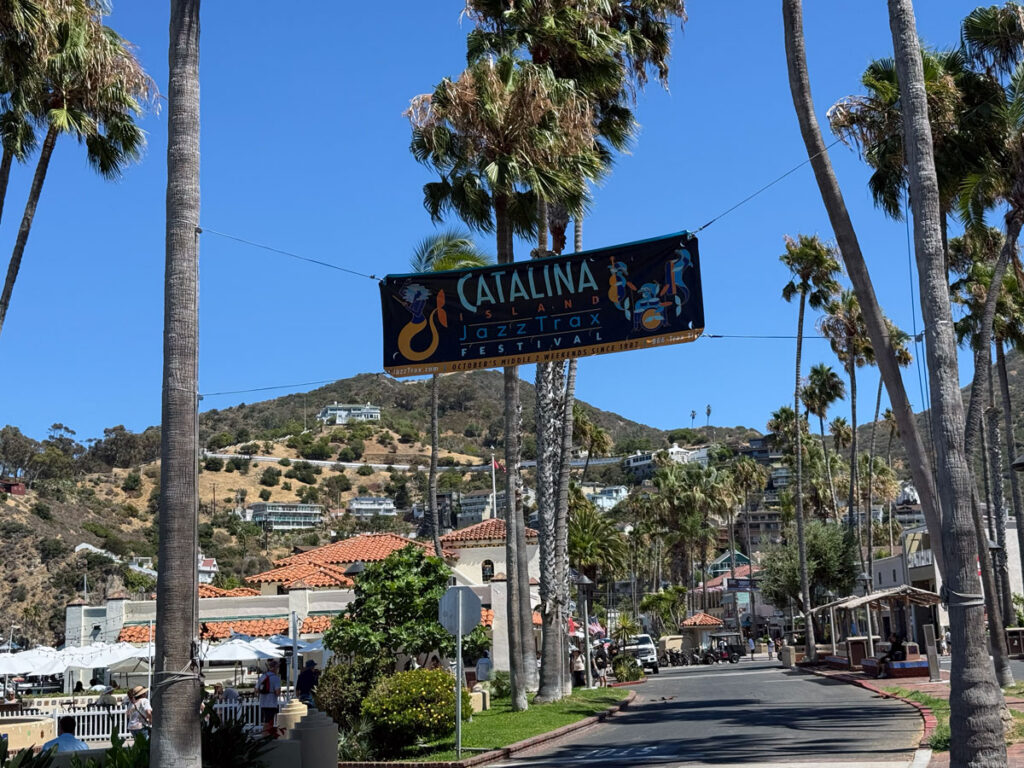
The Catalina Island JazzTrax Festival, running since 1987, takes over the Casino Ballroom on the middle two weekends of October each year with smooth jazz performances — one of the bigger draws for a fall trip. Two Harbors runs its own separate calendar of smaller festivals throughout the year, including a Beach BBQ & Art Fest, a Brew Fest, a Wine Fest, and Buccaneer Days, a pirate-themed weekend in early October.
Tip:
If a festival weekend lines up with your trip, book your ferry and any lodging well in advance — both the boats and the town’s limited hotel rooms sell out fast around JazzTrax and other major events.
Shopping and Souvenirs
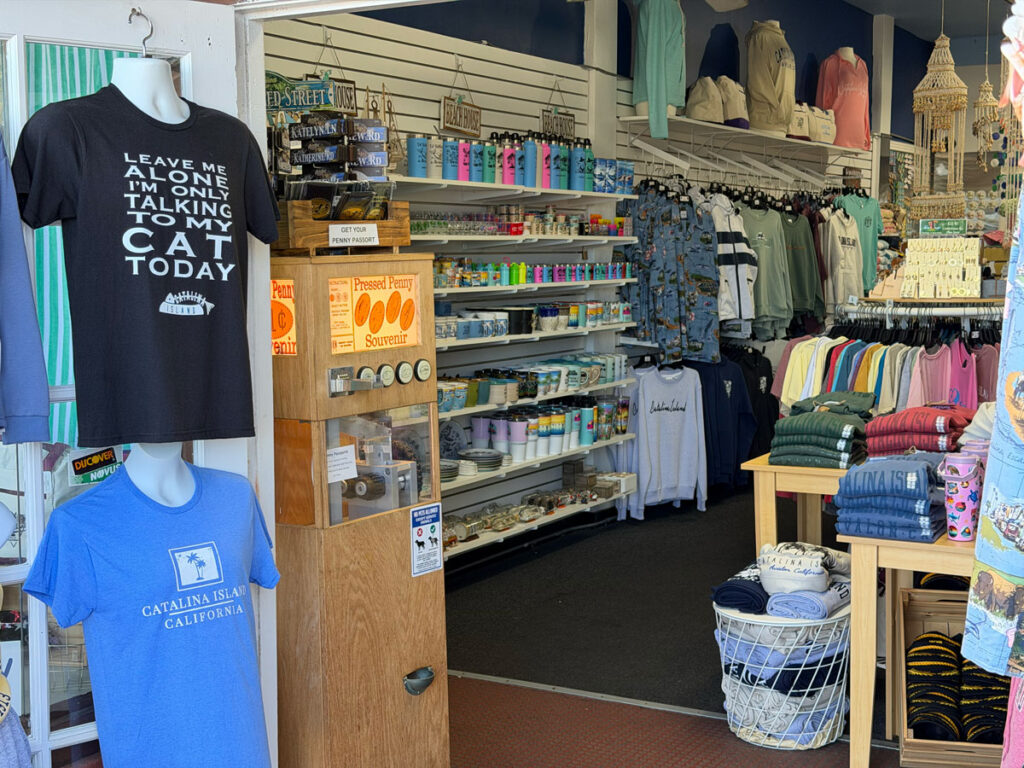
Crescent Avenue and the streets just behind it are lined with gift shops selling the usual island souvenirs — T-shirts, magnets, and beachwear — alongside a genuinely old-school touch: several shops still have working pressed-penny machines, a classic, cheap souvenir that costs just a penny plus a small machine fee.
Budget tip:
A pressed penny or a postcard is a two-dollar souvenir that packs flat, versus a $30 branded hoodie. Save the bigger purchase for something you’ll actually use.
Sample Budget Day Trip to Catalina Island
- MORNING: Catch an early Catalina Express sailing from Long Beach or San Pedro — about $42–45 one-way
- MIDDAY: Walk Crescent Avenue, browse the shops, get a pressed penny — free to a few dollars
- EARLY AFTERNOON: Tour the Catalina Casino, or rent snorkel gear and get in the water near the pier — $20–40 depending on activity
- AFTERNOON: Rent a golf cart for an hour to see the hillside viewpoints above the harbor — around $65–70
- EVENING: A casual seafood basket dinner on the waterfront before the return ferry — $20–30 per person
Read more: Everything Worth Doing at Pixar Pier (And What You Can Skip)
Money-Saving Tips for Catalina Island
- Book the ferry as early as you can. Fares climb and popular sailing times sell out, especially in summer and around festival weekends.
- Split a golf cart rental across a group. A 4- or 6-passenger cart costs the same whether it’s got one rider or four, so it’s cheapest split among a full group.
- Skip the sit-down waterfront dinner for lunch instead. Many of the same restaurants have lower lunch pricing than dinner, with the same harbor view.
- Bring your own snorkel gear if you have it. Rental gear is convenient but adds up; the harbor’s calm, clear coves don’t require anything technical.
- Consider a weekday trip. Ferries, restaurants, and golf cart rentals are all less crowded outside summer weekends, which can mean shorter waits and more availability without paying more.
Read more: I Stayed at Rosewood Miramar Beach — Here’s What Nobody Tells You
Can you do Catalina Island as a day trip?
Yes, and most visitors do. With an early ferry over and a late-afternoon or evening ferry back, a full day in Avalon covers the Casino, the waterfront, and at least one water activity comfortably.
Is there gambling at the Catalina Casino?
No. Despite the name, the Casino has never been a gambling venue — “casino” is Italian for “gathering place,” and the building has always been a theater and ballroom.
Can you rent a car on Catalina Island?
Not in the traditional sense. Avalon severely restricts full-size vehicles, and there’s a decades-long waiting list for a permit. Golf carts, rented by the hour, are the closest equivalent for visitors.
How much does the Catalina Express ferry cost?
One-way adult fares start around $42, with round-trip tickets (including the island wharfage fee and tax) generally running $85–90, though prices vary by season, route, and how far ahead you book.
What’s the best time of year to visit Catalina Island?
Late spring through early fall offers the calmest seas and warmest weather for swimming and water activities. October brings the JazzTrax Festival and Two Harbors’ Buccaneer Days, along with noticeably smaller crowds than peak summer.