
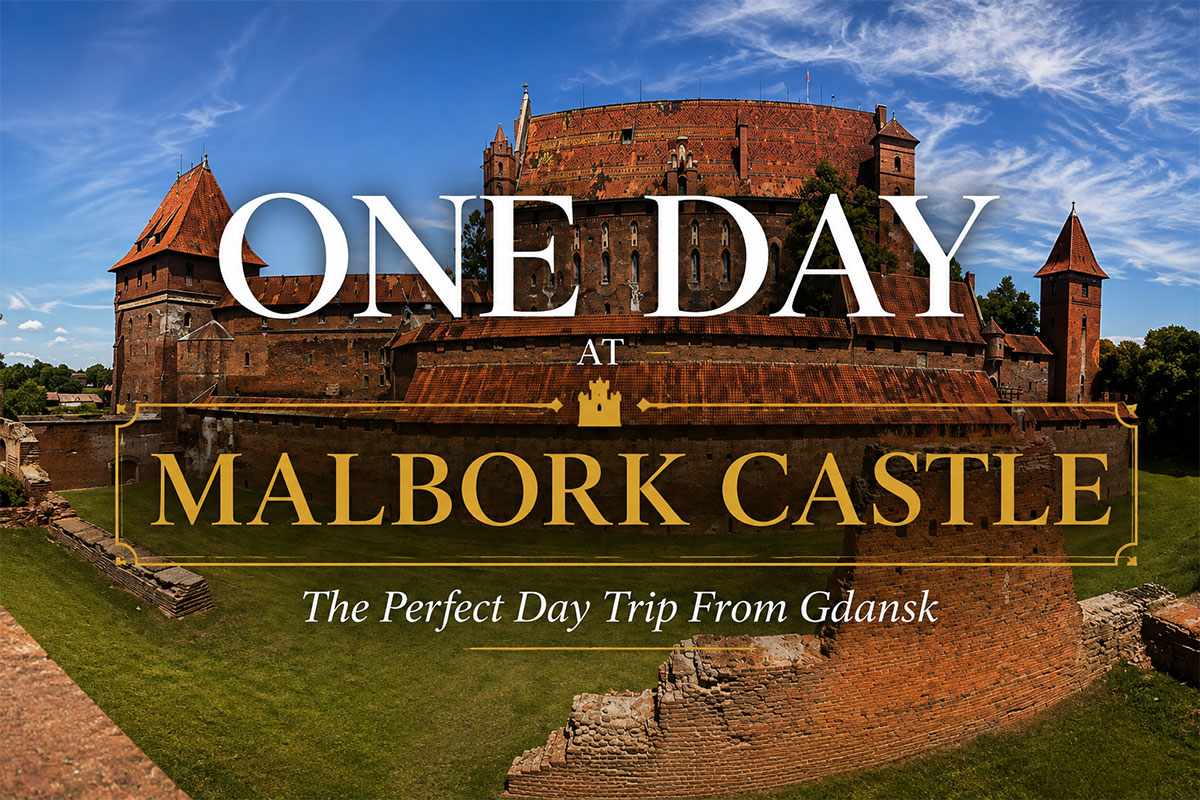
There’s a specific moment that happens to almost everyone who visits Malbork: you round a bend, the castle comes into view across the Nogat River, and your brain briefly refuses to process the scale of it. I’d read the statistics beforehand — largest brick castle in the world, 21 hectares, UNESCO-listed — and none of it prepared me for actually standing in front of it. This is everything I wish I’d known going in, verified against the castle’s own museum sources rather than guessed at.
Quick Facts: Malbork Castle, 2026
SIZE: 21 hectares (52 acres) — the largest castle in the world by land area
BUILT: 1274–1406, by the Teutonic Knights
UNESCO STATUS: World Heritage Site since 1997
STANDARD TICKET: ~70–80 PLN adult, ~60 PLN reduced, includes audioguide
FROM GDAŃSK: ~25–50 minutes by train, roughly 60 km
TIME NEEDED: 3.5–4 hours minimum for the full interior route
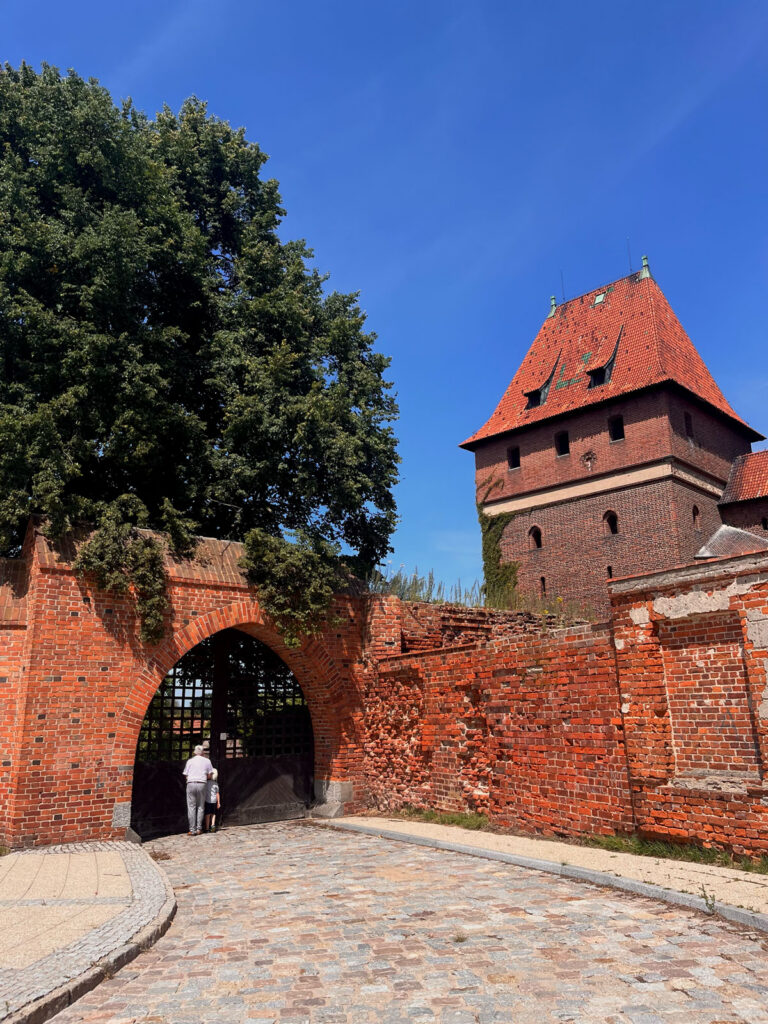
Understanding the Layout: Three Castles in One
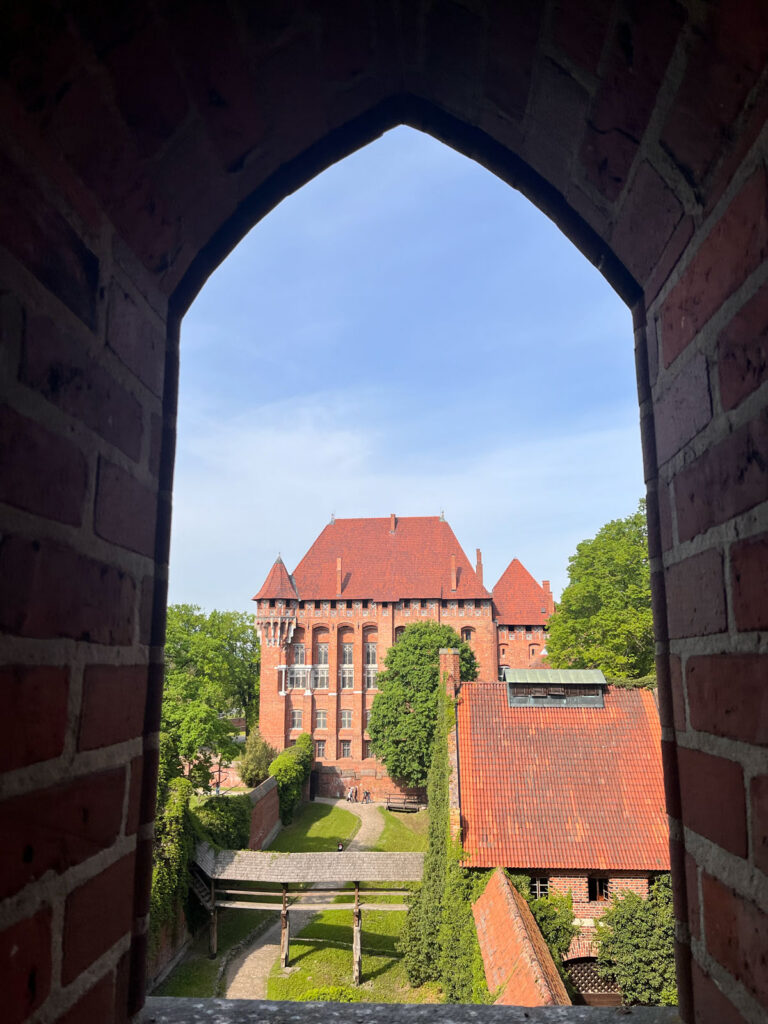
The single most useful thing to know before you arrive is that Malbork isn’t one building — it’s three concentric fortified zones, each added as the Order’s needs grew, separated by dry moats and their own gatehouses.
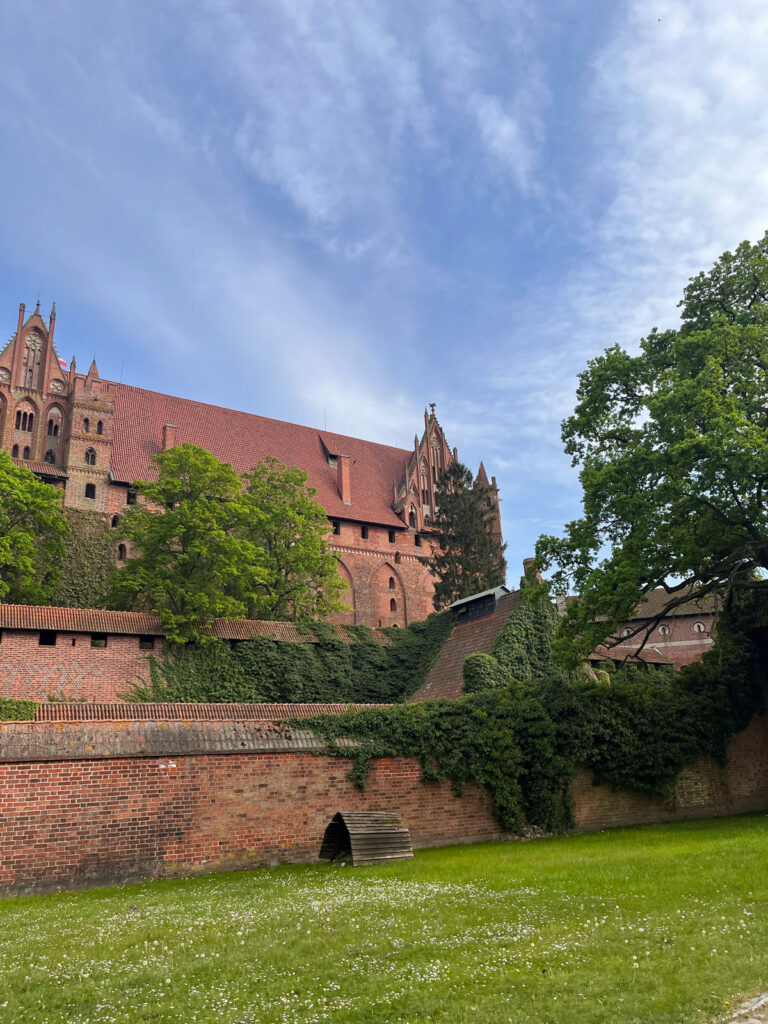
- The High Castle — the oldest, most monastic core, built first and most heavily fortified. This is where you’ll find St. Mary’s Church and the most restricted, defensible spaces.
- The Middle Castle — added as the Order’s power grew, home to the Grand Master’s Palace and the Knights’ Refectory, the most architecturally lavish part of the complex.
- The Low Castle (Outer Bailey) — the outermost, most utilitarian ring, once home to workshops, stables, and infrastructure supporting the knights living inside.
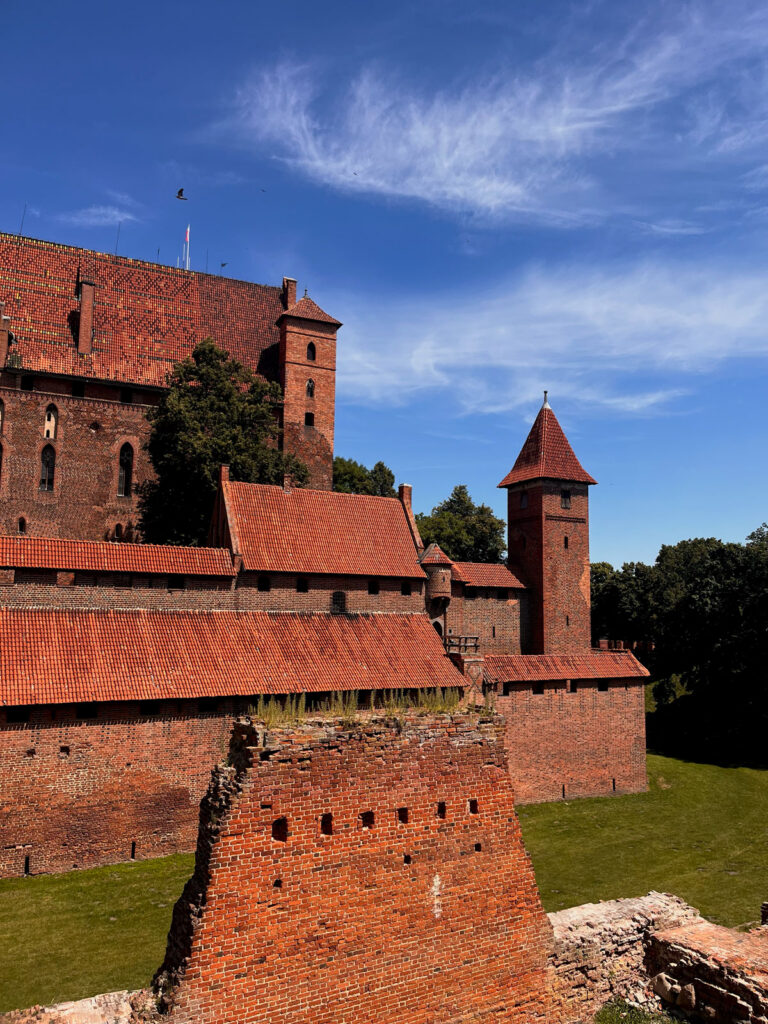
What to See Inside
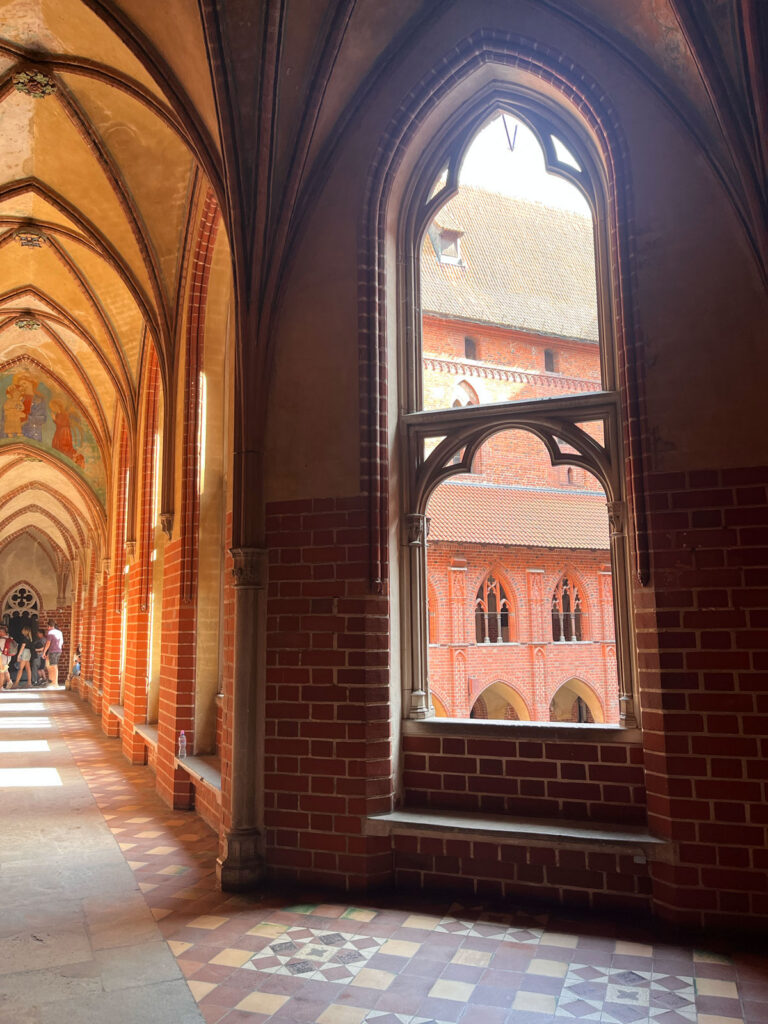
St. Mary’s Church and the Golden Gate
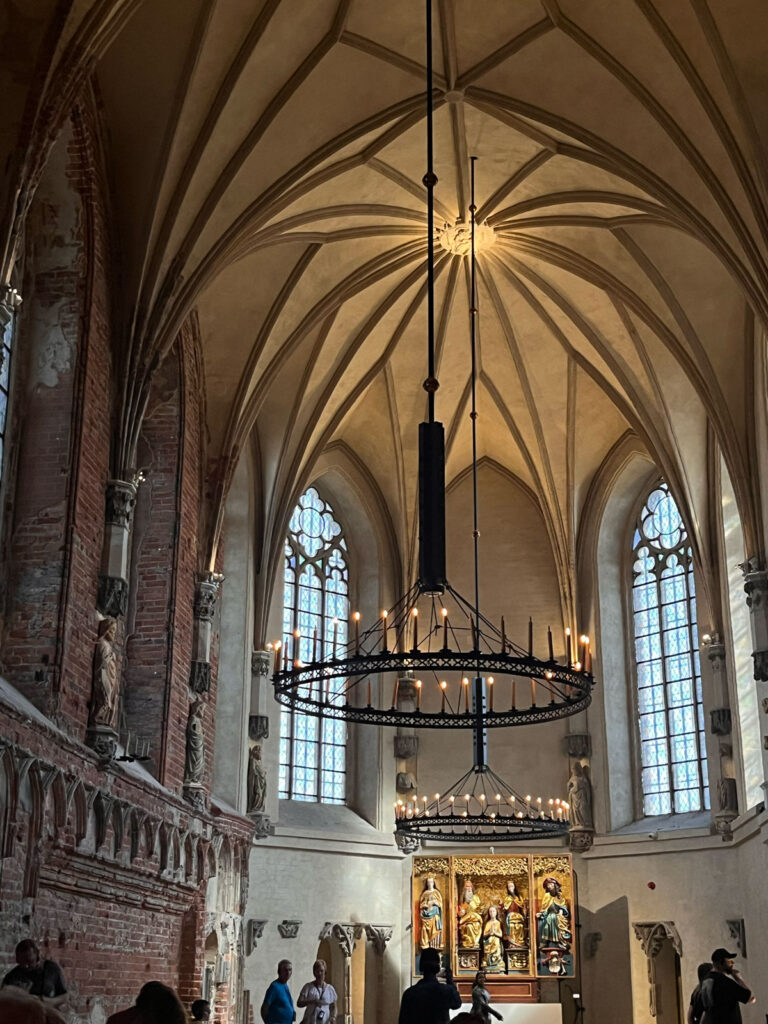
Reached through the ornately decorated Golden Gate, St. Mary’s Church was the spiritual center of the entire complex and the final resting place of several Grand Masters. It was heavily damaged in WWII and has been painstakingly restored, including surviving fresco fragments and the vaulted ceiling that defines the space.
The Grand Master’s Palace
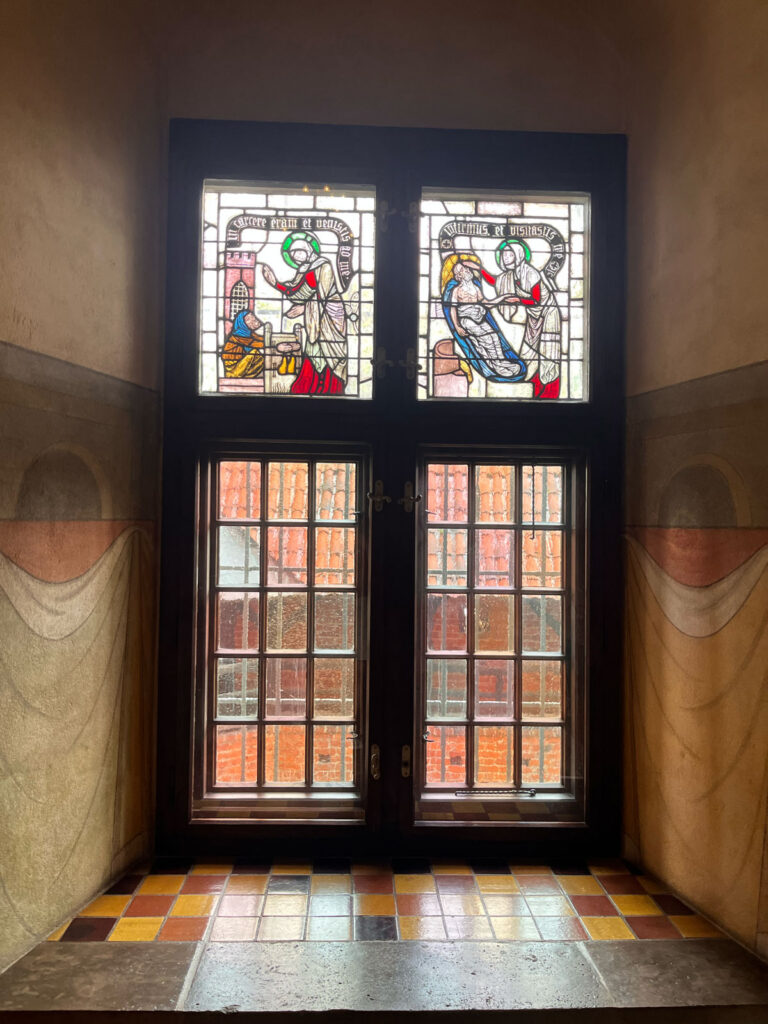
Widely considered the most architecturally rich part of the castle, the Grand Master’s Palace houses the Summer Refectory — famous for its vaulted ceiling rising from a single central column — and the vast Knights’ Refectory next door, a 450-square-meter hall built to feed the Order’s brothers. Even in a castle full of impressive rooms, this is the one most guides point to first.
The Amber Museum
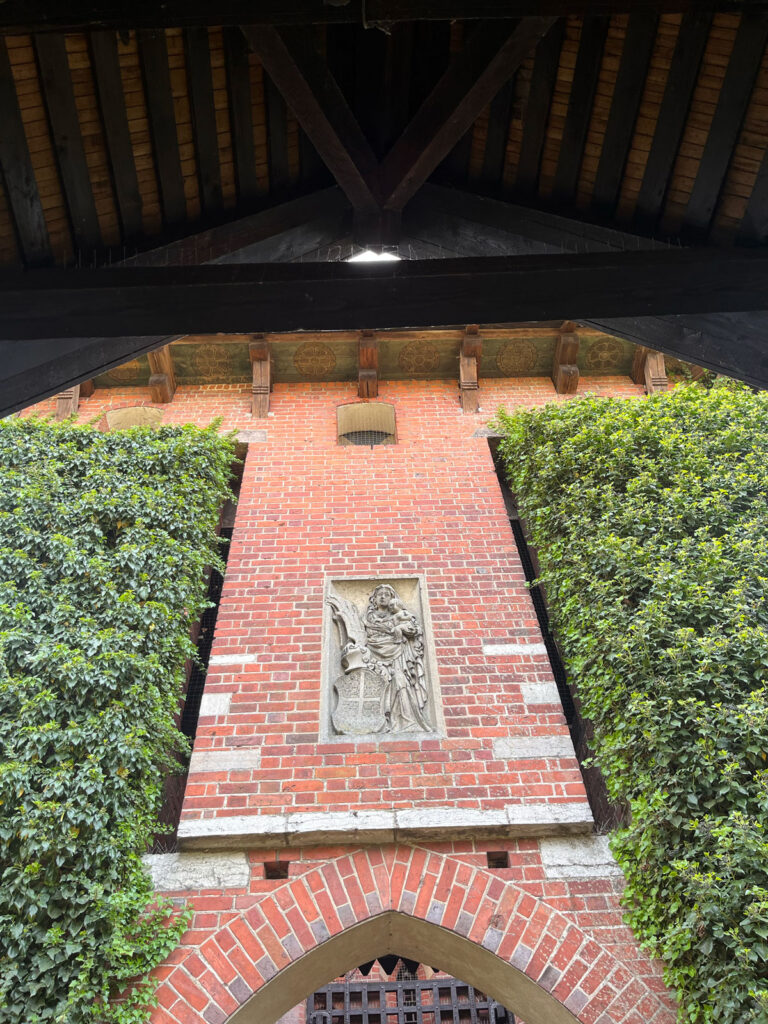
Given that the Teutonic Order once controlled the region’s amber trade, it’s fitting that Malbork now houses one of the largest amber collections in the world. There’s a dark bit of irony in its location, too — part of the exhibition sits inside the Foregate, a building that once served as the castle’s prison and torture chamber, so amber jewelry and grim medieval punishment history share the same walls.
The Gdanisko Tower and Other Curiosities
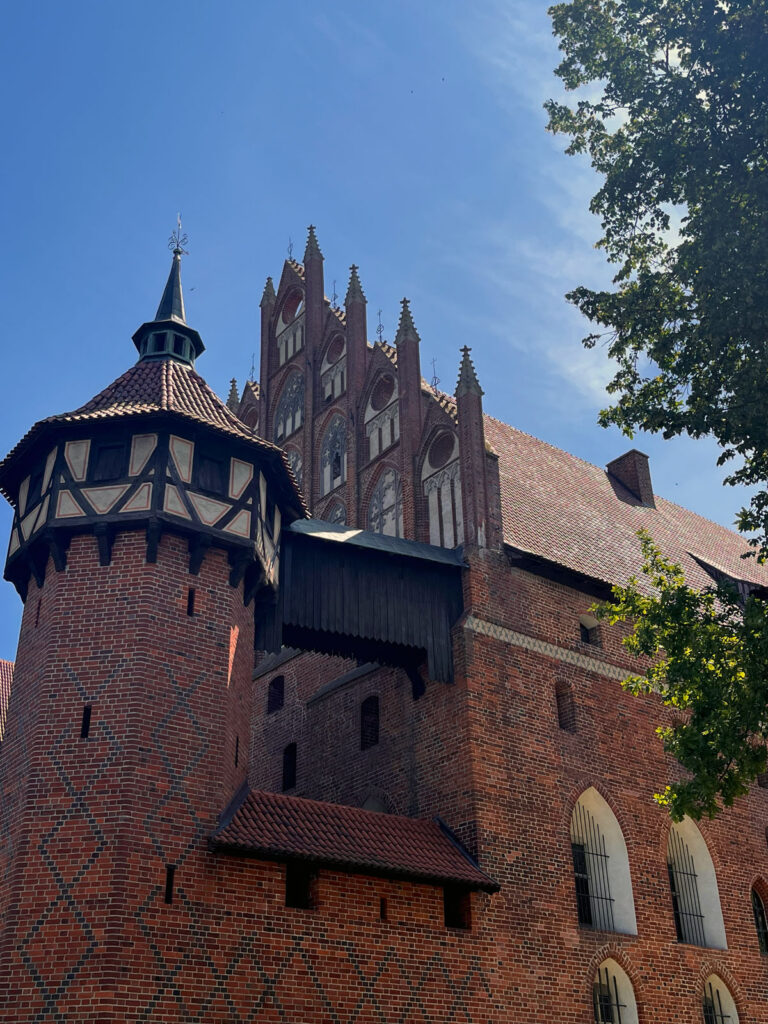
One of the odder highlights is the Gdanisko, a freestanding medieval tower connected to the main castle by an elevated covered passage — it served as the castle’s toilet tower, deliberately built apart from the main structure and elevated on arcades so waste would be carried away by the water below. It’s a small, strange detail that says a lot about how seriously the Order thought through daily castle logistics.
WORTH KNOWING
Malbork has its share of dark medieval history worked into the guided tour — including the 1330 assassination of Grand Master Werner von Orseln inside the castle itself, murdered by one of his own knights. Guides tend to bring this up around the Golden Gate and the Grand Master’s private chambers, so listen closely if that kind of history interests you.
Getting There from Gdańsk
Malbork sits about 60 kilometers southeast of Gdańsk, and the train is genuinely the easiest way to get there. PKP Intercity trains run from Gdańsk Główny directly to Malbork in roughly 25 to 40 minutes, departing every 30 to 60 minutes through the day. Cheaper Regio trains also run the route, but they stop more often and can take over an hour — worth it only if you’re specifically trying to save a few złoty.
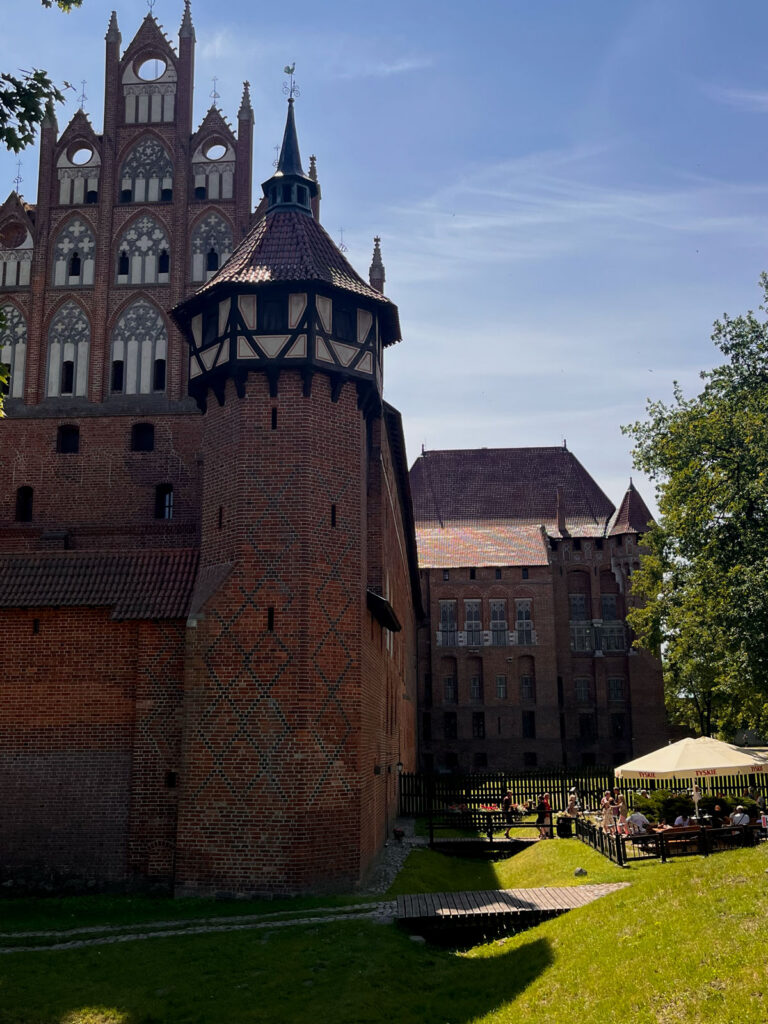
From Malbork’s train station, it’s a flat, signposted walk of about 15 to 20 minutes (roughly 1.7 km) to the castle entrance, or a short taxi ride of about 5 minutes for around 15 PLN. Driving is an option too, with paid parking near the entrance, but between summer traffic and limited parking, most Gdańsk-based visitors find the train less stressful.
Basing yourself in Gdańsk for the trip?
Malbork works well as a day trip if you’re staying in Gdańsk’s Old Town, close to the train station and an easy morning departure. For USA travelers: Get Up to 20% off with a Getaway Deal at Booking.com, which is where I locked in my own Gdańsk stay before heading out to Malbork for the day.
See Hotel Deals →
Read more: Gdansk Travel Guide 2026: What to See, Eat, and Skip
Tickets and Routes, Explained
Malbork’s ticket structure trips a lot of first-time visitors up, so here’s the breakdown:
- Historical Castle Route (Standard Route) — the main visitor experience, covering the High Castle, Middle Castle, Grand Master’s Palace, and St. Mary’s Church. Runs about 3.5–4 hours and costs roughly 70–80 PLN for adults, 60 PLN reduced, including an audioguide (available in around a dozen languages) or a scheduled Polish-language guided group.
- Full Route — everything in the Standard Route plus the Low Castle’s Outer Bailey exhibitions and a deeper look at the amber collection, running 5–6 hours total.
- Castle Grounds Route — a cheaper, shorter option covering the outer courtyards and gate passages without full interior access, useful if you’re tight on time.
- Free Mondays — the castle grounds (not the interiors) are free to visit on Mondays; pick up a free pass at the ticket office.
- Night tours — available Wednesday through Saturday evenings between May and August, covering the grounds, cloisters, and select interiors after dark, for around 70 PLN.
HONEST TAKE
Malbork draws 700,000–800,000 visitors a year, and ticket lines can stretch to an hour or more by midday in summer. Booking online in advance and arriving right at opening time isn’t just a nice-to-have here — it’s the difference between a relaxed morning and losing an hour of your day standing in a queue.
Tips to Save Money and Skip the Crowds
- Book tickets online in advance. It guarantees your entry time and skips the ticket-counter line entirely.
- Arrive right at opening, or go in late afternoon. Both windows see dramatically shorter lines than the 10 a.m.–2 p.m. stretch.
- Take the train, not a private transfer, if you’re solo or a couple. A round-trip PKP Intercity ticket runs a fraction of the cost of a private driver, and it’s barely slower door to door.
- Skip the Full Route if Malbork is just one stop in a bigger Gdańsk day. The Standard Route covers the headline rooms in about half the time.
- Pack a printed or downloaded ticket confirmation. Connectivity near the ticket office isn’t always reliable enough to pull up a mobile ticket on demand.
Read more: First Time in Ljubljana? Everything You Need to Know Before You Go
Quick Price Recap
| Item | Price (PLN / USD approx.) |
|---|---|
| PKP Intercity train, Gdańsk–Malbork return | ~€6–9 / ~$7–10 |
| Standard (Historical) Route, adult | ~70–80 PLN / ~$18–20 |
| Standard Route, reduced (student/senior) | ~60 PLN / ~$15 |
| Taxi, Malbork station to castle | ~15 PLN / ~$5 |
| Night tour (May–Aug) | ~70 PLN / ~$18 |
| Castle Grounds Route (Mondays) | Free |
Malbork isn’t a castle you tour so much as a castle you walk through, slowly, trying to keep pace with how much history is packed into 21 hectares of brick. Between the scale, the amber collection sitting inside a former torture chamber, and a toilet tower that somehow survived 700 years of history intact, it’s the rare “largest in the world” attraction that actually earns the superlative.