Milan gets treated as a layover city by a lot of American travelers — a place you pass through on the way to Lake Como or the Amalfi Coast. That’s a mistake. The historic center is genuinely walkable, the Duomo alone is worth building a day around, and the city does old-world elegance (marble arcades, 200-year-old pastry shops, gold leaf everywhere) without the crowds of Rome or Florence.
Milan at a Glance
- Best for: a full day, ideally two — the historic center alone easily fills 6–8 hours
- Where it happens: the compact zone between the Duomo, Piazza della Scala, and the Quadrilatero della Moda (fashion quarter) — almost all walkable
- Currency: Euro (EUR). As of early August 2026, $1 USD ≈ €0.87, or roughly €1 = $1.15
- Realistic budget: $25–60 per person for a cathedral ticket, a coffee or gelato stop, and a bit of window shopping
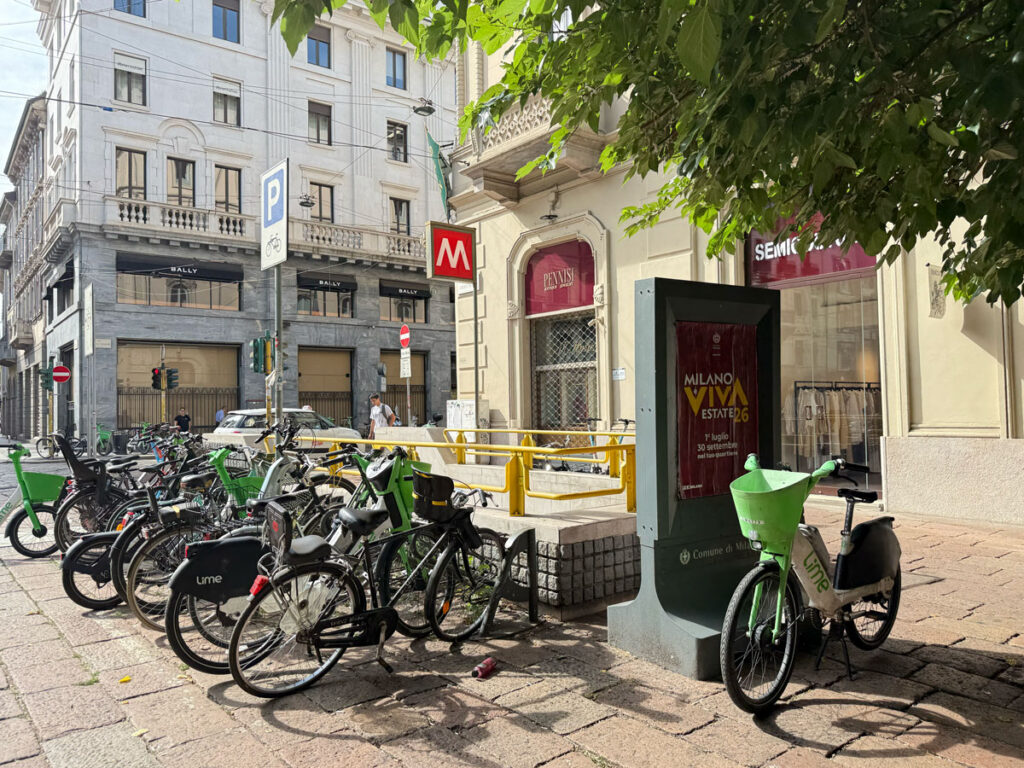
- Getting around: the ATM Milan metro (yellow M3, red M1) connects the Duomo, Montenapoleone, and Cordusio stops directly — a single ride is about $2.40
Start at the Duomo di Milano
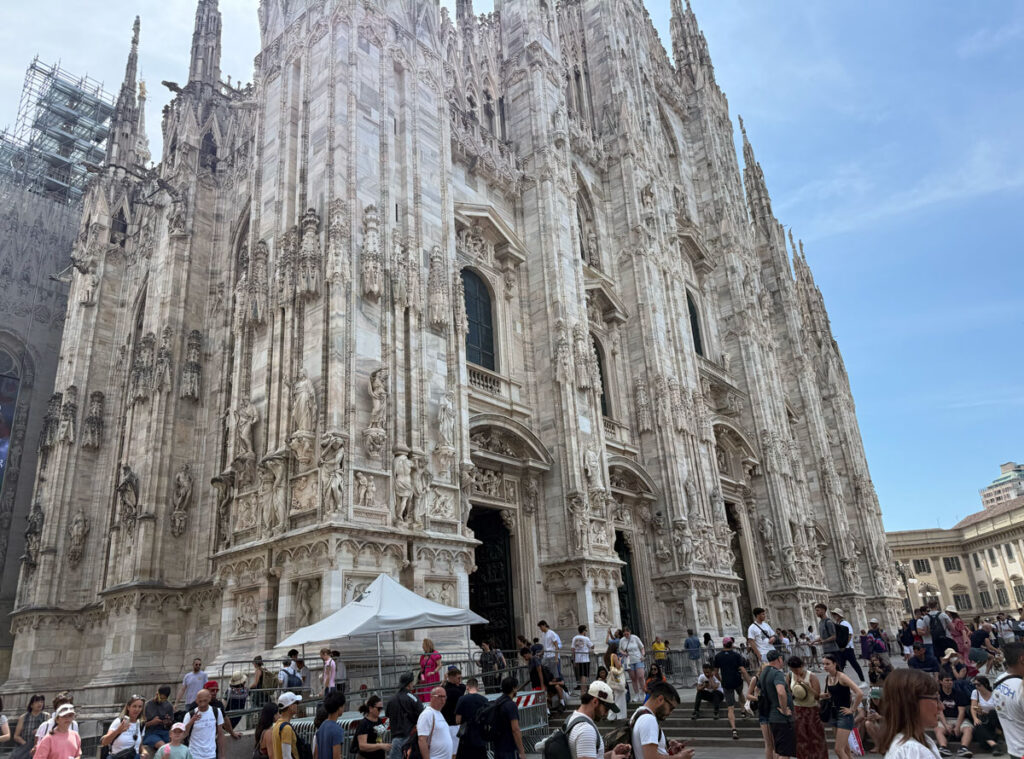
There’s no easing into Milan — the cathedral hits you the moment you step out of the Duomo metro stop. Construction began in 1386 and technically never really stopped (they’re still restoring sections of the facade today), which makes it one of the largest Gothic cathedrals in the world and the only major cathedral anywhere with a fully walkable marble rooftop.
Duomo Tickets — What It Actually Costs
- Cathedral interior only: about €10 (roughly $11.50)
- Rooftop terraces, on foot: about €10 (roughly $11.50)
- Rooftop terraces, by lift: about €14–15 (roughly $16–17)
- Combo ticket (cathedral + terraces + Duomo Museum): roughly €22–26 depending on stairs vs. lift (about $25–30)
- Hours: cathedral open daily 9am–7pm; terraces 9am–7pm, last entry 6:10pm
Tip:
Book your rooftop slot online before you go. Time-slot tickets are mandatory for the terraces, and walk-up security lines grow fast after mid-morning. If your legs are up for 250-plus steps, the stairs option saves you $5–6 over the lift.
Read more: French Riviera Vacations with Expedia
Up Close: What the Duomo Rooftop and Interior Actually Look Like
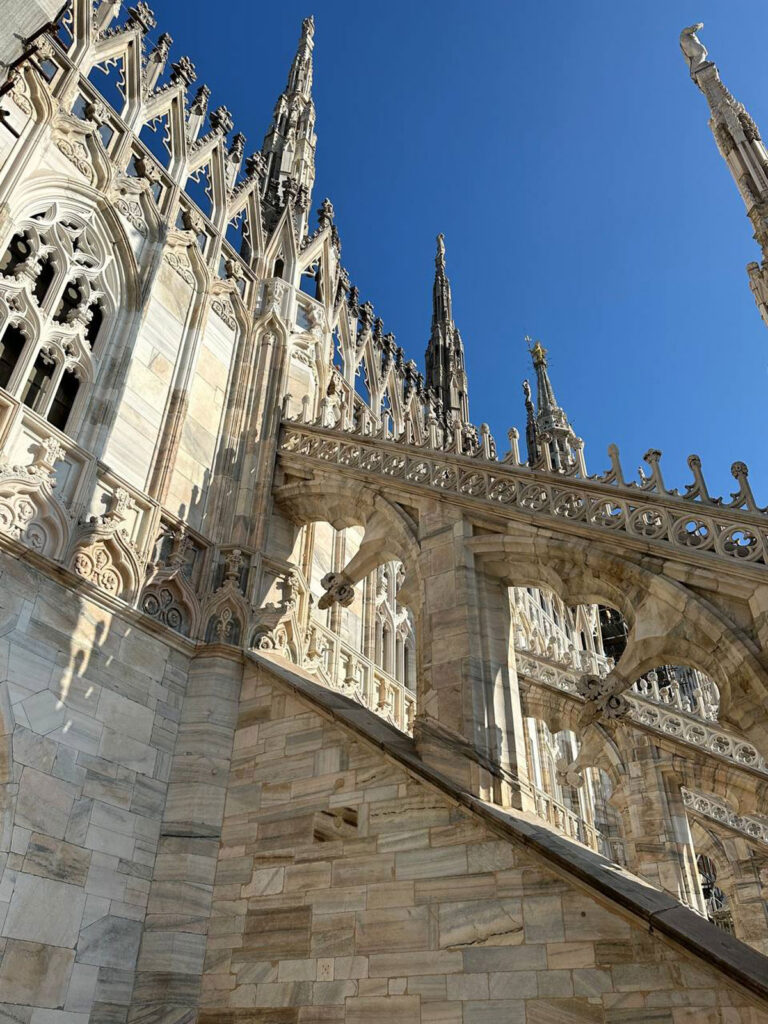
Photos from the piazza don’t really prepare you for the rooftop. Once you’re up on the terraces, you’re walking at eye level with the same forest of spires you were craning your neck to see from the ground — all 135 of them, carved from the same pale Candoglia marble that’s been quarried for the cathedral since construction began in 1386.
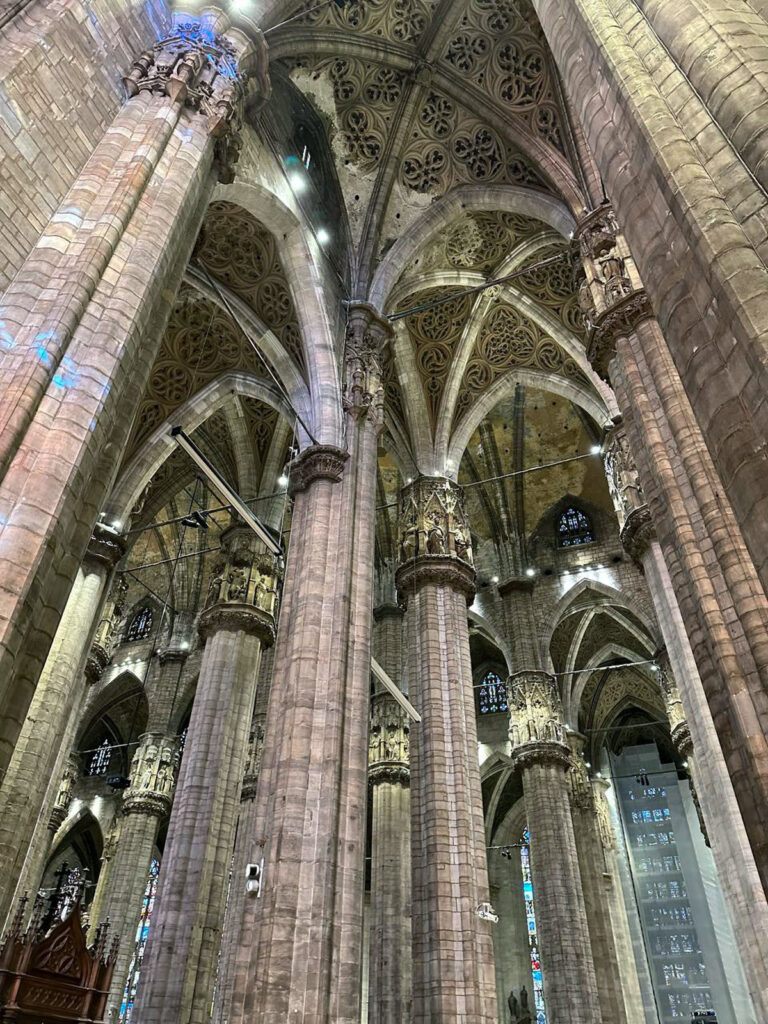
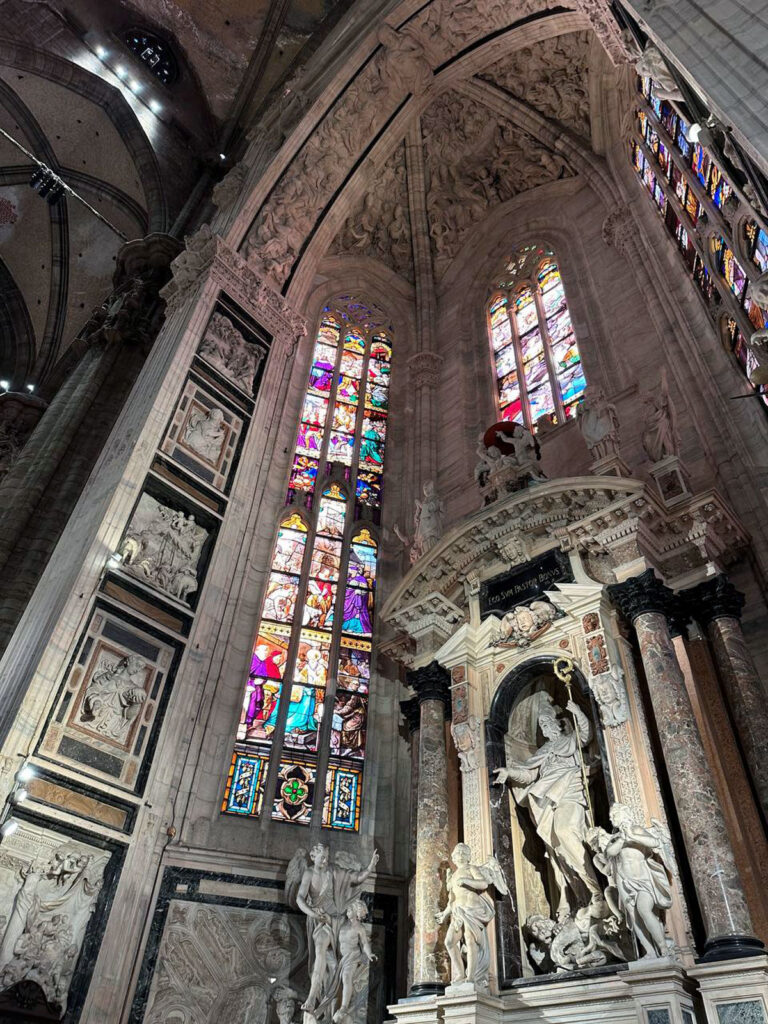
The interior is a different kind of overwhelming. Fifty-two columns, each representing a week of the year, rise 45 meters to support the Gothic vaulting, and the cathedral holds roughly 3,400 statues in total between the exterior and interior — more than any other building on earth, according to most counts. The stained glass alone covers more than 1,800 square meters, with some windows dating back to the early 1400s.
Read more: Gdansk Travel Guide 2026: What to See, Eat, and Skip
Tip:
Midday light is genuinely the best time to see the stained glass — the sun hits the windows directly and lights up colors that look flat and dark in early morning or late afternoon photos.
The Bronze King on Horseback
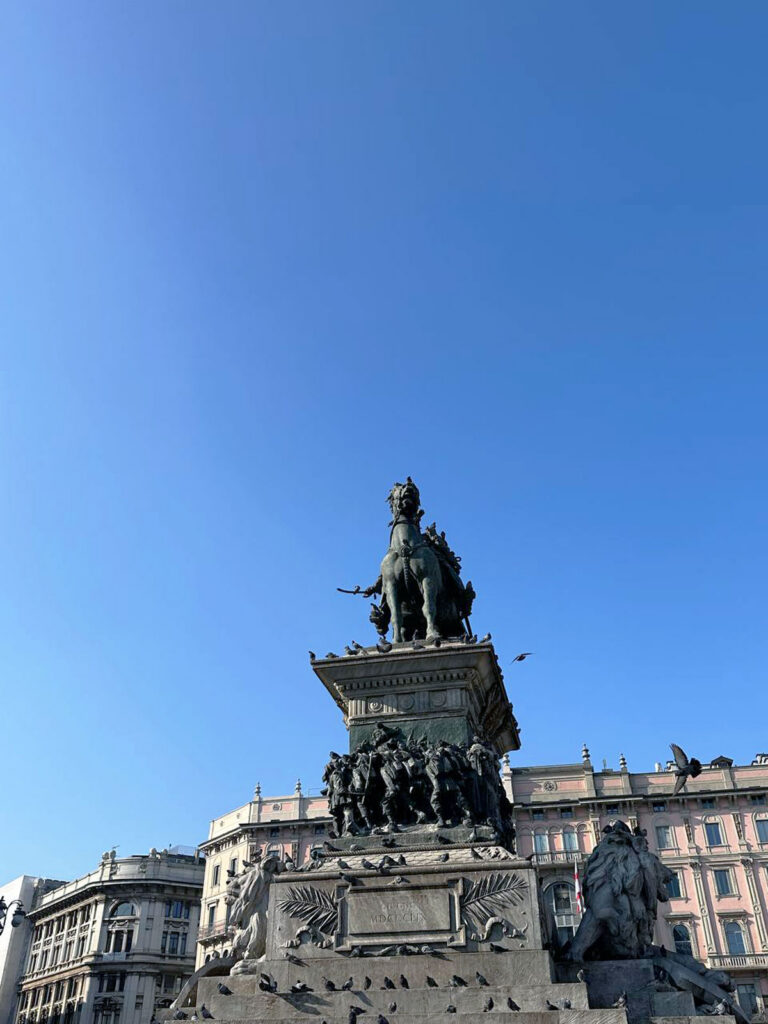
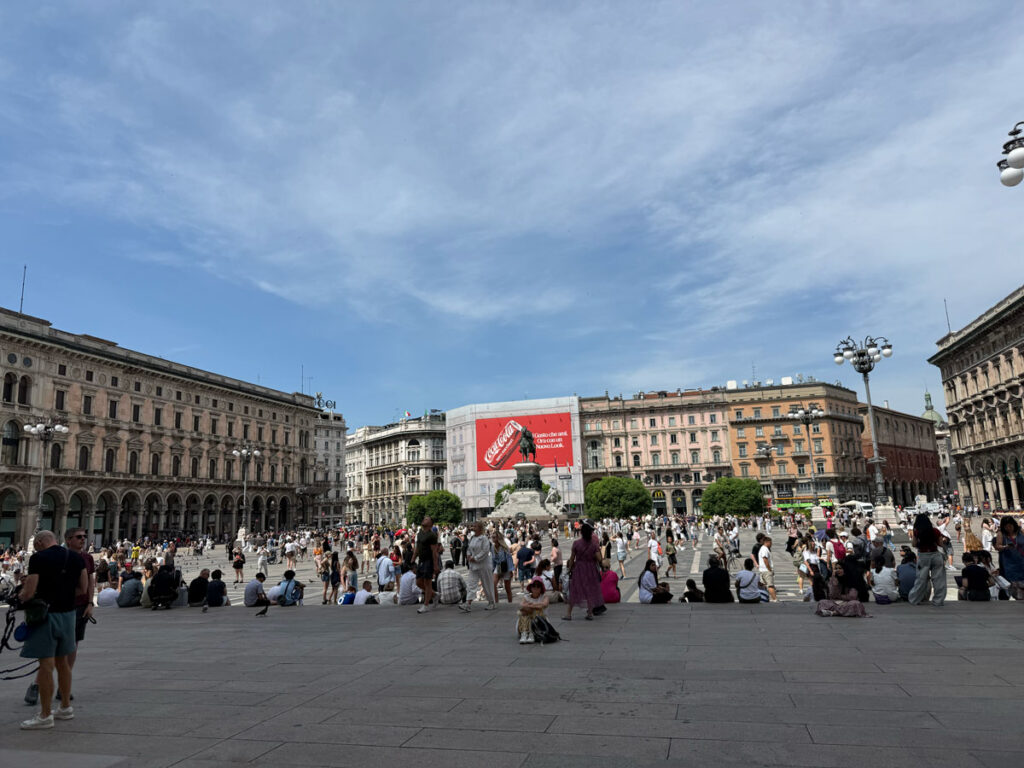
Right in the middle of Piazza del Duomo, easy to walk past without registering what it actually depicts, is the equestrian monument to Vittorio Emanuele II, Italy’s first king after unification. Sculptor Ercole Rosa was commissioned to build it in 1878 by King Umberto I, honoring his father, but Rosa died in 1893 before finishing it — the Barzaghi brothers completed the casting under sculptor Ettore Ferrari, and the monument was finally unveiled on June 24, 1896. The king is shown reining in his horse at the Battle of San Martino in 1859, and two marble lions flank the base, one with a paw resting on a plaque reading “Roma,” the other “Milano.”
Read more: First Time in Ljubljana? Everything You Need to Know Before You Go
Walk Through the Galleria Vittorio Emanuele II
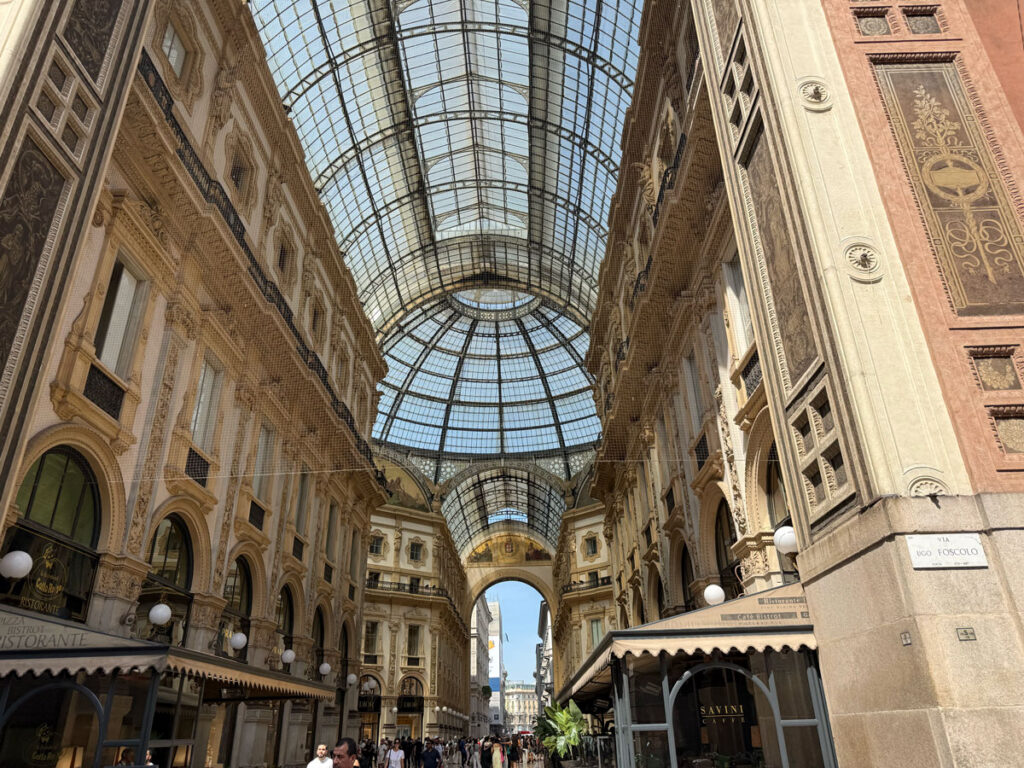
Right off the Duomo square is the covered arcade Milanese call “il salotto di Milano” — the city’s drawing room. The Galleria Vittorio Emanuele II was designed by architect Giuseppe Mengoni and built between 1865 and 1877, and it’s arguably the most beautiful free interior you can walk into anywhere in Italy. Tragically, Mengoni fell to his death from the scaffolding just days before the official opening.
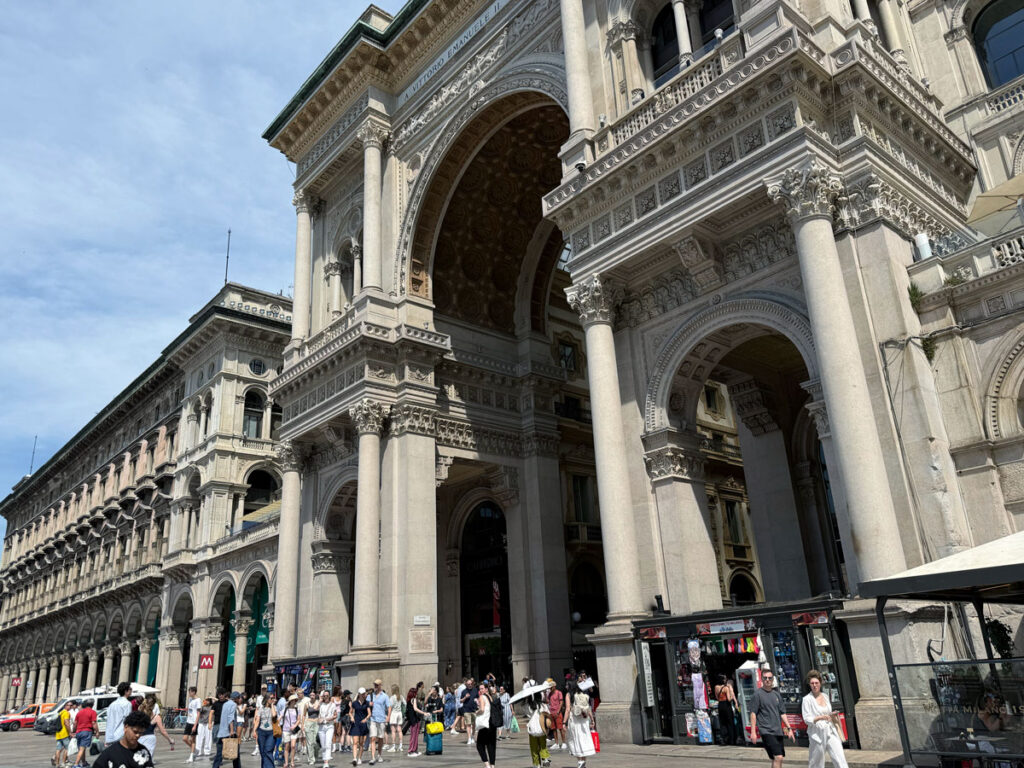
Look down as you cross the central octagon and you’ll find a floor mosaic of a bull, representing Turin’s coat of arms. Local tradition says spinning three times on your right heel over a specific spot brings good luck — the tile has been worn into a visible hollow from generations of visitors doing exactly that. The arcade also houses the original Prada store, which opened here in 1913, plus historic cafes like Camparino, where the Campari spritz was invented.
Tip:
The Galleria is free and open 24 hours — there’s no ticket. Walking through costs nothing, so even a tight budget shouldn’t skip it. Save the sit-down cafes for a splurge; a coffee at the counter elsewhere in the arcade is a fraction of the terrace price.
Duck Into the Quieter Streets Near Piazza della Scala
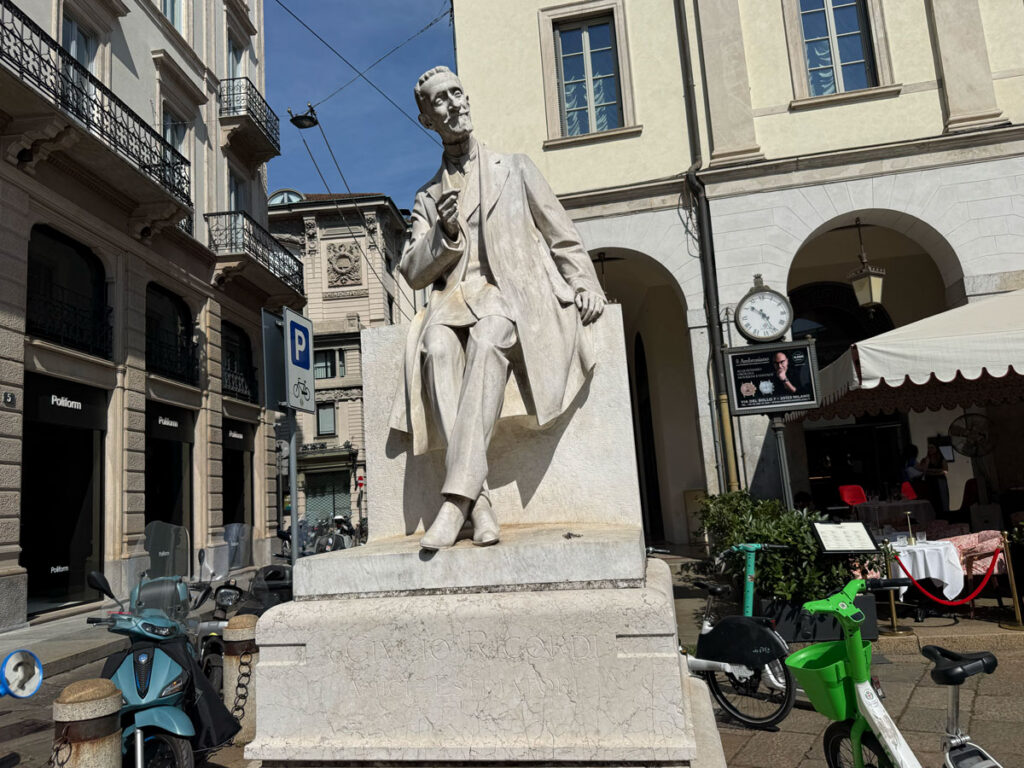
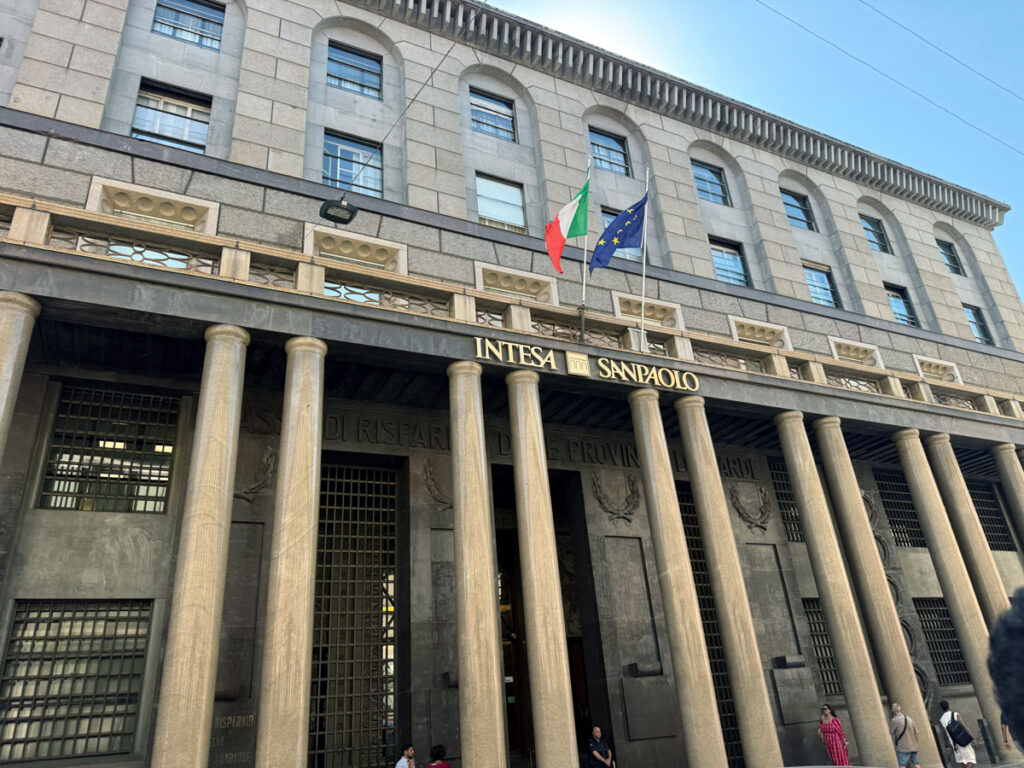
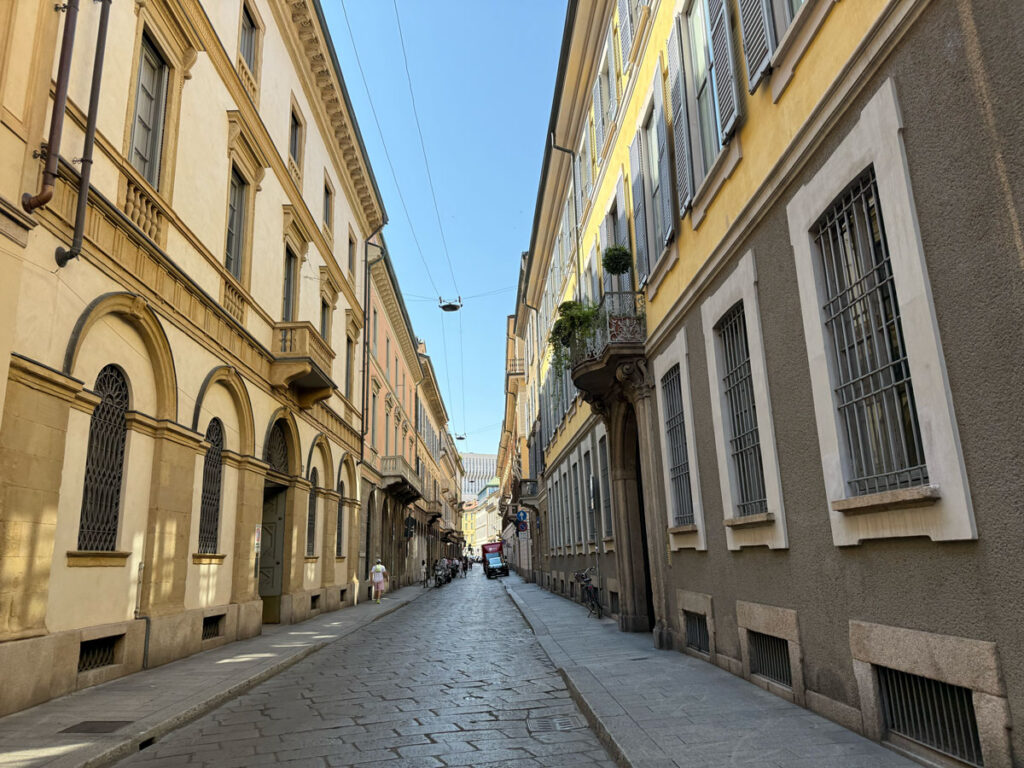
The Galleria’s far end spills out toward Piazza della Scala and Teatro alla Scala, Milan’s famous opera house. It’s worth slowing down here rather than rushing to the next photo stop — this small cluster of streets holds three real, easy-to-miss pieces of Milanese history within a few minutes’ walk of each other.
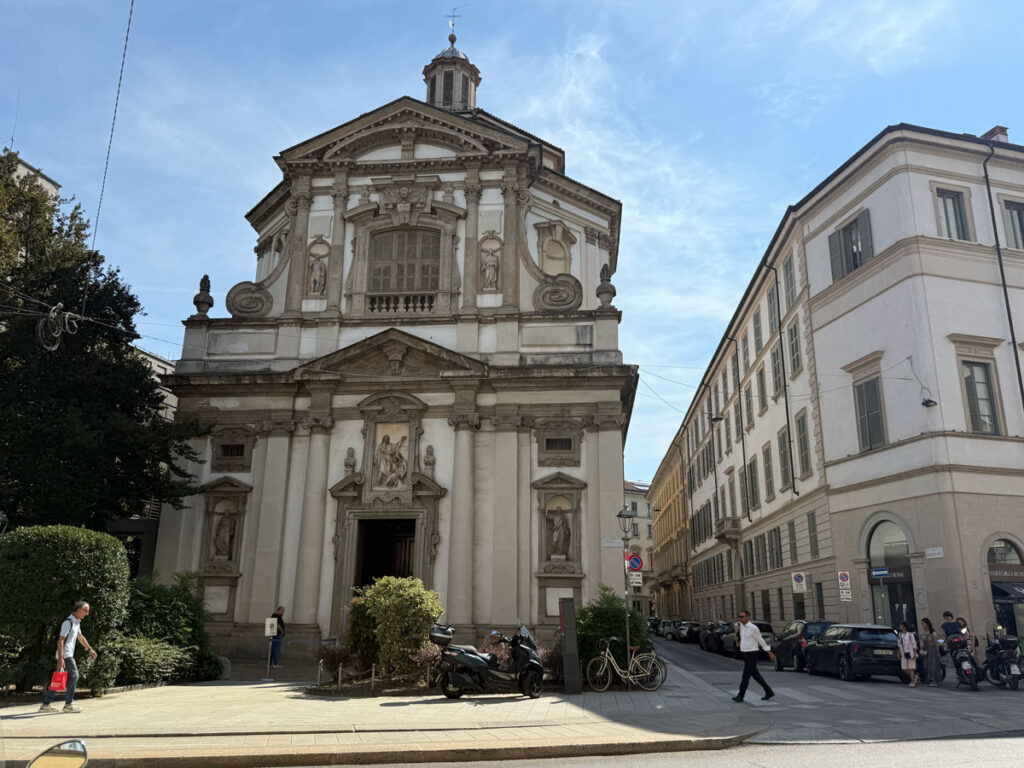
None of this costs anything to see from the street, and it’s a nice contrast to the tourist density around the Duomo — a few minutes of genuinely quiet Milan.
Go Medieval at Piazza Mercanti
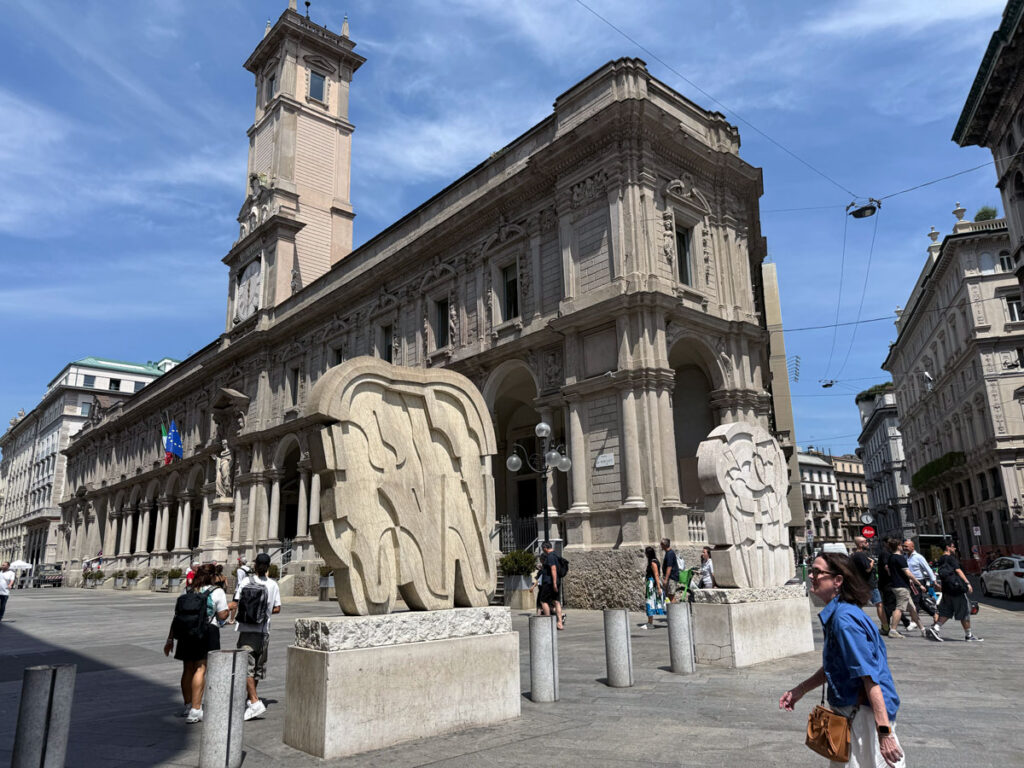
A short walk from the Duomo toward Cordusio metro station, Piazza Mercanti is Milan’s best-preserved medieval square, dating to 1228 when the first stone of the Palazzo della Ragione was laid. For centuries this was the city’s actual town square — city hall, law courts, and a public market all operated here before Piazza del Duomo took over that role.
Tip:
Piazza Mercanti is open 24/7 with no ticket required, and it’s only about a 3-minute walk from the Duomo. Go early morning or on a weekday if you want photos without a crowd — most tour groups skip it entirely in favor of the cathedral.
Where Milan Gets Expensive (in the Best Way): Montenapoleone and Brera
Milan is Italy’s fashion capital, and the Quadrilatero della Moda — the small grid of streets around Via Montenapoleone, Via della Spiga, and Via Sant’Andrea — is the reason. You don’t need to buy anything to enjoy walking it, and a few genuinely historic stops here are worth the detour even on a tight budget.
Cova, Milan’s Oldest Pastry Shop
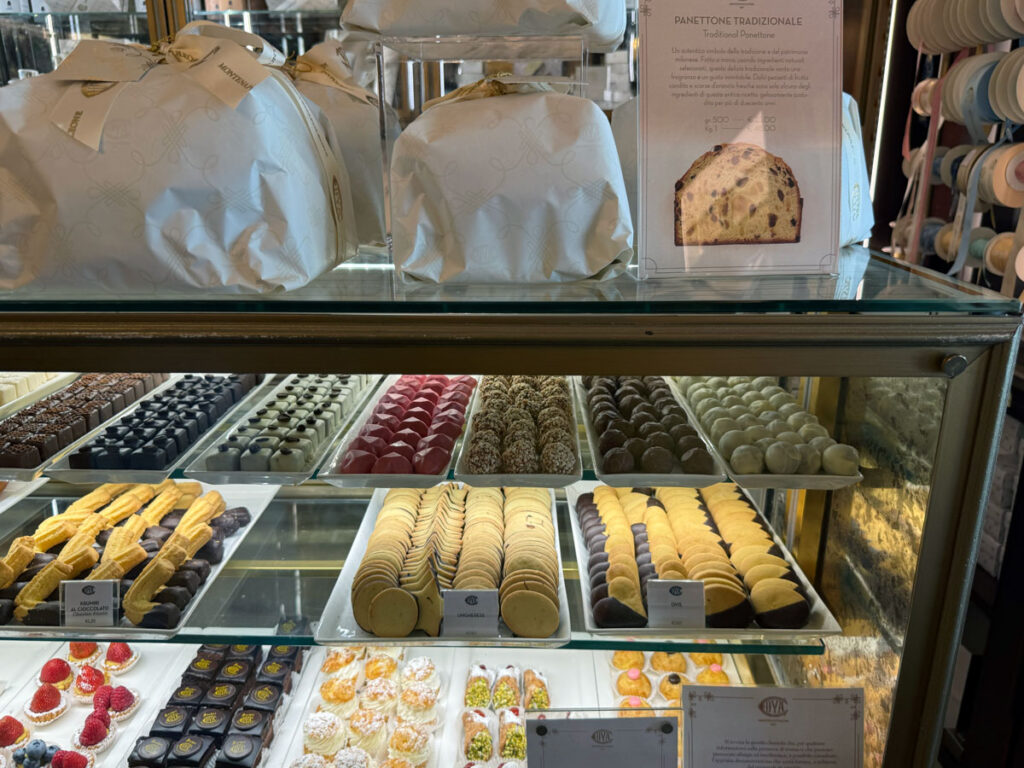
Founded in 1817 by Antonio Cova, a former officer in Napoleon’s army, Pasticceria Cova started life as a literary cafe next to Teatro alla Scala before relocating to Via Montenapoleone in 1950. It’s now part of the LVMH group, but the pastry counter still runs on the same tradition that once drew Giuseppe Verdi and Giacomo Puccini through the door. Panettone, pralines, and delicate French-Italian pastries fill the display case, and a coffee here runs about €5–6 (roughly $6–7).
Carthusia, a Perfume With a 14th-Century Legend
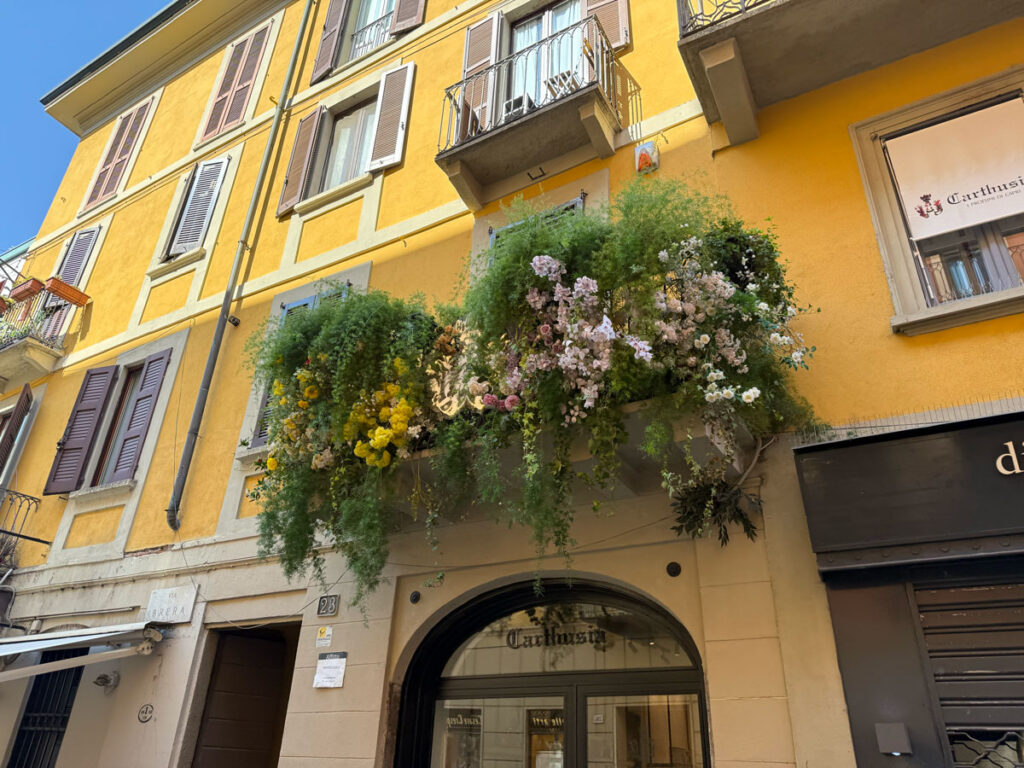
A block or two into the Brera district, keep an eye out for the yellow building on Via Brera marked “Carthusia.” The brand’s origin story goes back to 1380, when the prior of a monastery on the island of Capri supposedly left a bouquet of wildflowers in water for three days for a visiting queen, only to discover the water had taken on an unexplainable fragrance. The formula was rediscovered in 1948 and turned into what’s still billed as the smallest perfume laboratory in the world, based on Capri. This Milan boutique carries the full line of Capri-made fragrances if you want a scent-based souvenir with an actual story behind it.
Read more: Only a Few Hours in Warsaw? Don’t Miss These Places
Bvlgari’s Il Gelato, for a Genuinely Fancy Scoop
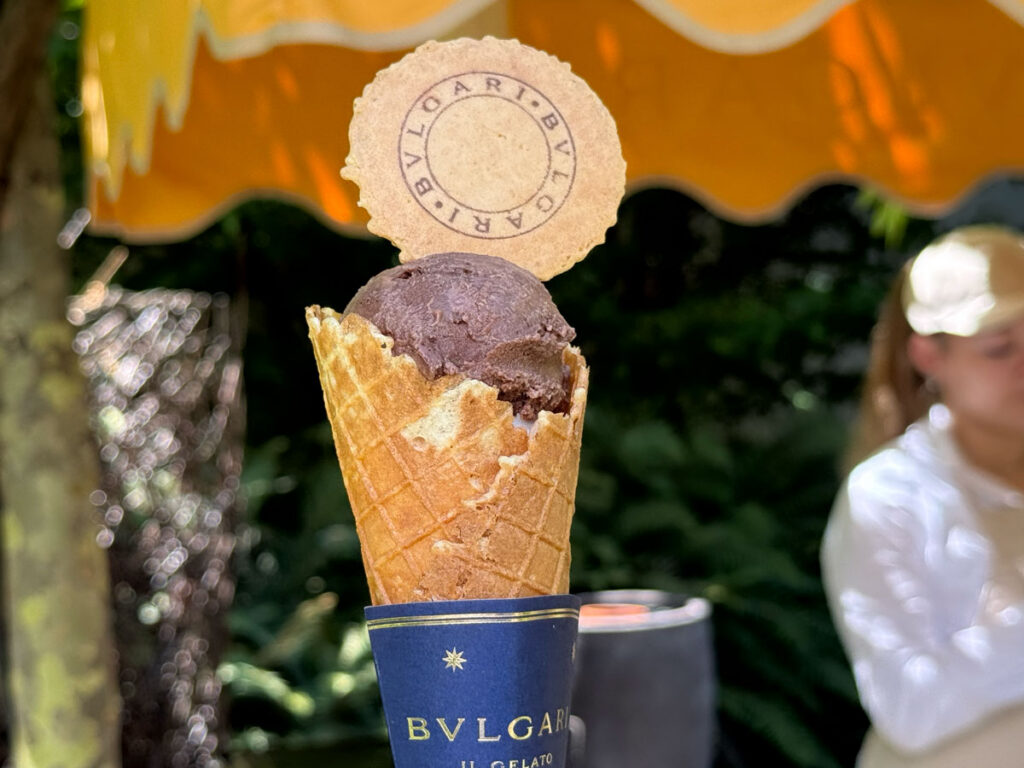
If your walk takes you near the Bvlgari Hotel Milano, tucked down a private street between Via Montenapoleone and the Brera Botanical Garden, keep an eye out for “Il Gelato” — the jeweler-turned-hospitality brand’s own gelato service, served in the hotel’s 4,000-square-meter private garden. It’s a small, indulgent detour rather than a budget stop, but it’s a genuinely different way to experience Milanese gelato culture than a standard scoop shop.
A Sample One-Day Milan Itinerary
- MORNINGArrive at the Duomo early, book the rooftop terrace time slot, and explore the cathedral interior before the piazza fills up
- LATE MORNINGWalk through the Galleria Vittorio Emanuele II, spin on the bull mosaic, continue to Piazza della Scala
- MIDDAYWander Via Verdi past the Chiesa di San Giuseppe and the Ca’ de Sass, then loop back to Piazza Mercanti
- AFTERNOONHead into the Quadrilatero della Moda — window shop Montenapoleone, stop at Cova for coffee and pastry
- LATE AFTERNOONContinue into Brera, browse Via Brera’s boutiques including Carthusia, and grab gelato before heading back
Turning your Milan day into a longer stay? If the Quadrilatero della Moda talks you into an extra night (it happens), it’s worth comparing same-day hotel rates before you book anything at full price. Expedia’s Last-Minute Travel Deals regularly discount Milan hotels by up to 60% off, and it only takes a couple of minutes to check from the Galleria if plans change.
What Souvenirs Actually Cost in Milan
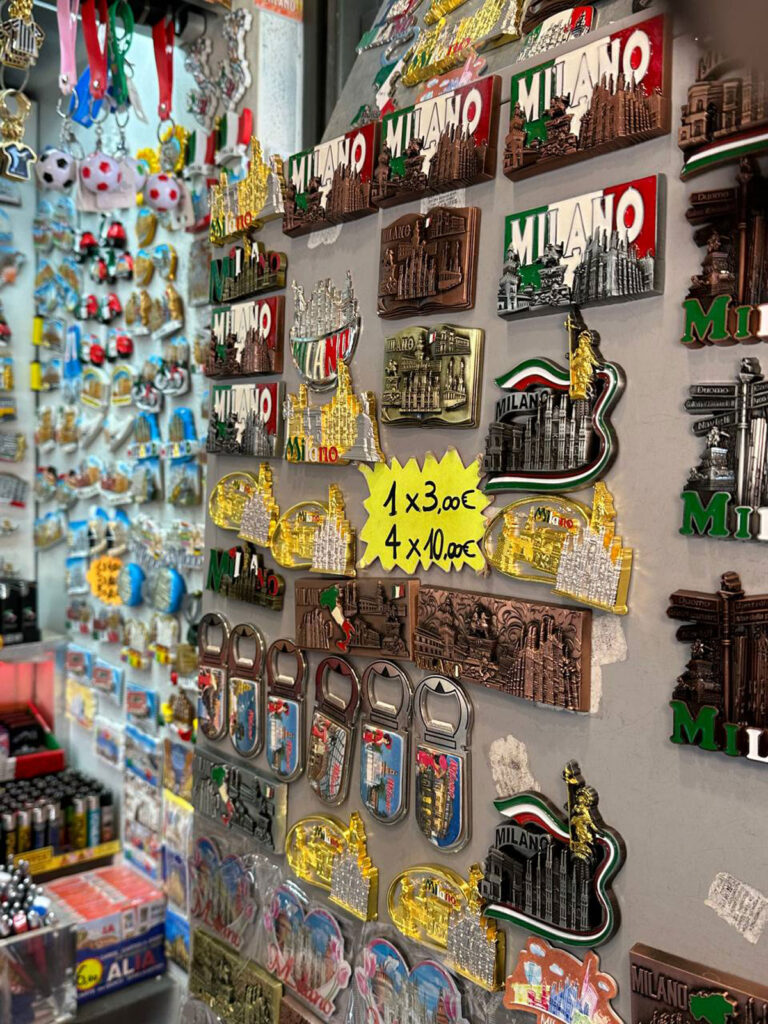
Skip the first souvenir stand you see near the cathedral steps if you can — prices tend to even out a block or two away, and the quality is usually the same metal-cast magnets and keychains everywhere in the historic center. A typical Milano magnet runs about €3 (roughly $3.45) individually, but almost every stand offers a volume discount — four magnets for €10 (about $11.50) is standard, which works out closer to $2.90 each.
Money-saving tip:
If you’re buying souvenirs for more than one person back home, the “buy 4” bundle pricing almost always beats buying individually, even if you don’t need four of the exact same design — most stands will let you mix and match magnets, keychains, and bottle openers to hit the bundle price.
Money-Saving Tips for a Milan Visit
- Skip the lift, take the stairs to the Duomo terraces. The walk-up option saves roughly $5–6 per person over the elevator ticket, and the 250-plus steps aren’t as brutal as they sound.
- The Galleria and Piazza Mercanti are both free. Two of the most photogenic stops in the entire city cost nothing beyond the walk.
- Book Duomo tickets online in advance. Time slots are mandatory for the rooftop, and skipping the ticket-office line saves real time, especially in peak summer months.
- Use the metro over taxis downtown. A single ATM ticket (about $2.40) covers most trips between the Duomo, Montenapoleone, and Brera, and traffic in the historic center makes taxis slower than the yellow M3 line most of the day.