

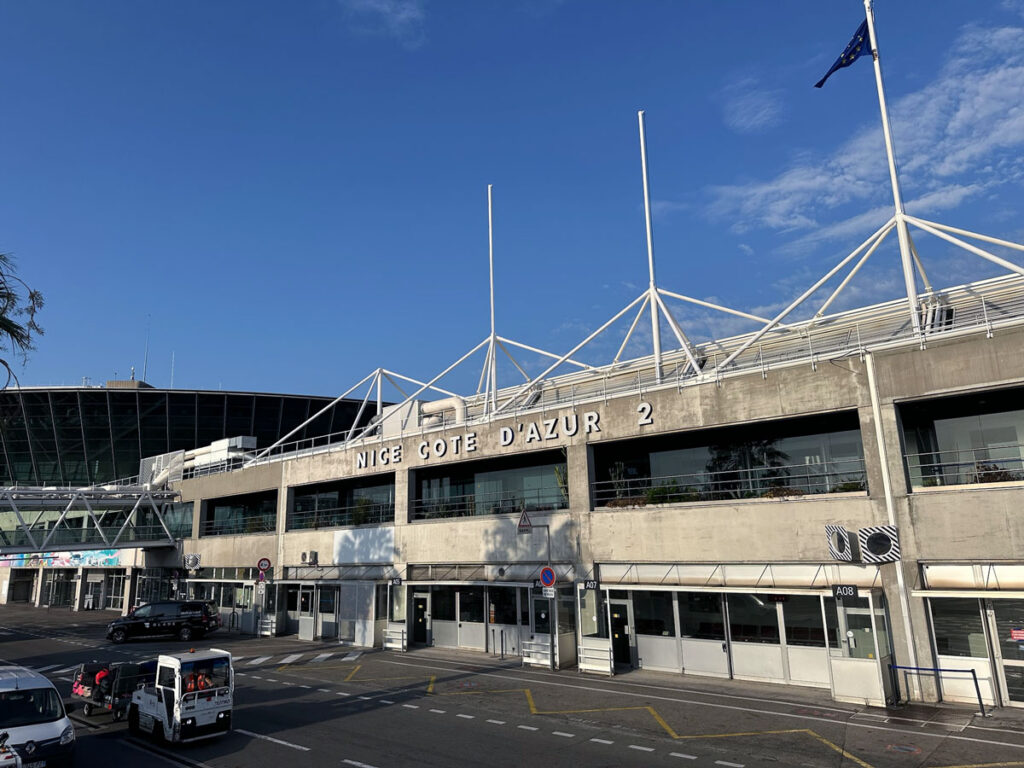
Nice has a glamorous reputation to live down to — and honestly, it mostly doesn’t. Yes, this is the gateway to Monaco and Cannes, and yes, you’ll see plenty of money floating around the Old Port. But the city itself is layered, walkable, and genuinely affordable once you know where to look. A free hilltop park with better views than most paid attractions, a medieval Old Town where the best pastry costs less than $2, seven kilometers of blue chairs you’re welcome to sit in all day, and a public beach that doesn’t charge admission — that’s the real Nice underneath the postcards.
Nice at a Glance
- Best for: 2–4 days minimum — there’s enough free and cheap sightseeing to fill a real trip
- Where it happens: Vieux Nice (Old Town), Castle Hill, Place Massena, and the Promenade des Anglais, all within walking distance of each other
- Currency: Euro (EUR). As of early August 2026, $1 USD ≈ €0.87
- Realistic daily budget: $35–60 per person for food, a museum or two, and local transit, not counting your hotel
- Getting there from the US: Delta flies nonstop from New York (JFK) year-round and added a new Boston–Nice route in May 2026; United runs a seasonal nonstop from Washington DC in summer
Climb Castle Hill for Free (Skip the Paid Viewpoints)
This is the single best value in the entire city. Colline du Chateau, or Castle Hill, rises about 300 feet above the Old Town, and reaching the top costs nothing — you can climb roughly 200 stone steps or take a free elevator most of the way up. From the summit you get a genuine 360-degree view: the Bay of Angels and Promenade des Anglais to the west, the Old Port to the east, and on a clear day, the snow-capped Alps in the distance.
Tip:
Go in the late afternoon. The golden-hour light on the terracotta rooftops of the Old Town is dramatically better than midday, and the crowds thin out as the day cools off. Skip the paid elevator ticket if you’re not pressed for time — the stairs are free and the elevator only saves your legs, not your wallet.
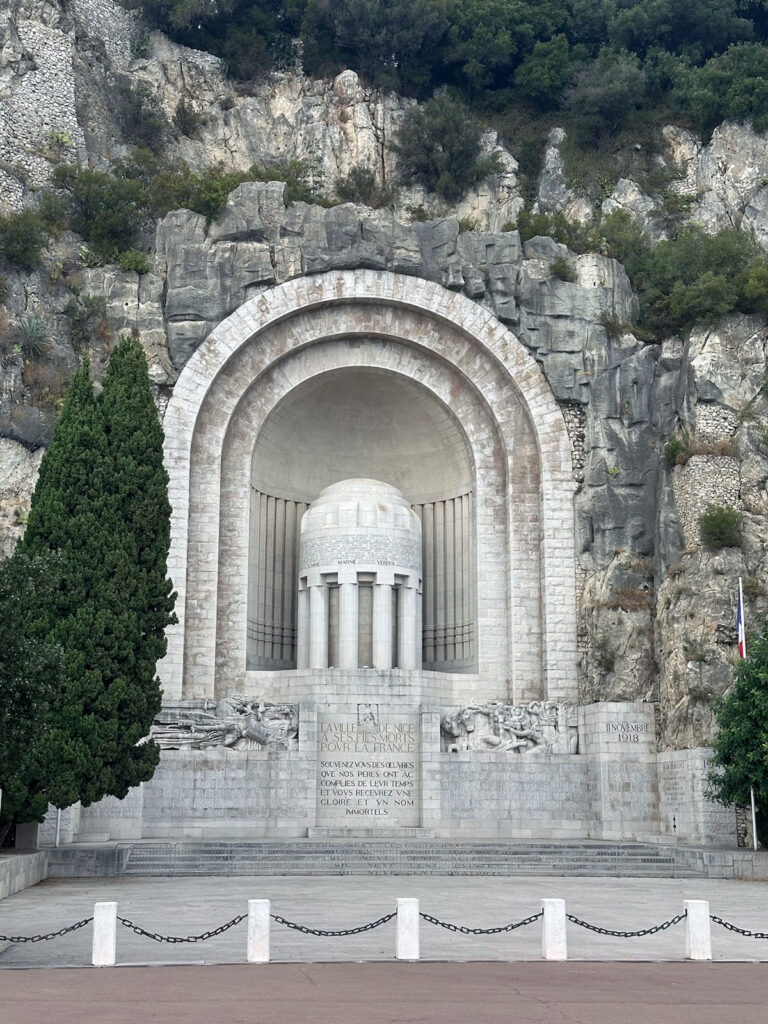
On the way to Castle Hill from the Old Port, you’ll pass one of the city’s more striking free sights: the Monument aux Morts, a war memorial carved directly into the cliff face at the base of the hill. Built between 1924 and 1927 by Nice-born architect Roger Seassal and inaugurated in 1928, it stands about 105 feet tall and honors more than 3,600 people from Nice who died in World War I, with names later added for subsequent conflicts. It’s genuinely one of the most striking war memorials in France, and almost everyone walking between the port and the Old Town passes right by it.
Read more: French Riviera Vacations with Expedia
The Old Port (Port Lympia) for Free
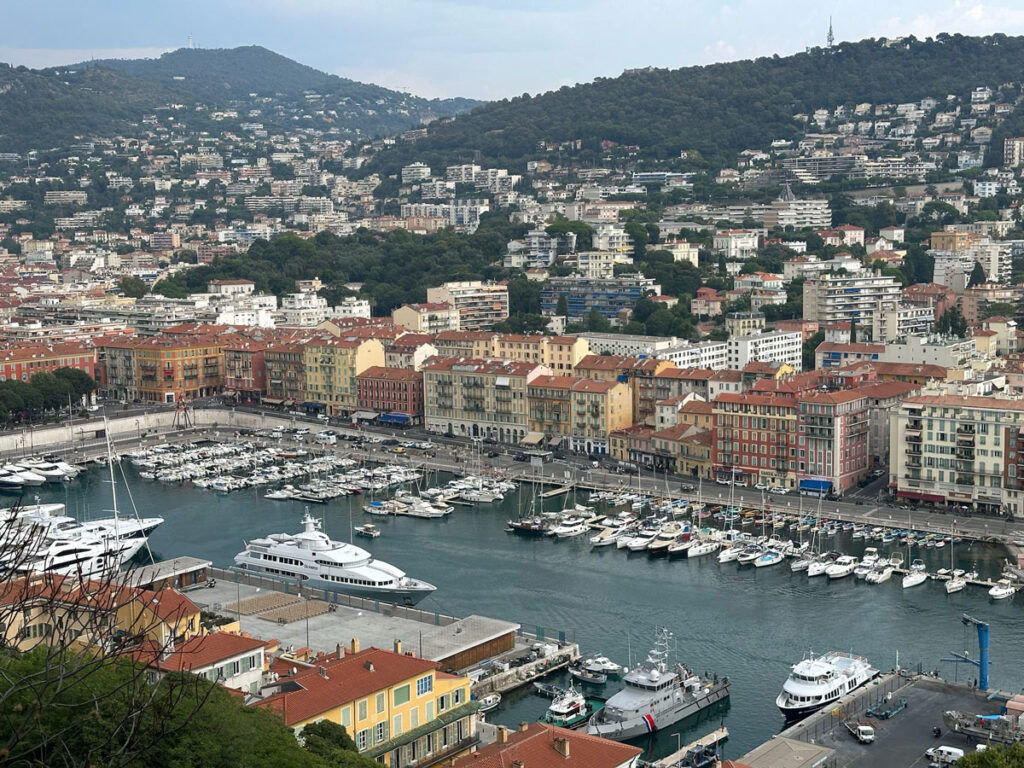
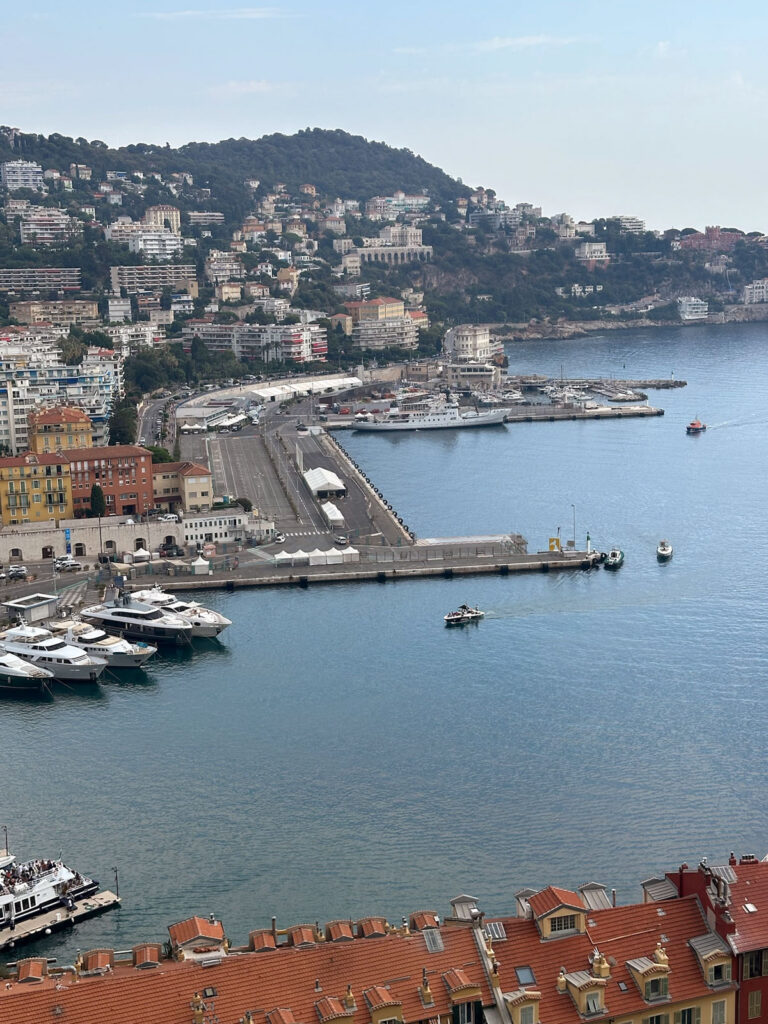
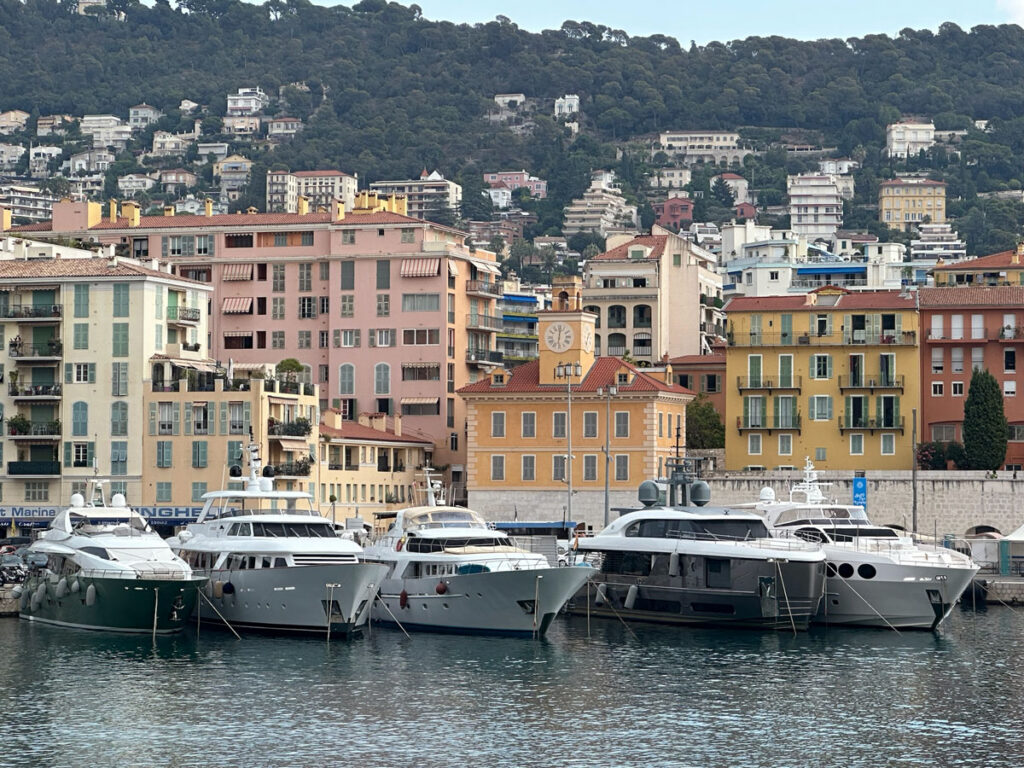
Just past the Monument aux Morts, Nice’s Old Port opens up — a horseshoe-shaped harbor lined with pastel Genoese-style buildings, working fishing boats, and a fair number of yachts. Climbing partway up Castle Hill gives you a genuinely great elevated view down over the whole thing, no ticket required.
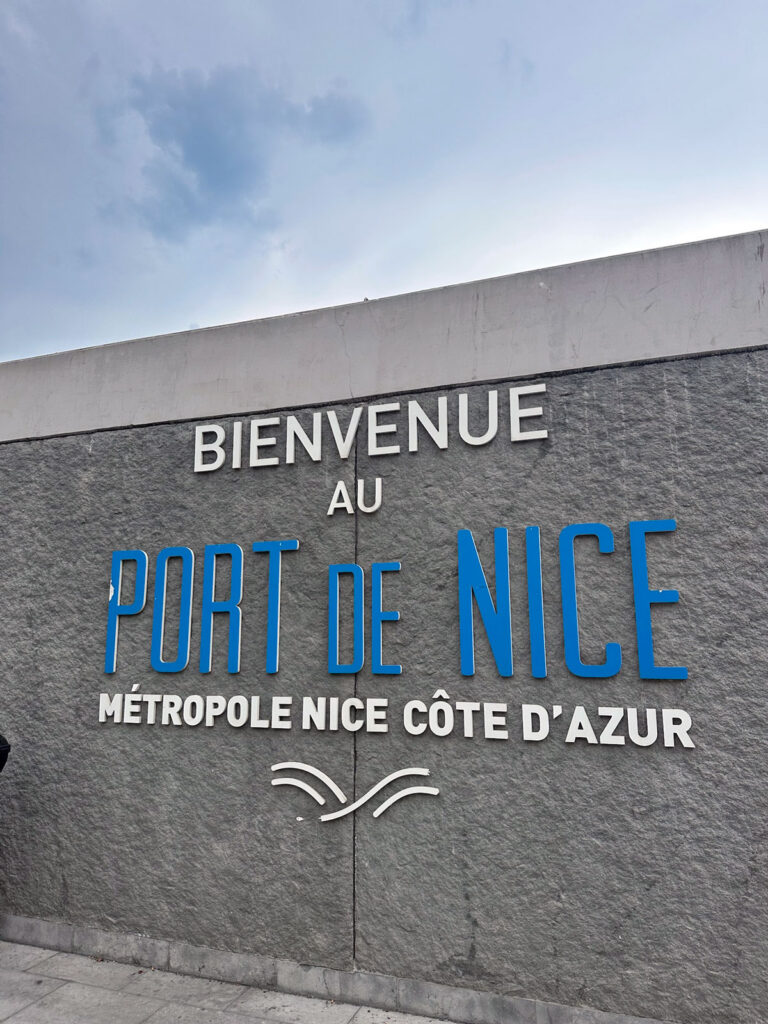
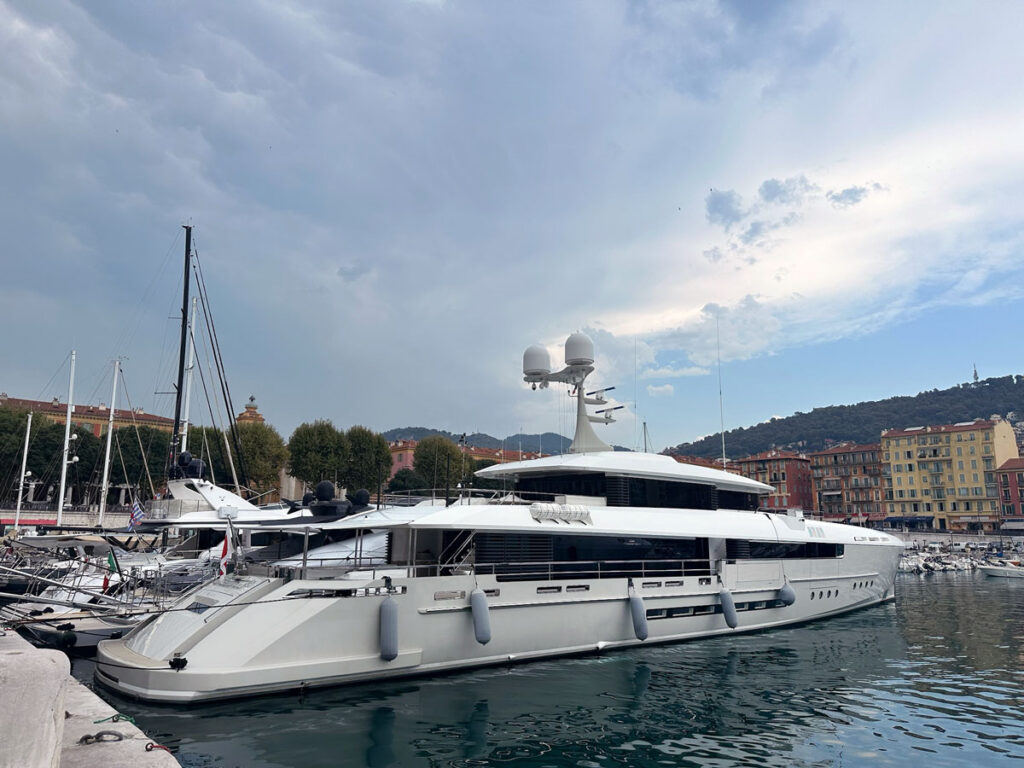
At street level, the entrance to Port Lympia is marked by a simple sign welcoming you to the harbor — walking its full loop is free and takes about 20 minutes, and it’s worth the stroll even if you’re not a boat person, if only to see how the “budget” framing of this guide occasionally collides with a nine-figure yacht.
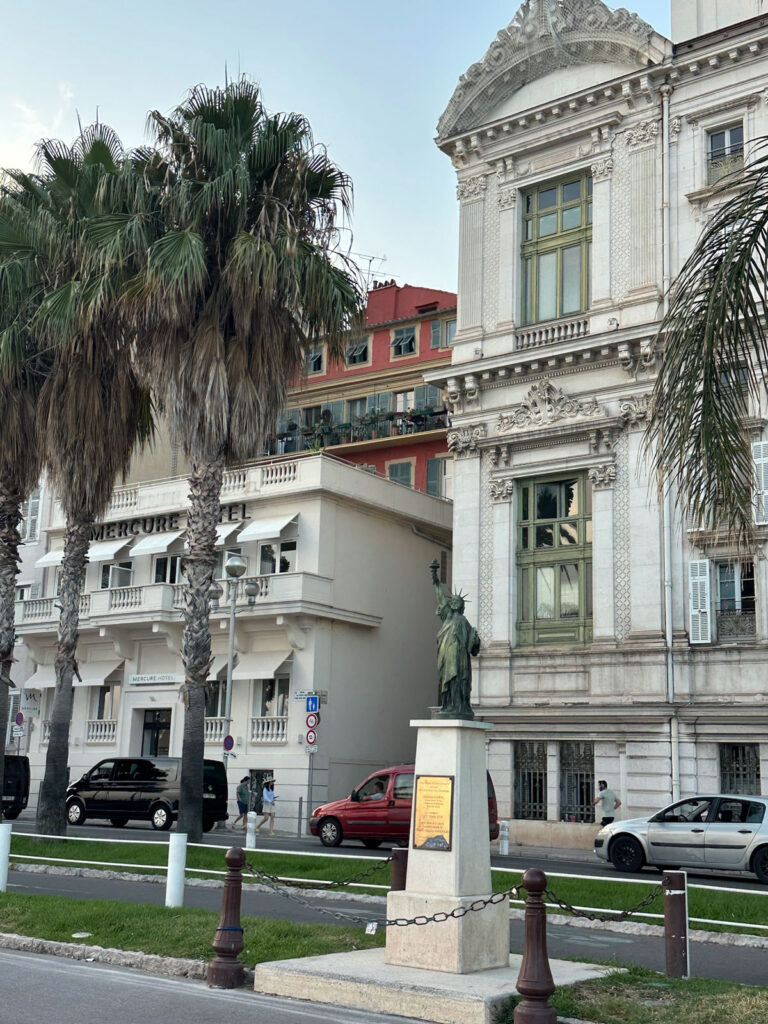
Along the Quai des États-Unis, at the edge of the Old Port and a block from the Opéra de Nice, keep an eye out for a bronze Statue of Liberty replica just over a meter tall. It was unveiled in 2014 to mark the centenary of the First World War and is cast from an original Bartholdi mold — the same sculptor behind the New York statue. Almost nobody stops for it, which is exactly why it’s worth the two-minute detour: no line, no ticket, no crowd.
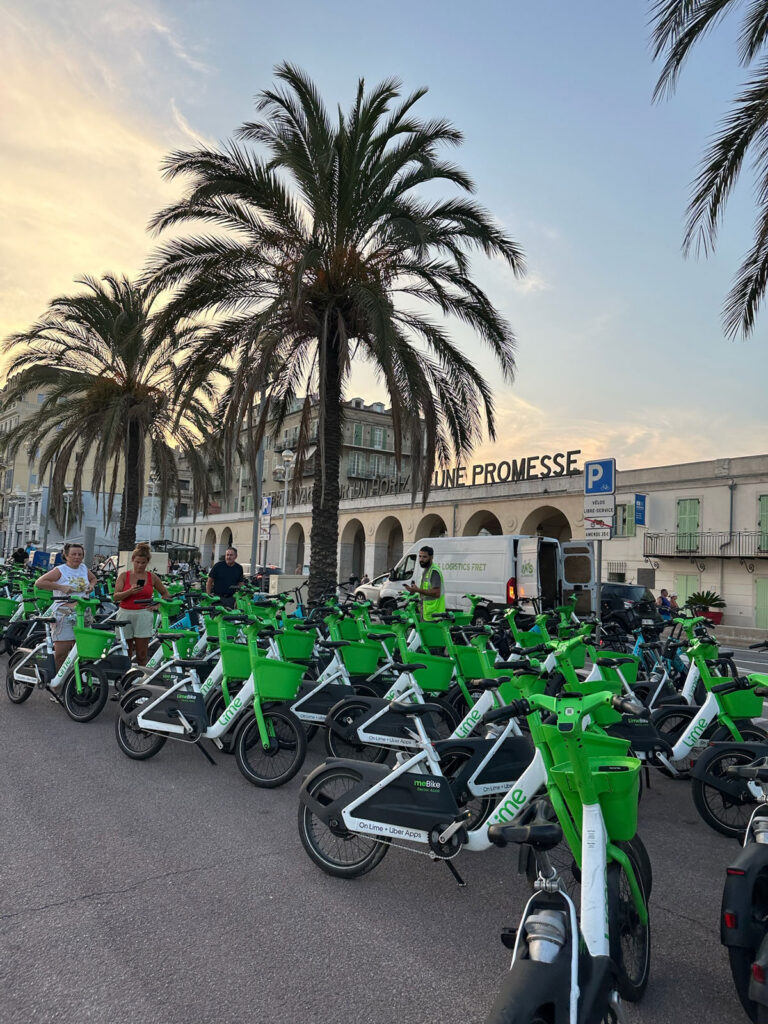
The same quay is also where you’ll find one of the easiest ways to get around: a Lime bike-share dock, useful for hopping between the port and the far end of the Promenade without waiting on a bus.
Read more: Monte Carlo in a Day: A Budget-Friendly Guide From Nice
Explore Vieux Nice, the Old Town
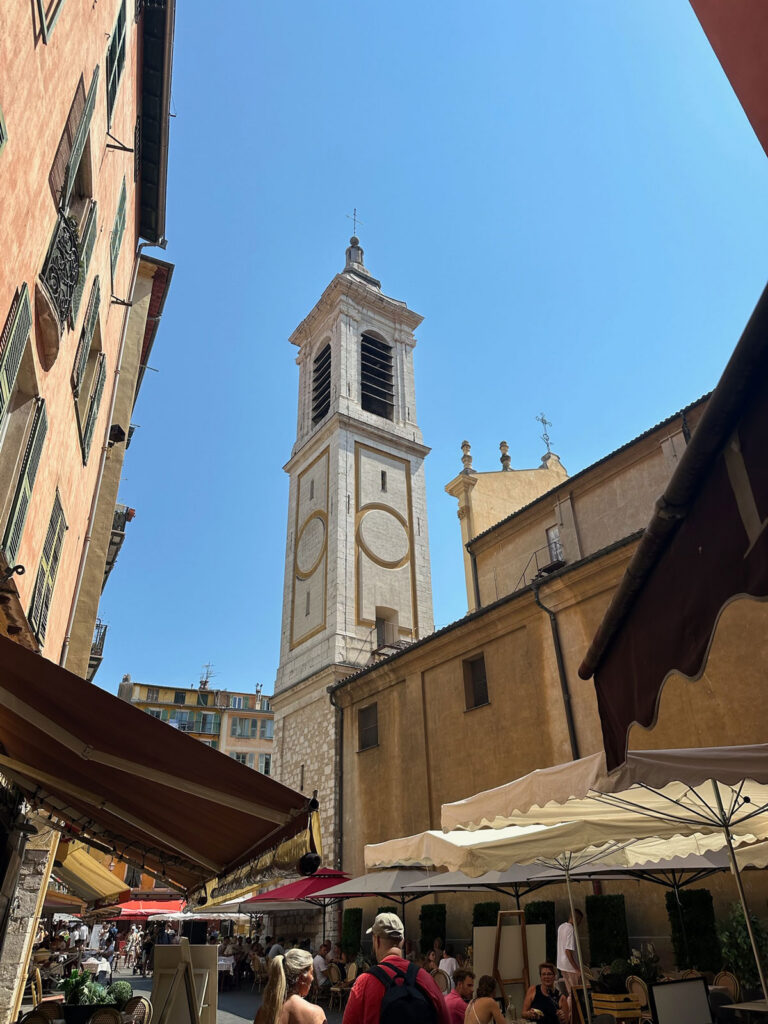
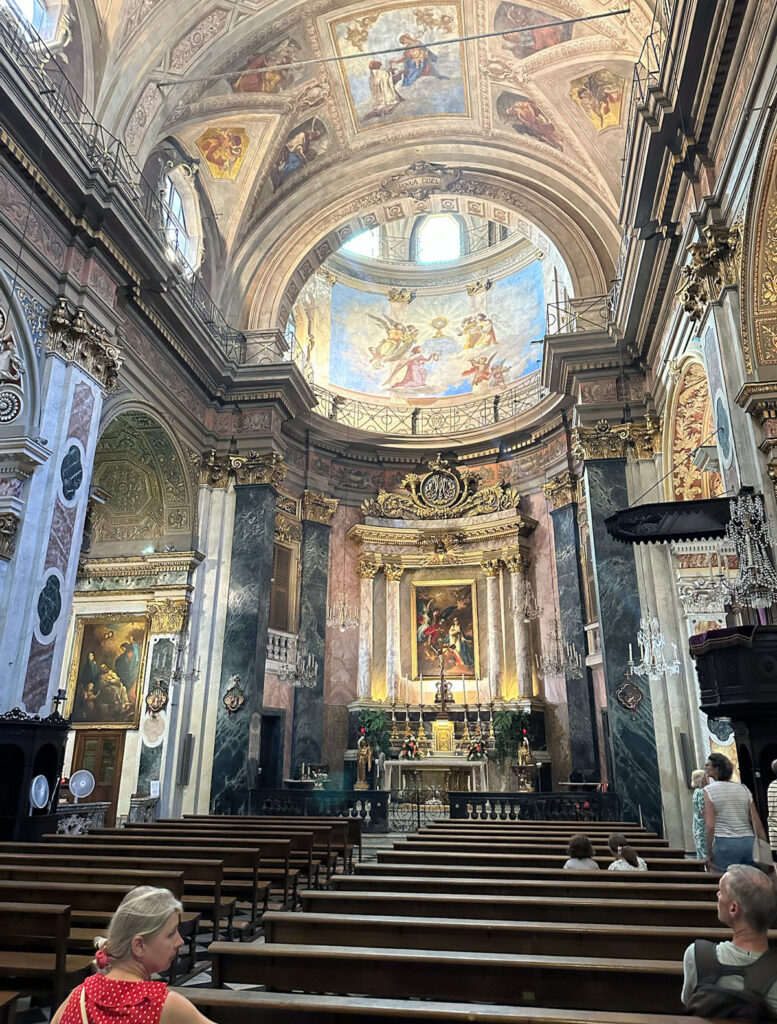
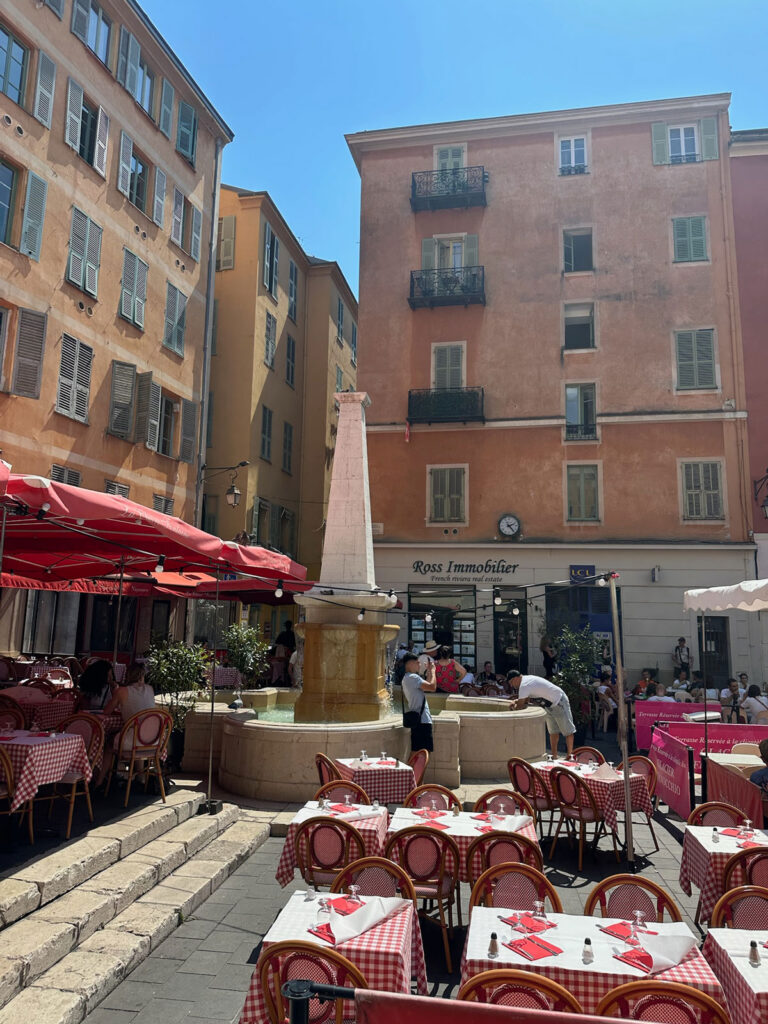
Vieux Nice is where the city earns its reputation: narrow ochre-colored streets, hidden fountains, baroque churches, and market stalls all packed into a compact grid a few blocks from the sea. None of it costs anything to walk through, and the churches themselves are free to enter.
Tip:
Skip the sit-down cafes directly on Cours Saleya at market hours — they mark up for the view. Walk one street back and you’ll find the same espresso for half the price.
Place Garibaldi
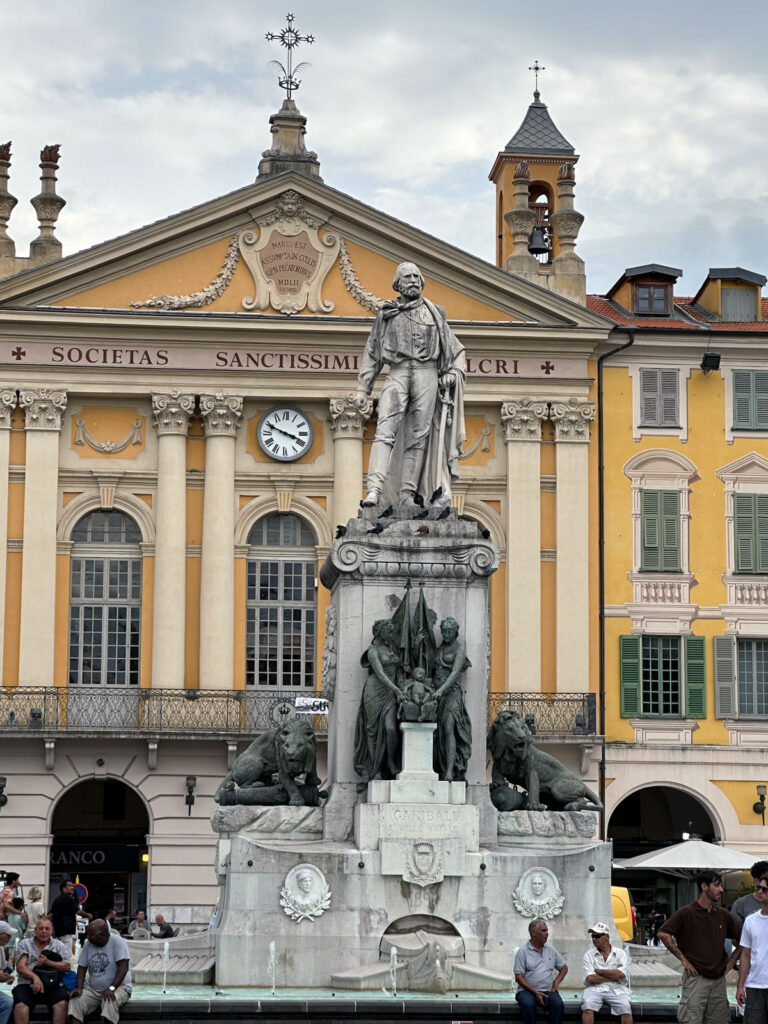
At the northern edge of the Old Town, Place Garibaldi is Nice’s oldest square — laid out in 1773 to greet the King of Sardinia and originally named Place Royale. It was renamed for Giuseppe Garibaldi, the Italian unification hero who was born in Nice in 1807, and his statue has stood at the center since 1891, framed by ochre-and-terracotta arcaded buildings and their painted trompe-l’œil facades. The T1 tram runs straight through it, which makes it an easy, free stop on the way between the port and Place Masséna.
Place Masséna, the Promenade du Paillon, and Nice’s Public Art
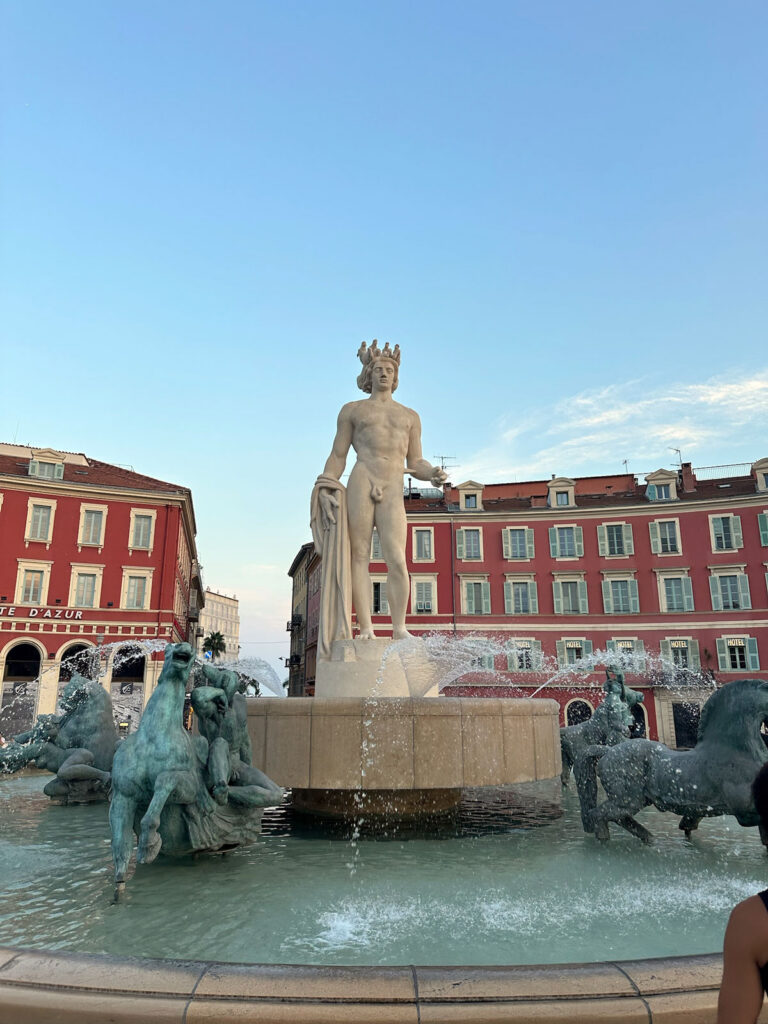
Place Masséna is Nice’s civic living room: a checkerboard plaza in red-and-black stone, ringed by ochre-red Italianate buildings, and anchored by the Fontaine du Soleil — a fountain of leaping bronze horses circling a marble statue of Apollo, crowned with rays representing the sun. It’s free to visit any time of day, and it’s at its best right around sunset, when the crowds thin and the fountain lights come up against the darkening sky.
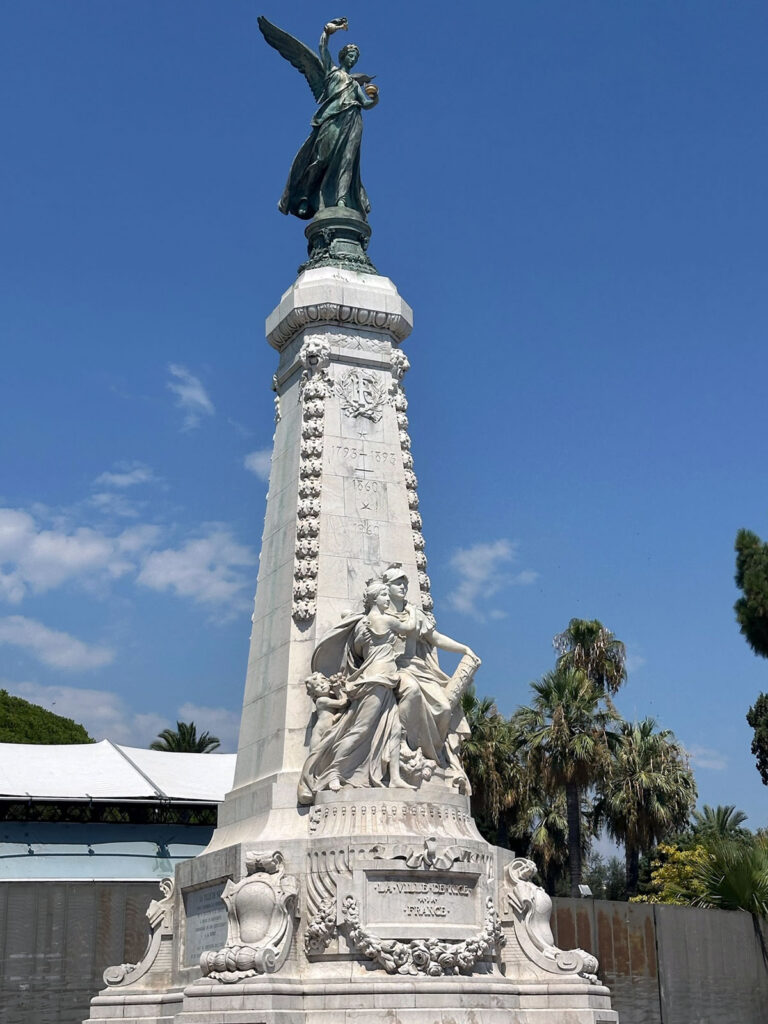
Nice has invested heavily in public art over the last two decades, and almost none of it requires a ticket. The Centenary Monument in Jardin Albert 1er, designed by Andre-Joseph Allar and unveiled in 1896, commemorates the 1793 annexation of Nice into France with a bronze winged Victory wrapped in the French flag — it’s a striking, completely free landmark right along the Promenade des Anglais.
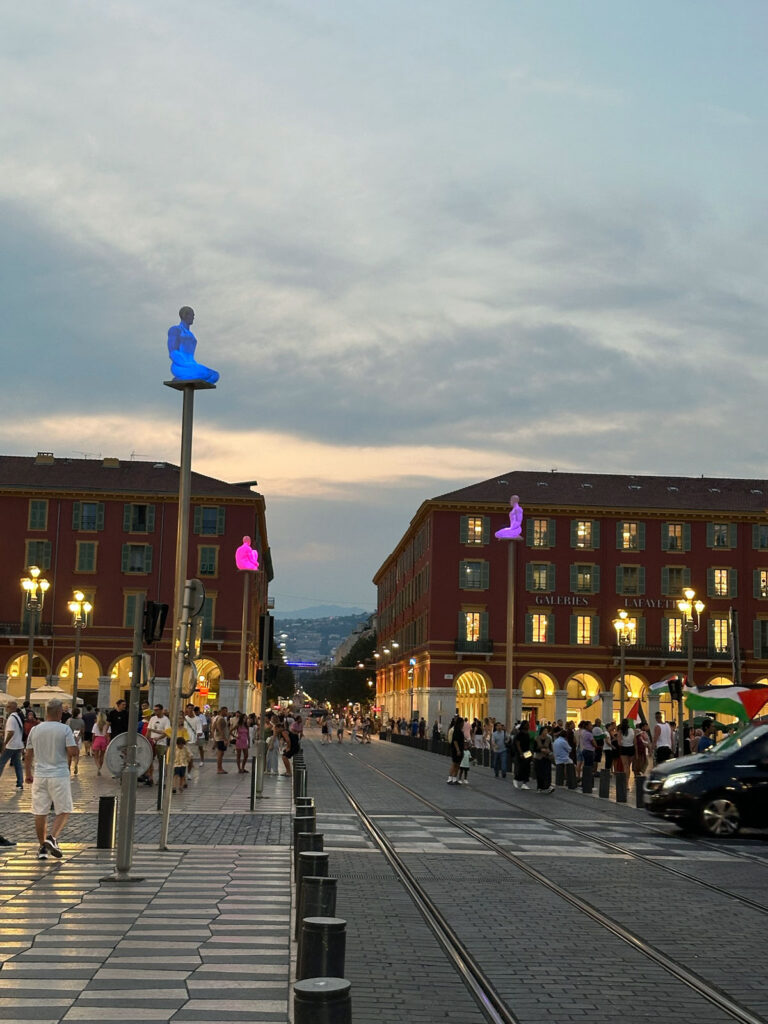
Just north of the square, the Promenade du Paillon is a mile-long ribbon of public gardens built over what used to be a parking lot. At Place Masséna and along the Promenade du Paillon, seven glowing statues by Spanish artist Jaume Plensa sit atop tall poles, each representing a different continent. Titled “Conversation in Nice,” the figures slowly shift color after dark, and the whole installation, along with the park’s 128-jet water mirror, is free and open around the clock.
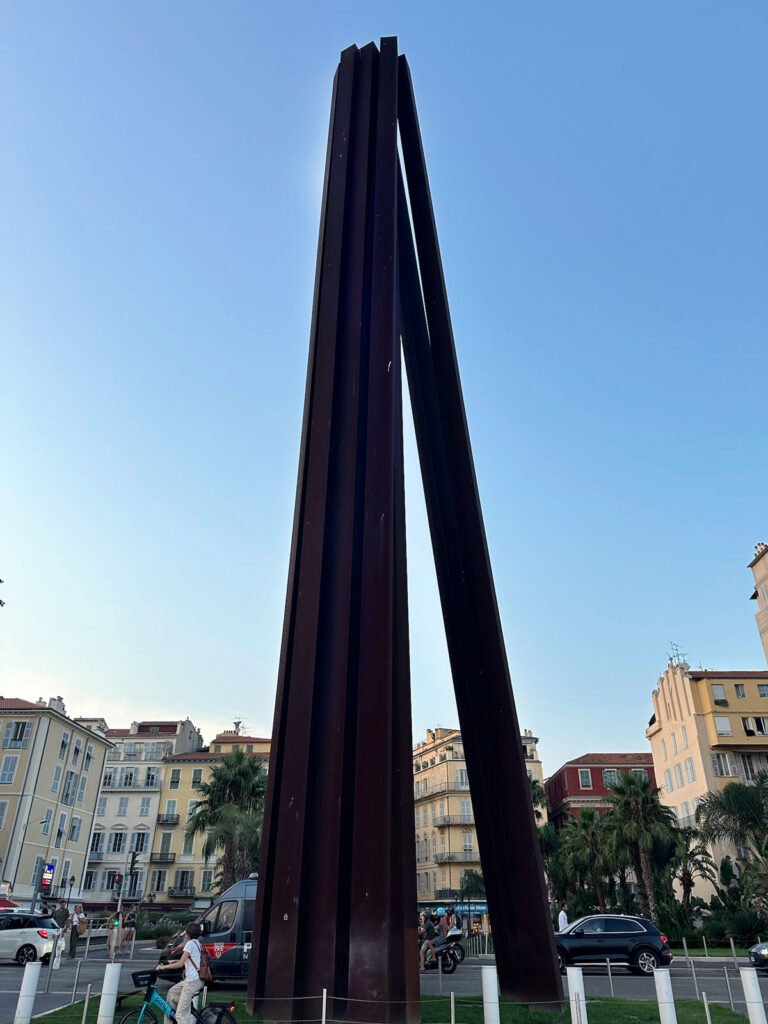
Closer to Albert I Garden, look for a monumental steel arc by Bernar Venet, one of the sculptor’s earliest public works in the city where he trained as a young set designer as a teenager.
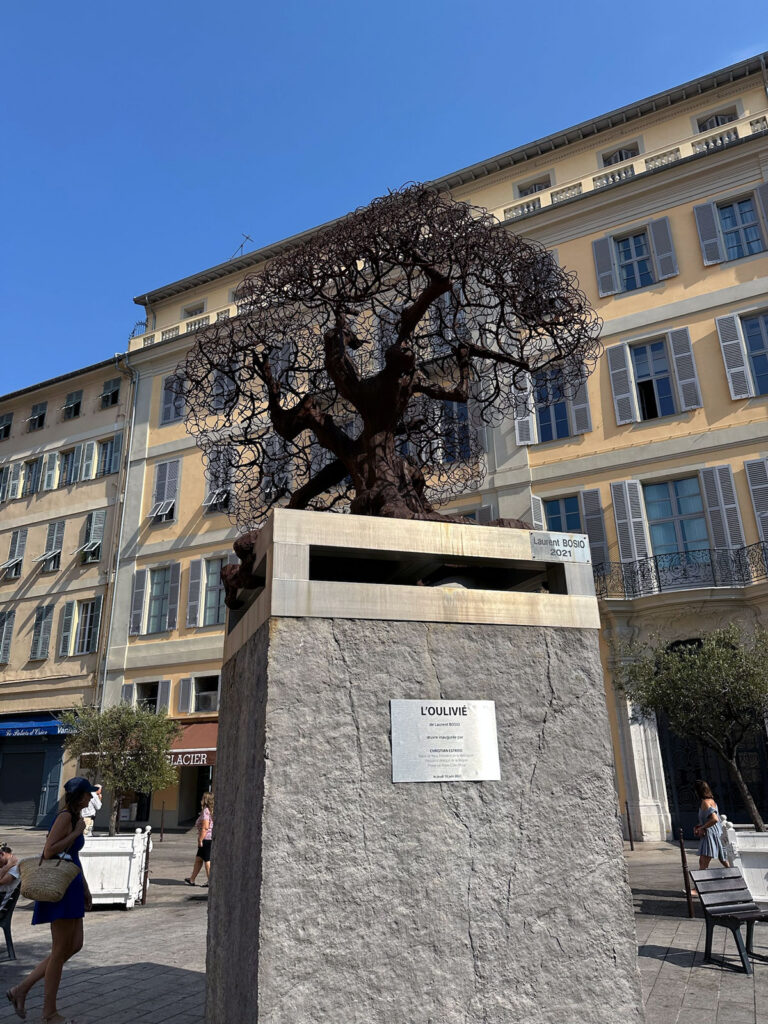
A few blocks away, keep an eye out for L’Oulivie, a striking woven metal olive tree sculpture by artist Laurent Bosio, inaugurated in 2021 in a small Old Town square — a nice, quiet contrast to the grander monuments nearby.
Read more: Is Milan Worth Visiting? A Practical Travel Guide for First-Timers
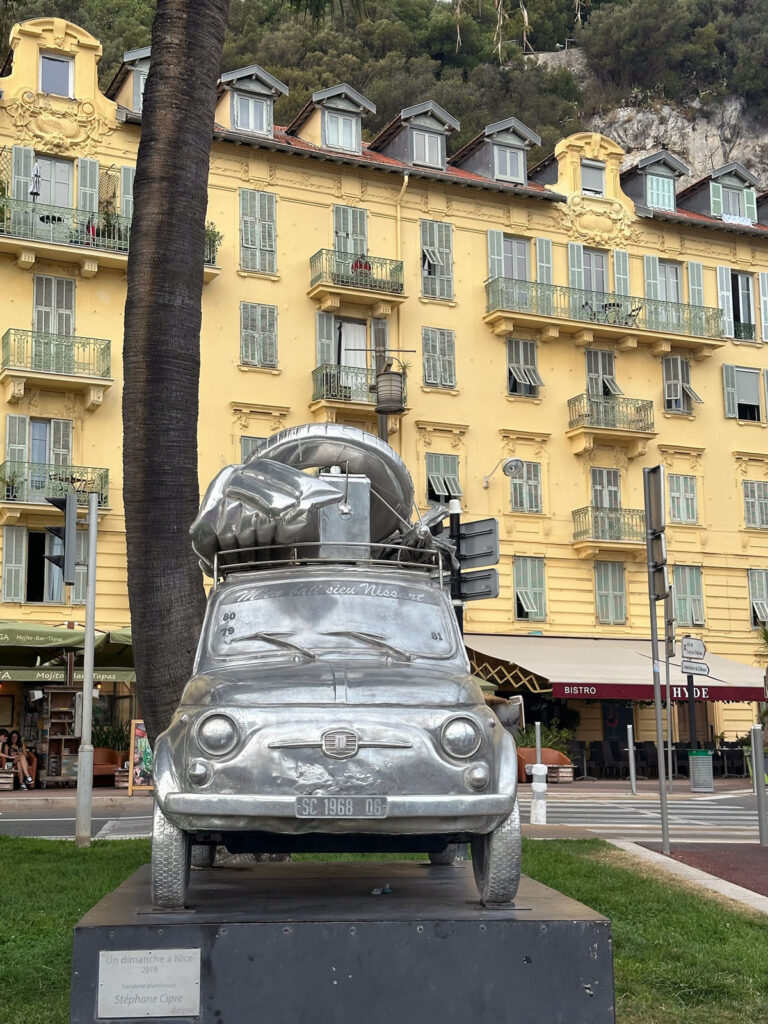
And down near the port, don’t miss “Un dimanche a Nice” (“A Sunday in Nice”), a 2019 aluminum sculpture by artist Stephane Cipre depicting a vintage Fiat 500 loaded down with luggage and a rolled-up mattress — a playful, very Nicois take on the classic summer road trip to the coast.
The Promenade des Anglais and the Blue Chairs
If Paris has the Eiffel Tower, Nice has its blue chairs. Les chaises bleues have lined the Promenade des Anglais since 1948, when a concession-holder named Jacques Ballanger commissioned a sturdier alternative to the wicker seating that used to blow apart in the wind. They were originally white and rented by the hour; today the city-owned versions, welded together in long rows and bolted to the pavement, are completely free to sit in — no purchase, no reservation, no time limit.
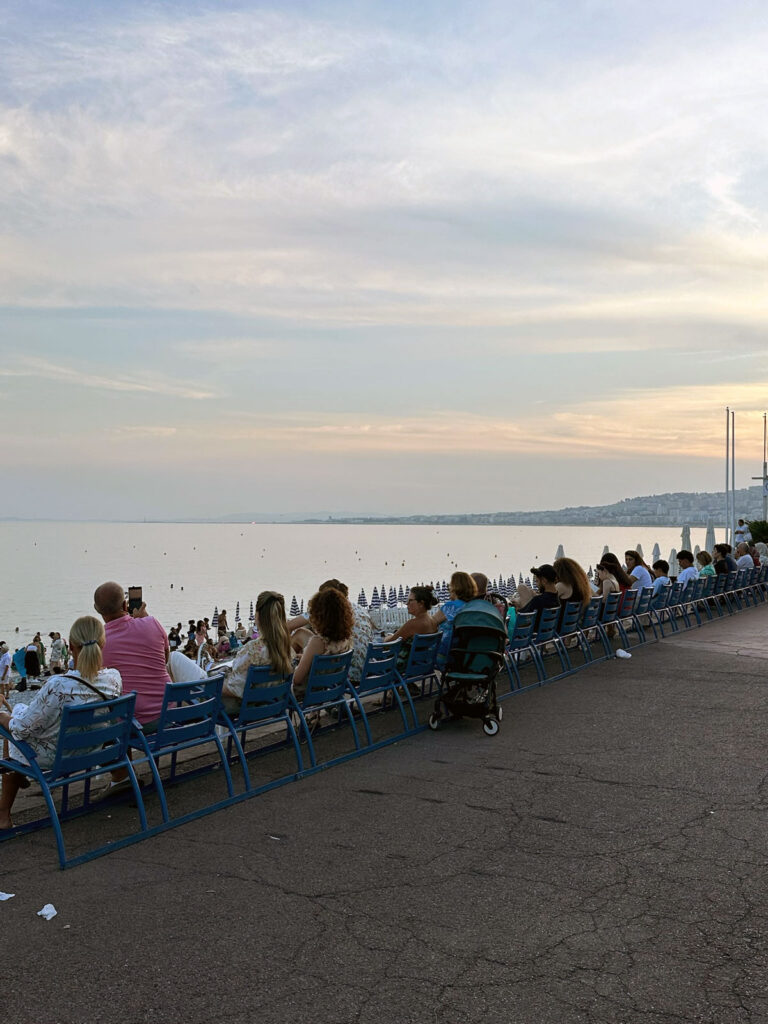
This stretch of the Promenade is the single best free activity in Nice, full stop: watch the sunset, people-watch, or just sit with a bag of galets from one of the confectioners along Rue Saint-François-de-Paule — Nice’s famous pebble-shaped almond chocolates, named for the smooth stones on the beach and sold loose by weight. The best light is the last hour before sunset, when the whole row of chairs faces the water and fills up with a mix of locals and travelers doing exactly what the chairs were designed for in 1948.
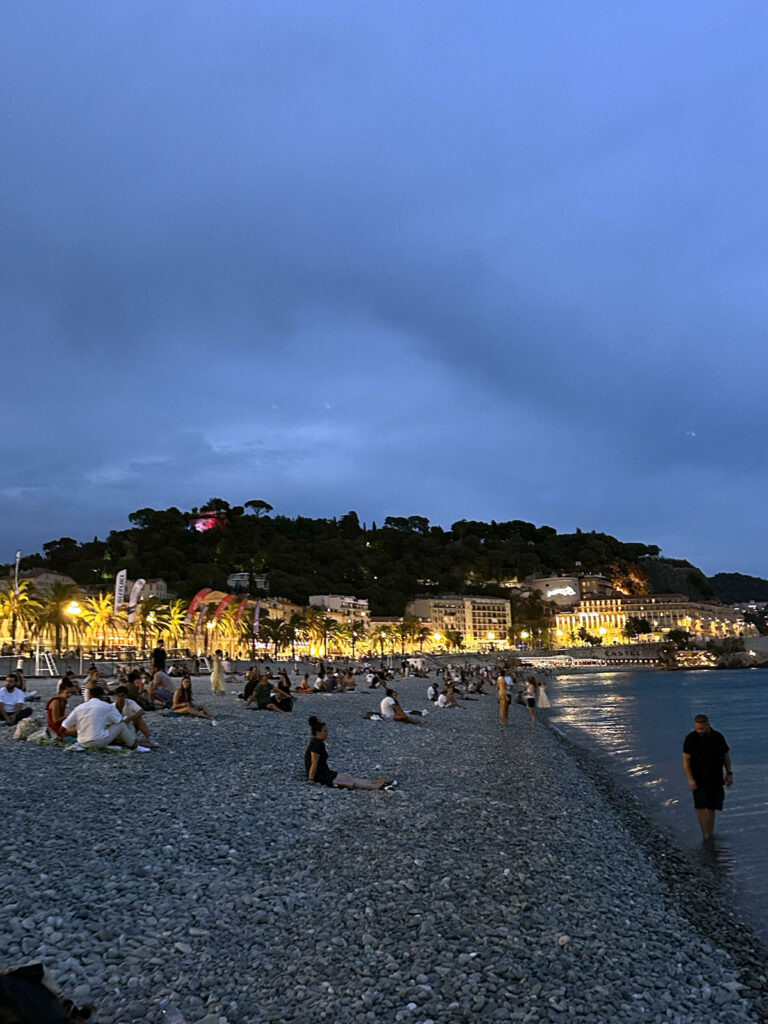
The beach doesn’t shut down at sunset, either. Nice’s public stretches of pebble beach stay open into the evening, and a warm night draws locals down with blankets and takeout long after the paid loungers at the private beach clubs have been folded up for the day. It’s free, it’s the same view the clubs charge for, and it’s arguably better once the crowds thin out.
Read more: Only a Few Hours in Warsaw? Don’t Miss These Places
Free Architecture Worth the Detour
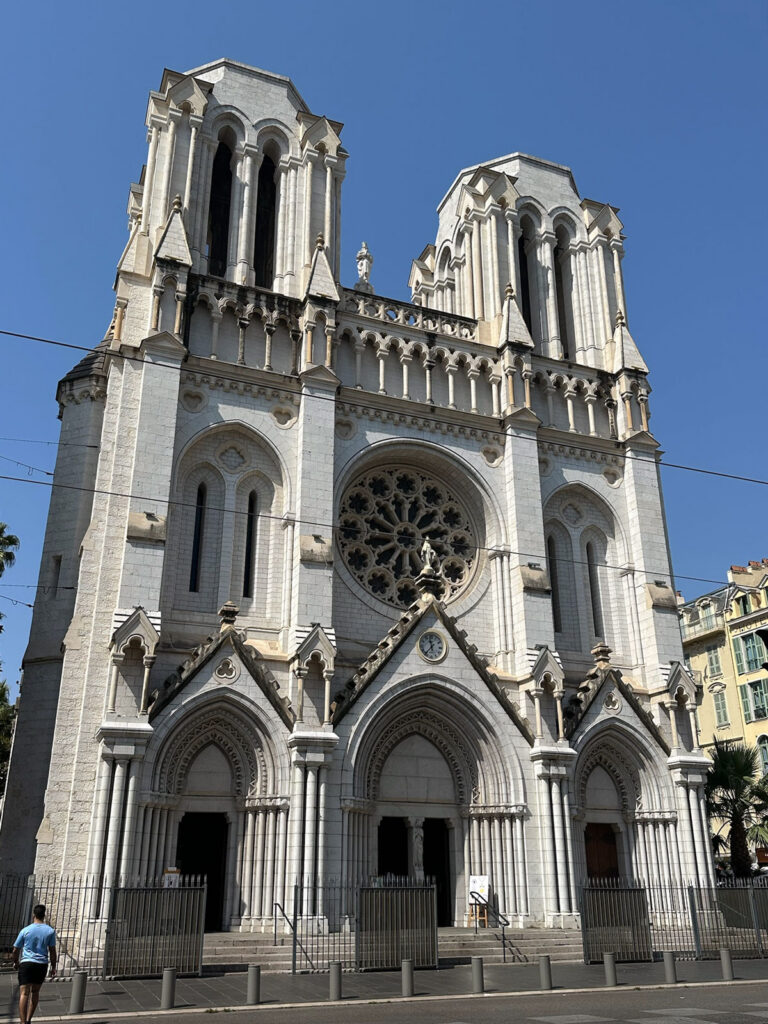
Nice’s church architecture doesn’t charge admission, and the Basilica of Notre-Dame de Nice is worth a stop even if you’re not religious. It anchors the top of Avenue Jean Médecin, the city’s main shopping artery, with a rose window and vaulted Gothic Revival interior that took nearly a decade to build after opening in 1868.
Getting Around Without a Rental Car
Nice doesn’t require a car, and renting one adds parking costs you don’t need. The tram (Lignes 1 and 2) covers Place Masséna, the train station, and the port for a flat fare, and the same ticket works on city buses. For short hops along the water — say, from the Old Port to the middle of the Promenade — a shared e-bike or scooter is often faster than waiting on transit.
| Getting Around | Typical Cost | Best For |
|---|---|---|
| Tram / bus single ticket | €1.70 (~$1.95) | Station to Old Town, Place Masséna, the port |
| Lime / other bike-share | ~€1 unlock + per-minute fee | Waterfront hops, timing sunset along the Promenade |
| Walking | Free | Everything in this guide — the whole spine is under 5 km |
| Airport shuttle bus (Line 98/99) | ~€6 (~$6.90) | Nice Côte d’Azur Airport to city center |
Tip:
Skip taxis from the airport unless you’re arriving very late. The airport express bus runs frequently and drops you within walking distance of the Promenade for a fraction of the fare.
Where to Eat in Nice Without Overspending
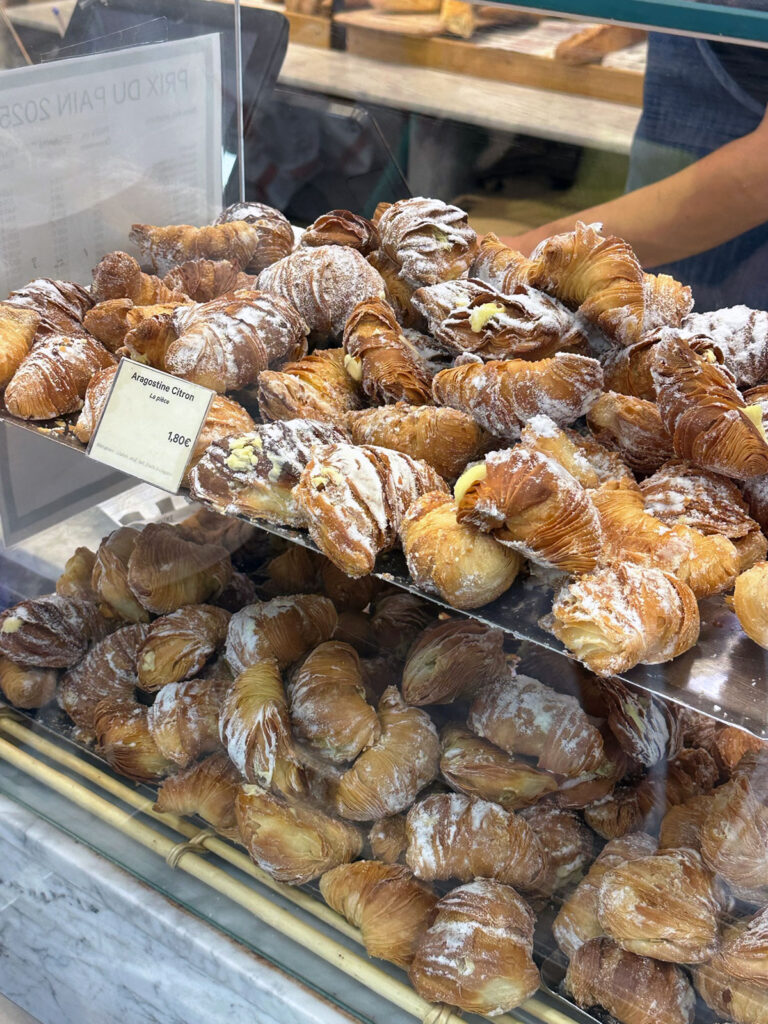
This is where a lot of Riviera guides quietly give up. It doesn’t have to be that way — Nice’s bakeries and grocers make it easy to eat extremely well for a few dollars at a time.
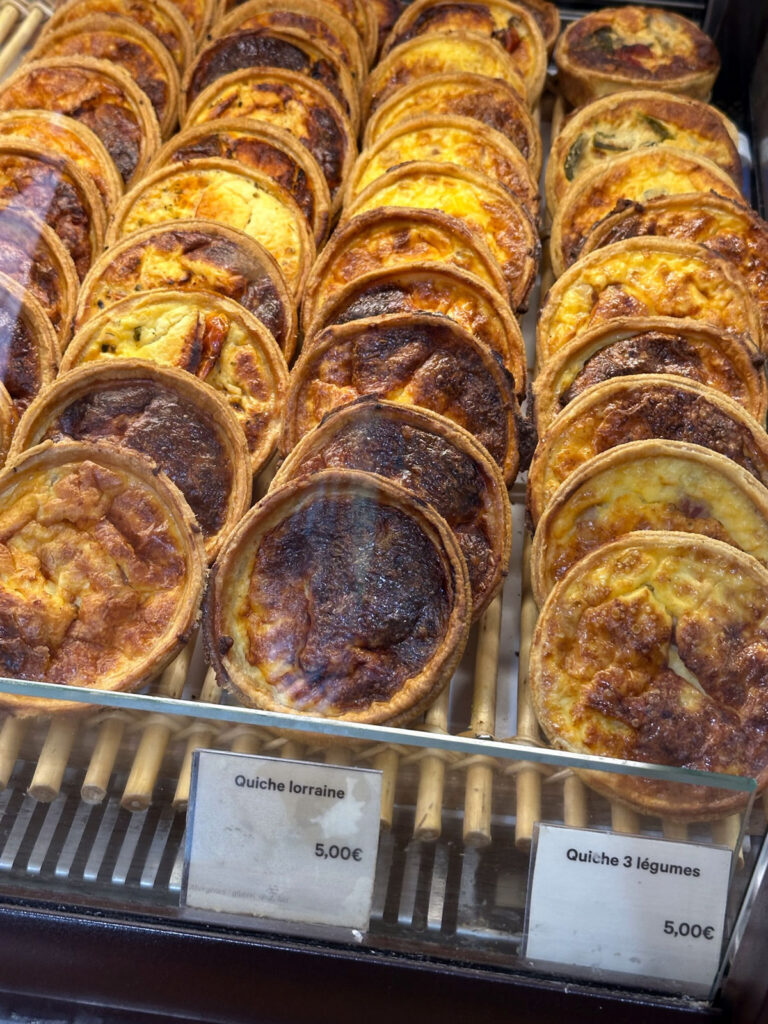
Budget tip:
A bakery lunch (a quiche slice plus a pastry) typically runs under $8 per person, versus $20–30 or more for a sit-down cafe meal on a prime Old Town terrace. Save the terrace meal for one splurge, not every day.
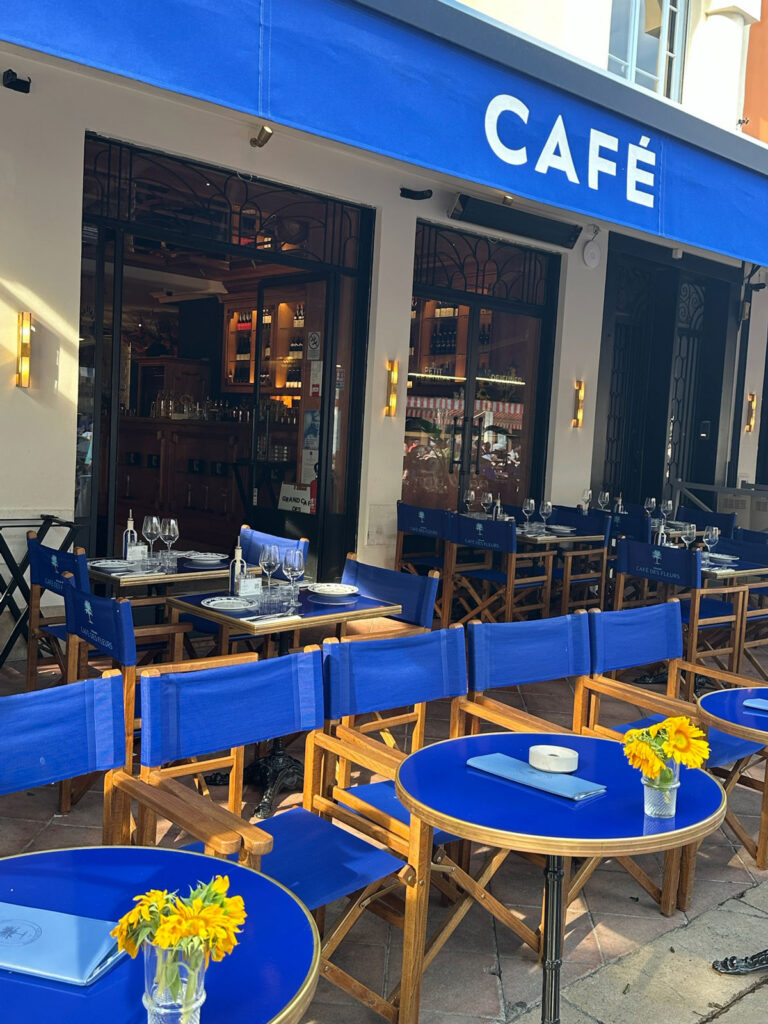
For contrast, here’s what a nicer sit-down option looks like: pretty cafe terraces with table service and fresh flowers on every table. Lovely for one meal of the trip, but the price per plate climbs fast compared to the bakery route.
Read more: Things to Do in Krakow: The Best Places to See on Your First Visit
Budget Shopping and Souvenirs
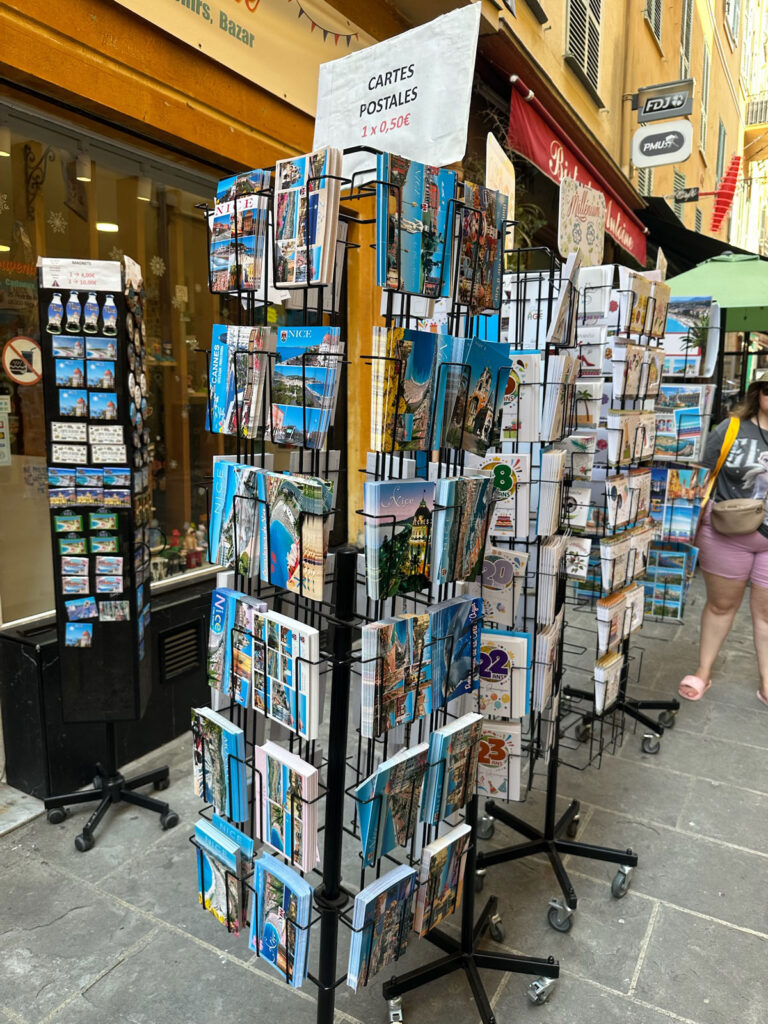
Skip the overpriced tourist-trap magnets near the big squares. Postcards are still one of the cheapest, lightest souvenirs anywhere in Nice, often just €0.50 (about $0.57) each.
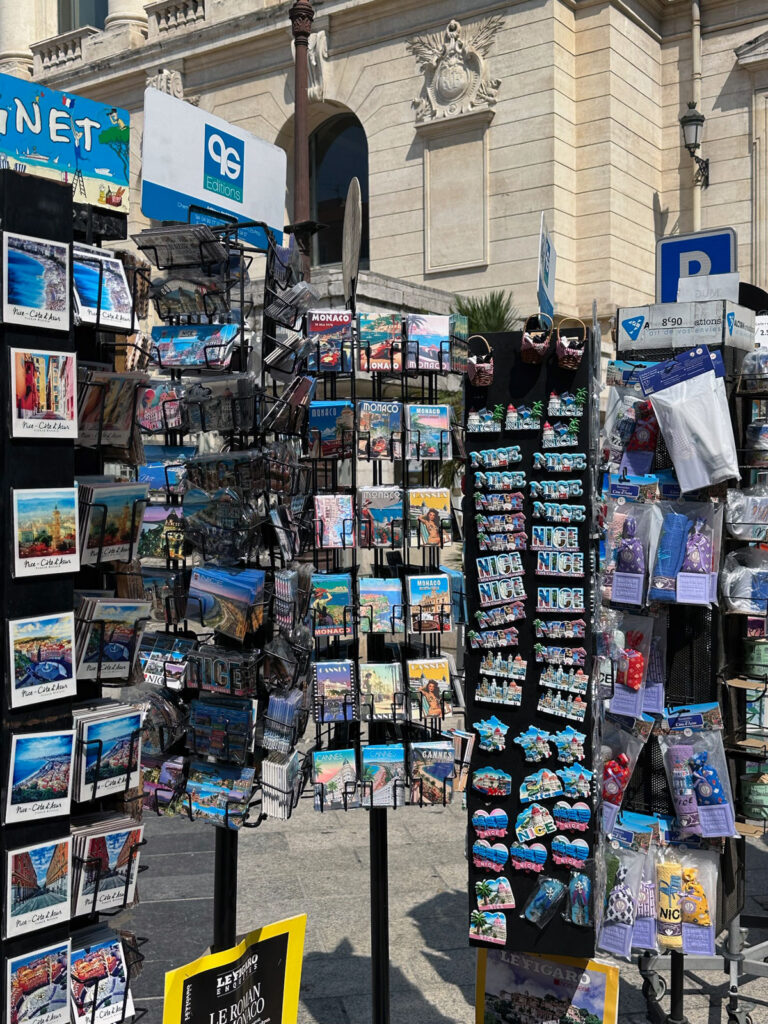
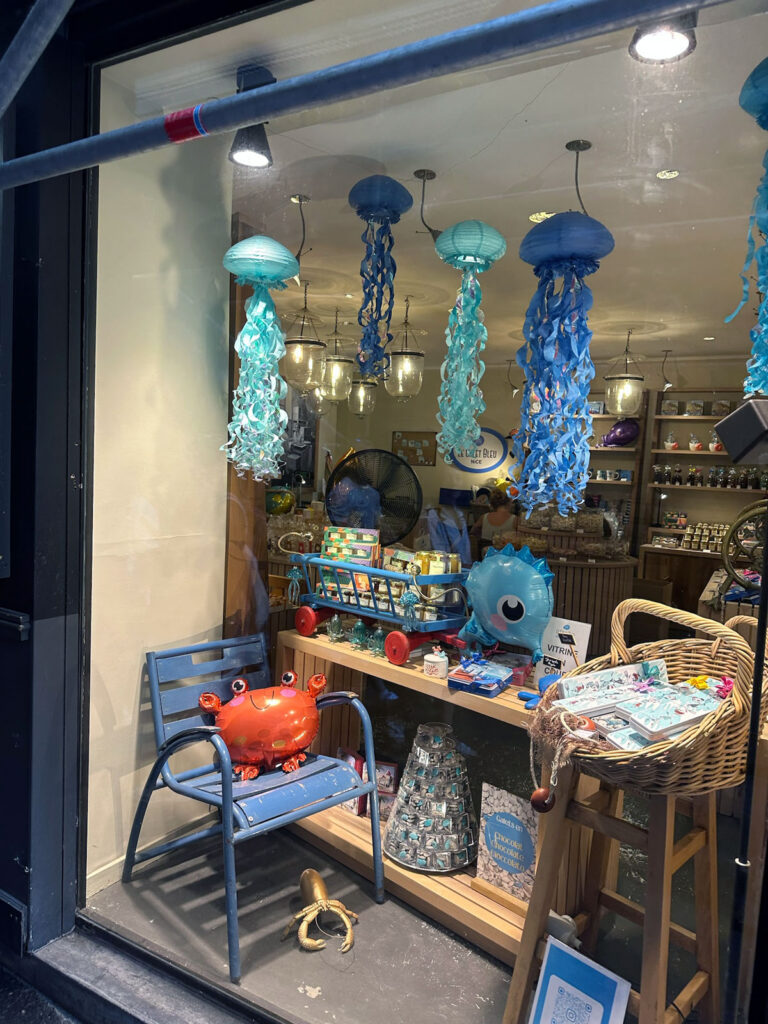
For souvenirs that feel a little more local than a magnet, look for the pebble-themed shops near the Old Town and the port: galets sold loose by weight, and small blue-chair replicas that riff on the Promenade’s most famous piece of street furniture.
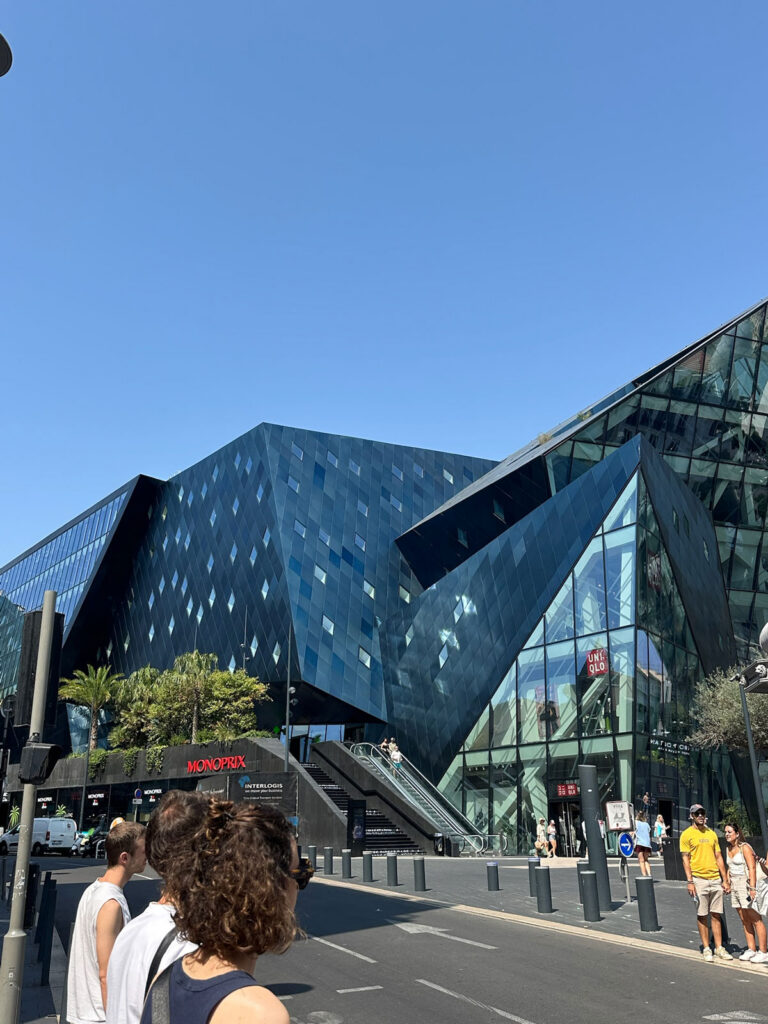
Avenue Jean Médecin is Nice’s real shopping street, and its newest landmark is ICONIC — a faceted glass complex linking the Thiers train station to the avenue, home to a Uniqlo and a premium-format Monoprix. It’s a useful stop for anything you forgot to pack, and unlike the boutiques along Rue Paradis, nothing inside is priced for tourists.
A Sample Budget Day in Nice
- MORNING: Grab a quiche or pastry from an Old Town bakery, wander Vieux Nice’s churches, fountains, and Place Garibaldi
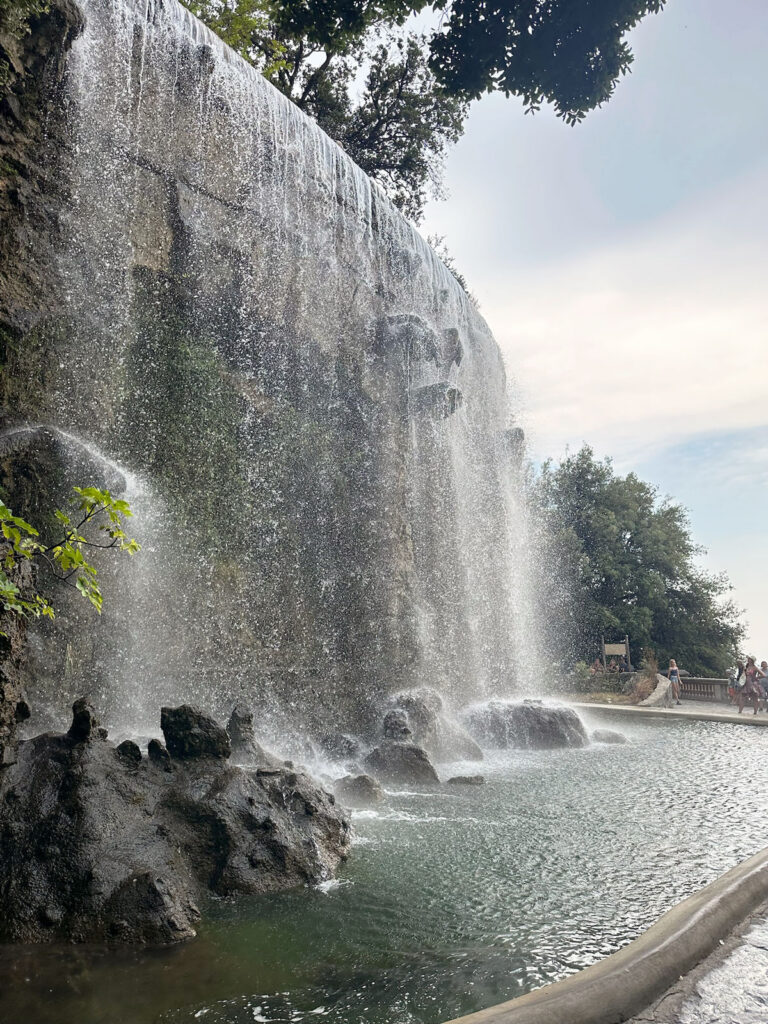
- MIDDAY: Walk to the Old Port, then climb Castle Hill for the panoramic view, stopping at the Cascade du Chateau along the way
- AFTERNOON: Head to Place Massena and the Promenade du Paillon, see the Centenary Monument, the Fontaine du Soleil, and the Plensa statues
- LATE AFTERNOON: Pick up picnic supplies at a grocery store and relax in the blue chairs or on the free public beach along the Promenade des Anglais
- EVENING: Watch the sunset from the Promenade, then return to Place Massena after dark to see the Plensa statues glowing before a casual Old Town dinner
Booking your stay in Nice? Hotel prices along the Riviera swing hard by season and neighborhood, so it’s worth comparing before you commit. Booking.com’s travel deals regularly discount Nice hotels by up to 20% off, and checking rates for a few different dates only takes a couple of minutes.
Money-Saving Tips for a Nice Trip
- Skip the paid Castle Hill elevator. The climb is only about 200 steps, and the view is free either way — the elevator just saves your legs, not your wallet.
- Eat bakery-first. A quiche and a pastry cost a fraction of a sit-down meal and are genuinely some of the best food in the city.
- Book flights early for the best fares. Nice now has more year-round nonstop US routes than ever — Delta from New York and Boston, United seasonally from Washington DC — and prices vary widely by how far ahead you book.
- Time Castle Hill for late afternoon. Better light for photos, and noticeably fewer crowds than the midday rush.
- Public beaches and blue chairs are free. You only pay if you rent a lounge chair and umbrella at a private beach club — bring your own towel, or just sit in the chairs everyone else uses for free.