

What Is Chihuly Garden and Glass?
Chihuly Garden and Glass is a permanent exhibition of sculptor Dale Chihuly’s monumental blown-glass works, installed at Seattle Center in the shadow of the Space Needle. It opened in 2012 and has since become one of the most-visited cultural destinations in the Pacific Northwest — not because it markets itself aggressively, but because the work is genuinely difficult to see anywhere else at this scale.
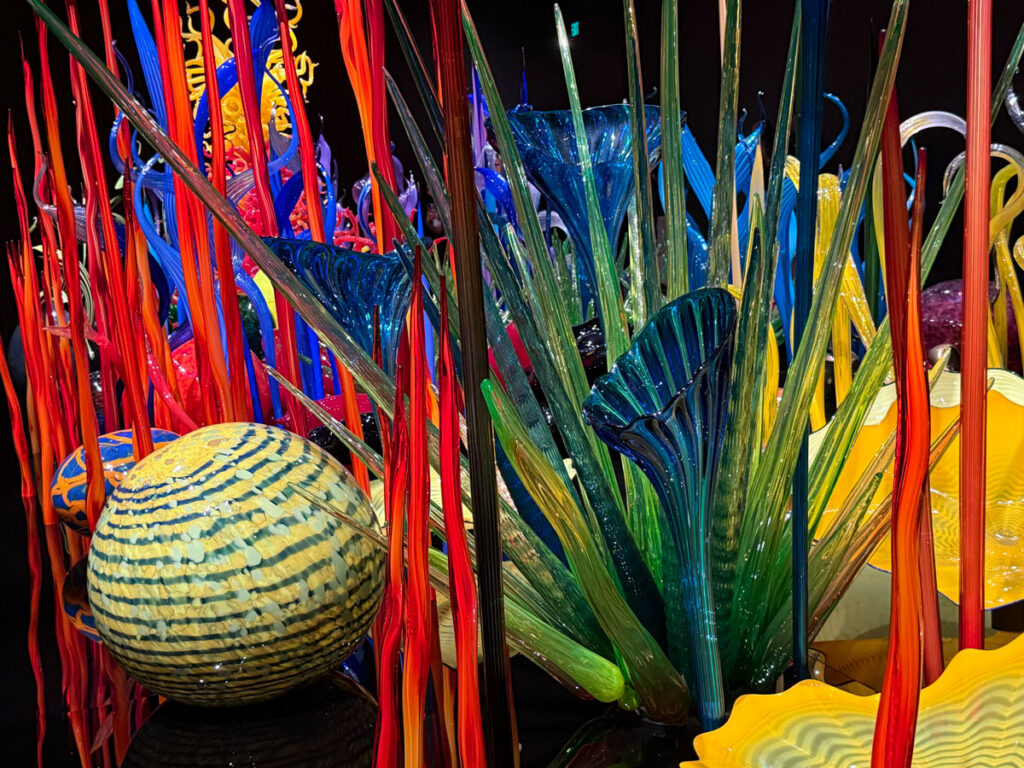
The exhibition spreads across eight interior galleries, a glass-ceilinged Glasshouse, and a two-acre outdoor garden. The sequence was designed by Chihuly himself to build in intensity: the early rooms present smaller, jewel-like works; the Glasshouse delivers a ceiling-spanning chandelier installation that stops most people mid-step; the garden puts sculptural glass into direct conversation with Pacific Northwest plantings and the Seattle skyline.
Before You Go
- ADDRESS
305 Harrison St
Seattle Center, WA 98109 - HOURS
Sun–Thu 9 AM – 8 PM
Fri–Sat 9 AM – 9 PM - ADMISSION
Adults ~$32
Students/Seniors ~$28
Children (3–12) ~$20 - TIME NEEDED
90 minutes to 2.5 hours - GETTING THERE
Monorail from Westlake Center (3 min) or 15-min walk from Seattle Center Link station - BEST FOR
Adults, couples, photography enthusiasts; families with children over 7
The Glasshouse
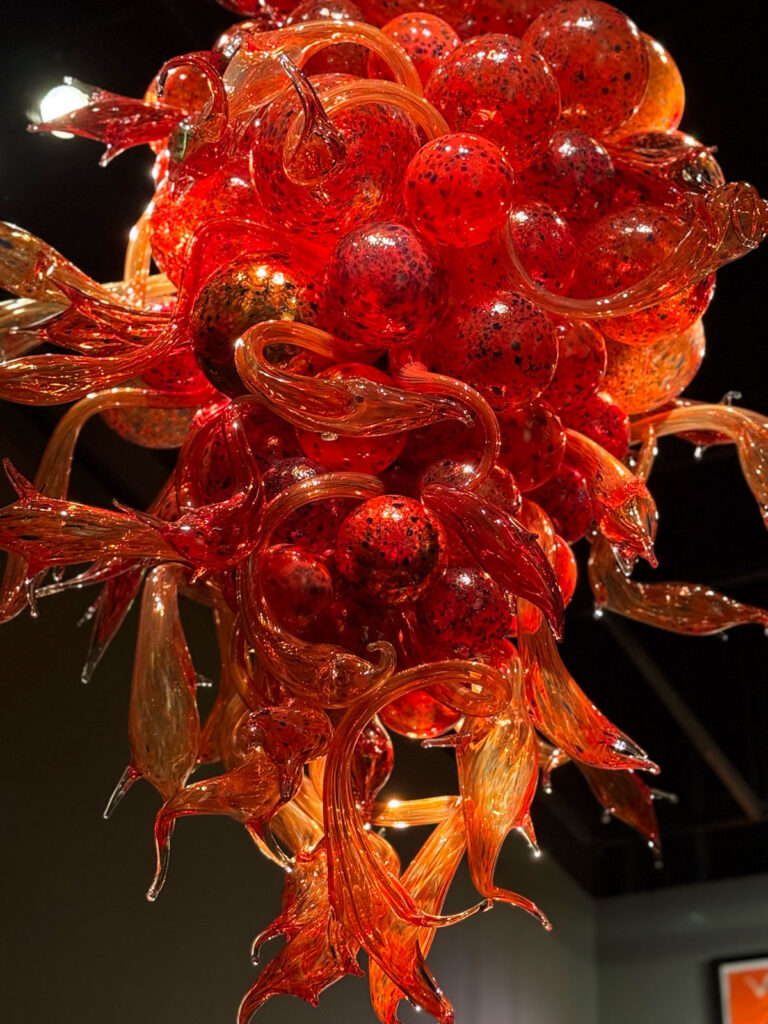
The Glasshouse is the climax of any visit to Chihuly Garden and Glass. A 40-foot-tall glass-and-steel structure designed to frame the Space Needle, it houses Chihuly’s largest suspended chandelier installation: over 1,400 hand-blown glass elements in reds, ambers, and golds that fill the entire canopy overhead.
The effect is more overwhelming than photographs suggest. Standing beneath it, the glass catches the natural light differently at every angle — some elements look solid and molten, others translucent and delicate. On overcast Seattle afternoons, it glows. On clear days, you can watch the Space Needle through the roof behind the sculpture.
Read more: Seattle Travel Guide: The Perfect Adventure in the Emerald City
The Galleries: Exploring Chihuly’s Signature Collections
Each gallery focuses on a different series of Chihuly’s work — different forms, color palettes, and production techniques. The sequence matters: earlier rooms prime your eye for the scale and density of what comes later.
Sealife Room
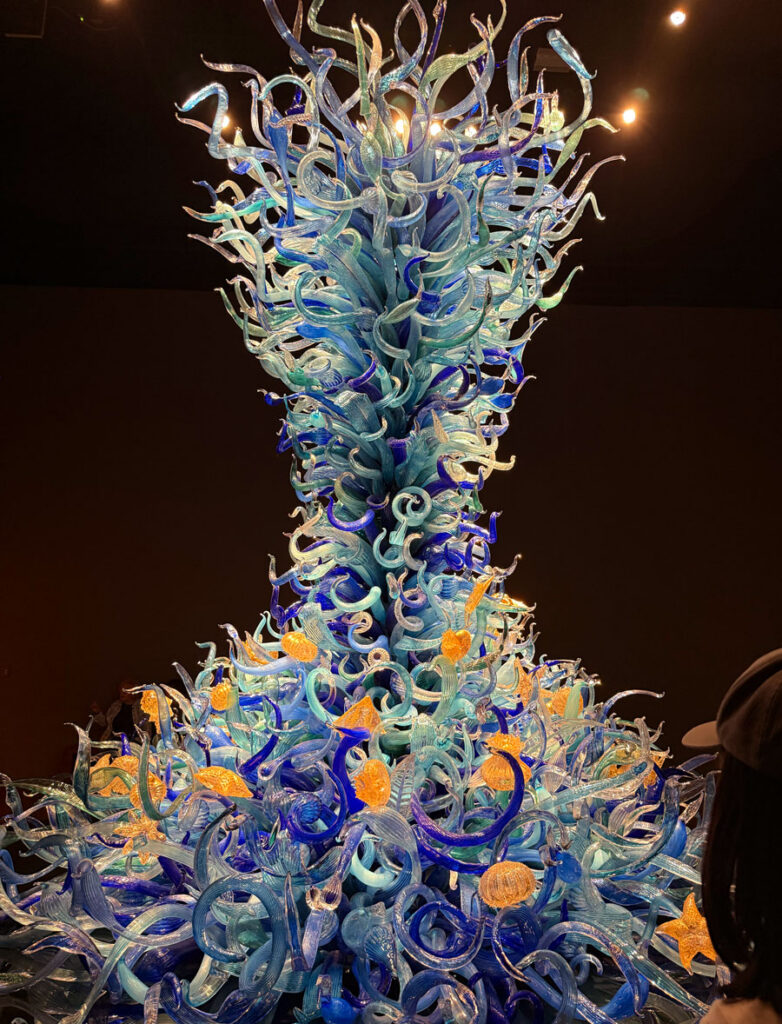
The Sealife Room is the first darkened space in the sequence, and the shift from the naturally lit entrance is intentional. Large organic forms in blues, violets, and deep teals suggest sea creatures — anemones, jellyfish, coral — without literalism. The glass is internally lit, which makes each piece seem to emanate rather than reflect light.
Persian Ceiling
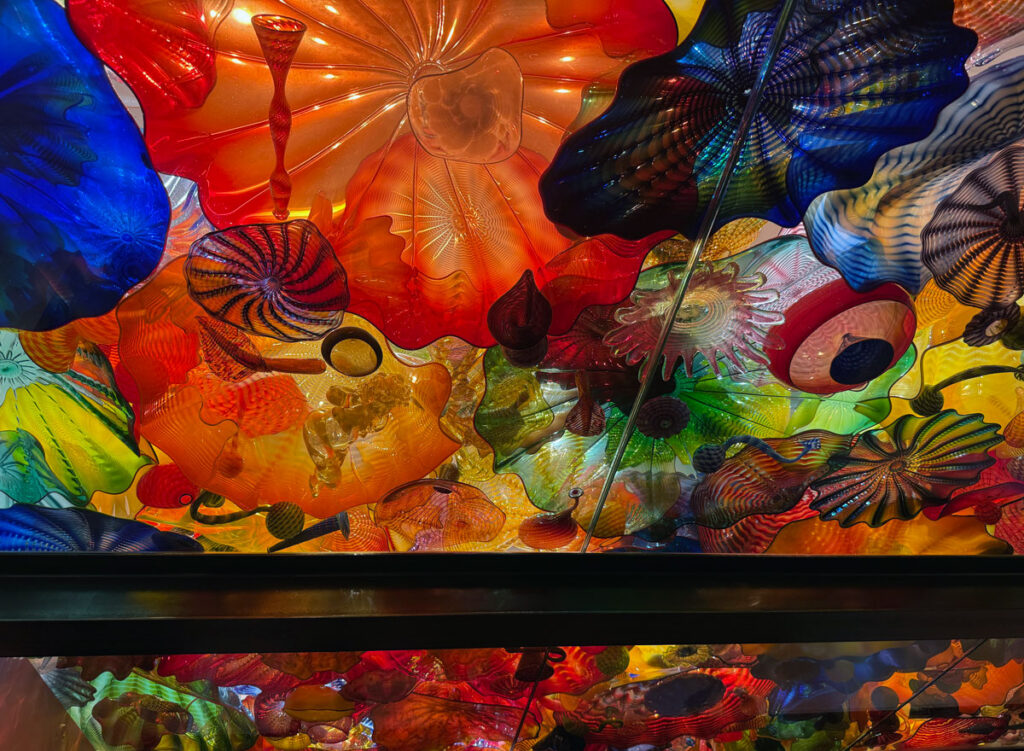
The Persian Ceiling is arguably the most photographed room in the interior galleries. An overhead panel of more than 1,300 flattened glass discs in deep jewel tones — garnets, emeralds, ambers — creates a mosaic ceiling that visitors instinctively photograph lying on the provided bench beneath it. The color combinations are Chihuly at his most decorative and his most controlled.
Ikebana & Float Boat
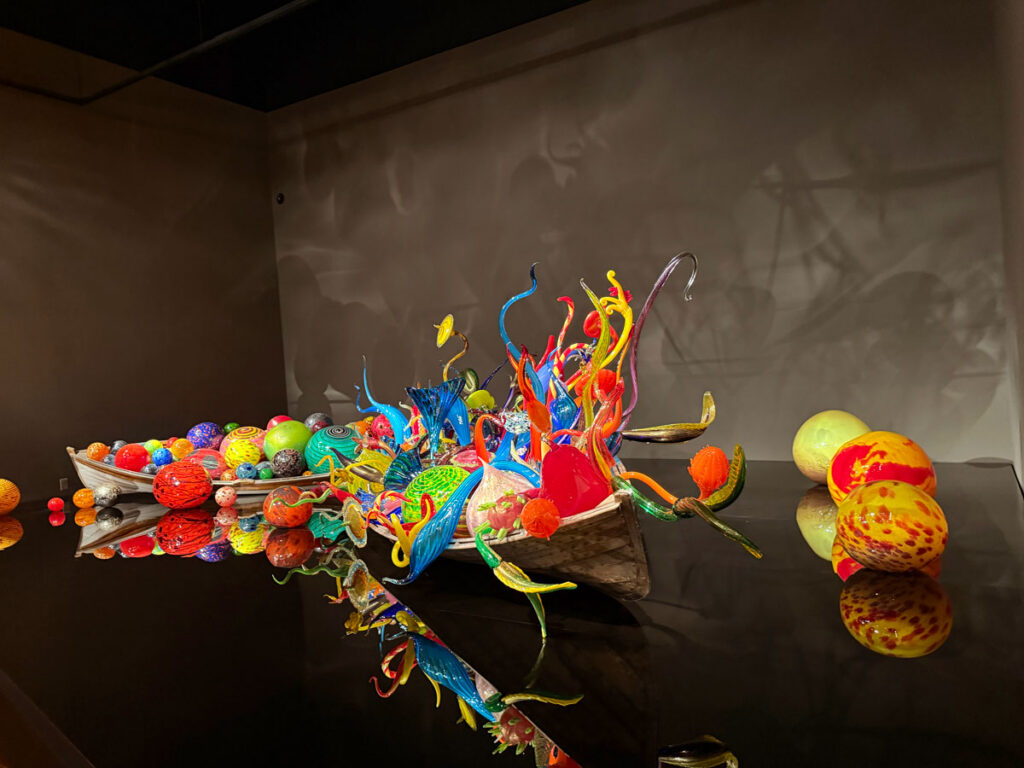
The Ikebana gallery showcases Chihuly’s monumental vessel forms — large-scale blown pieces that reference Japanese flower arranging in their upright, singular presence. The Float Boat room, adjacent, fills a dark wooden boat hull with hundreds of dense glass spheres in amber, gold, and rust. Both rooms reward close inspection: the variation in texture and surface finish between individual pieces is where Chihuly’s hand-production method is most evident.
Read more: Seattle Aquarium: an Honest Guide to Every Exhibit
Winter Brilliance
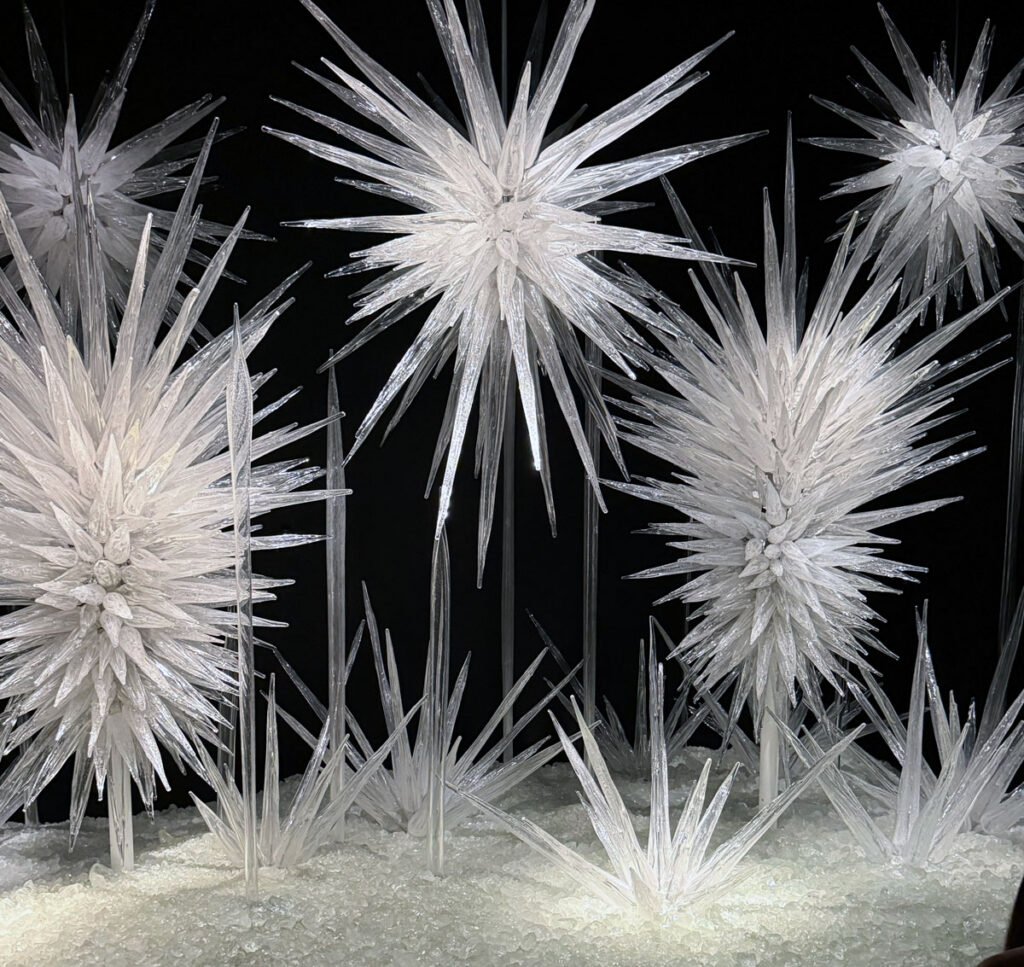
The Winter Brilliance installation covers an entire wall with hundreds of elongated glass forms — branching, tapering, some smooth and some textured — in a near-monochromatic white. Against the dark walls, it reads as architectural: more like living coral than sculpture. This is one of the rooms where slowing down pays off. The individual pieces vary considerably, and the cumulative effect changes depending on how close you stand.
Fiori & Macchia Forest
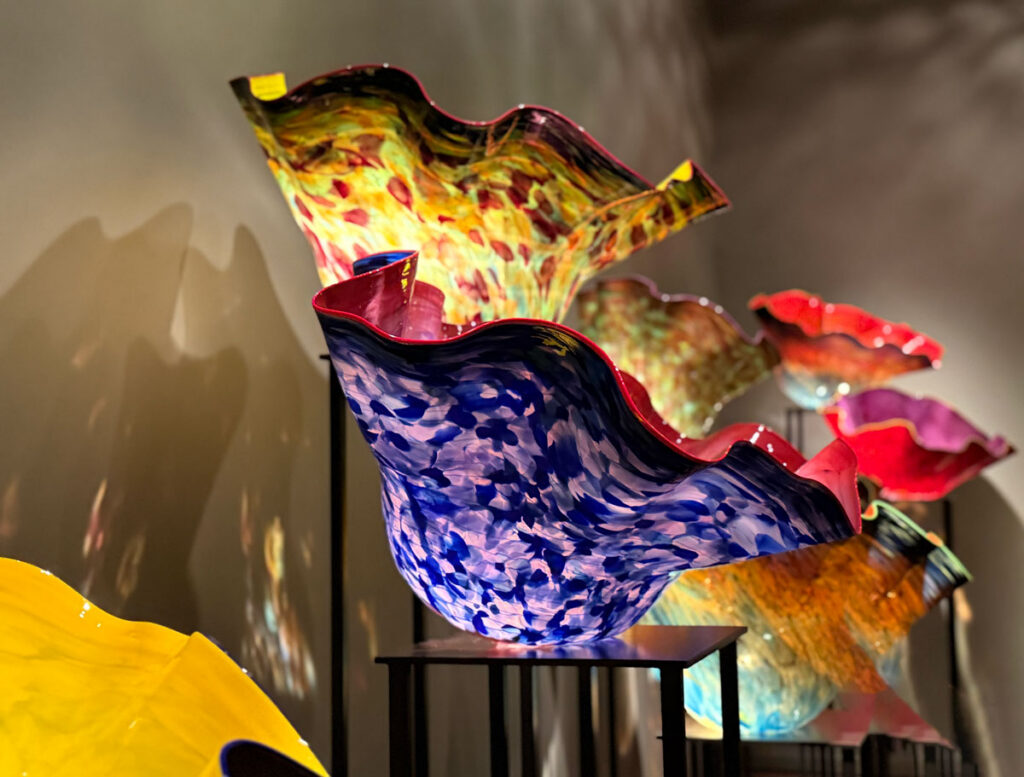
The Fiori and Macchia Forest rooms present two of Chihuly’s signature series in dense, immersive arrangements. The Macchia — Italian for “spotted” — are large, single-shell forms with wildly contrasting interior and exterior colors. The Fiori room is a floor-level garden of blown flowers, their stems rising from beds of colored glass. Both rooms are slower, more intimate than the ceiling installations, and worth taking time in.
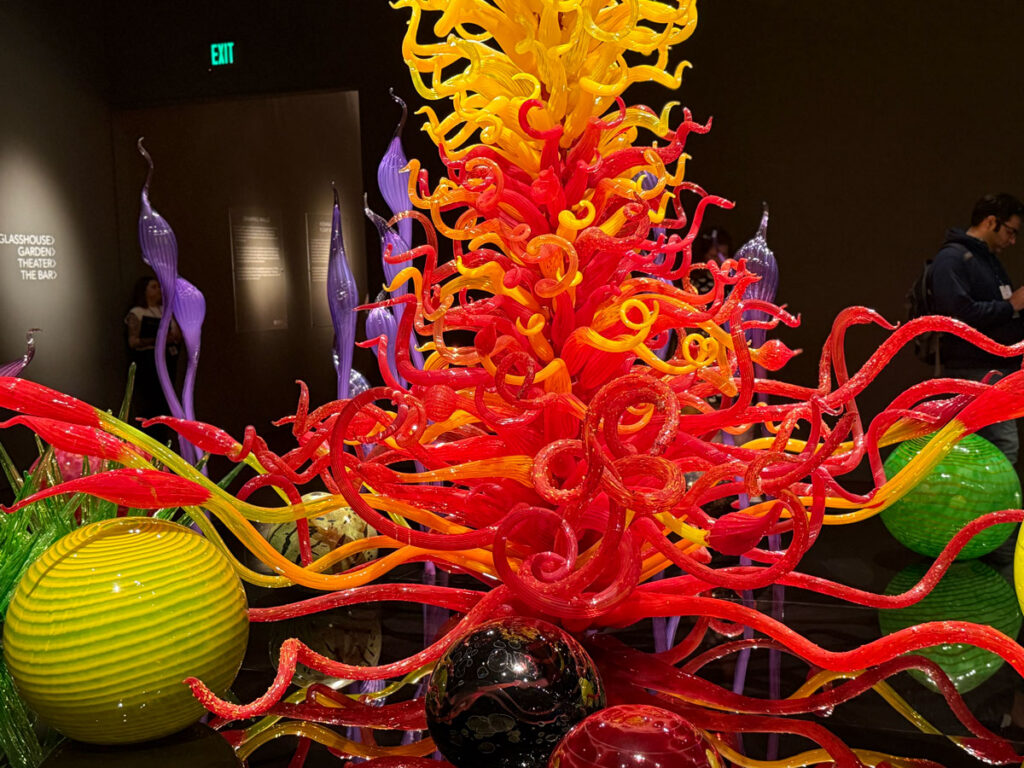
The Glass Baskets Room
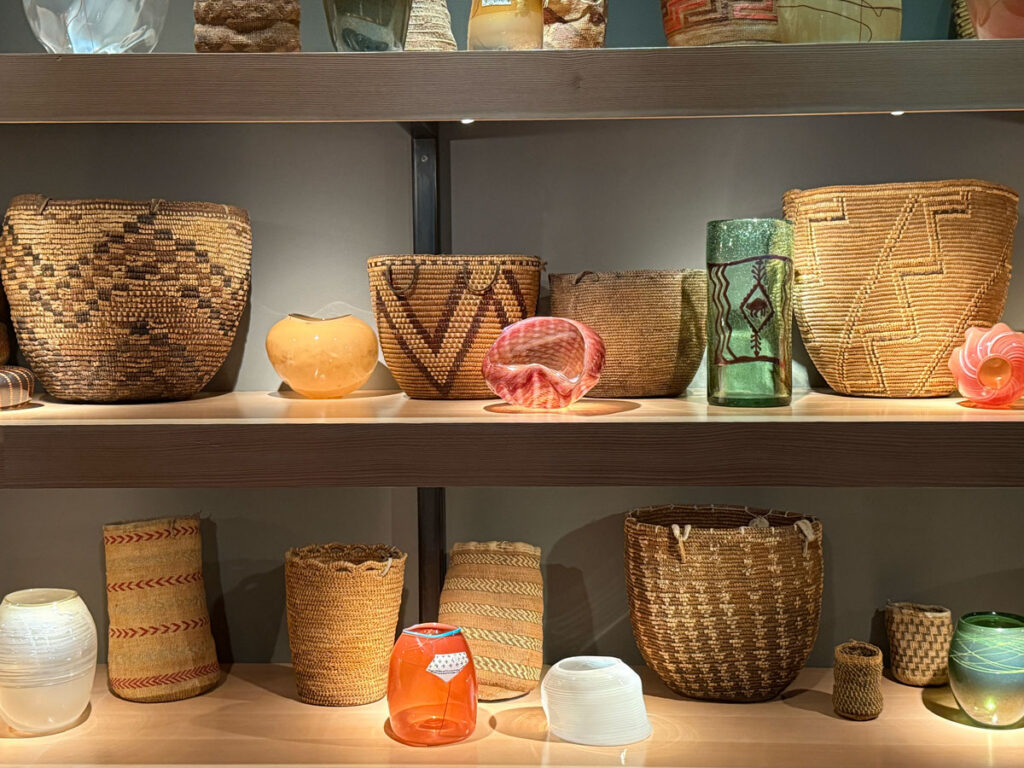
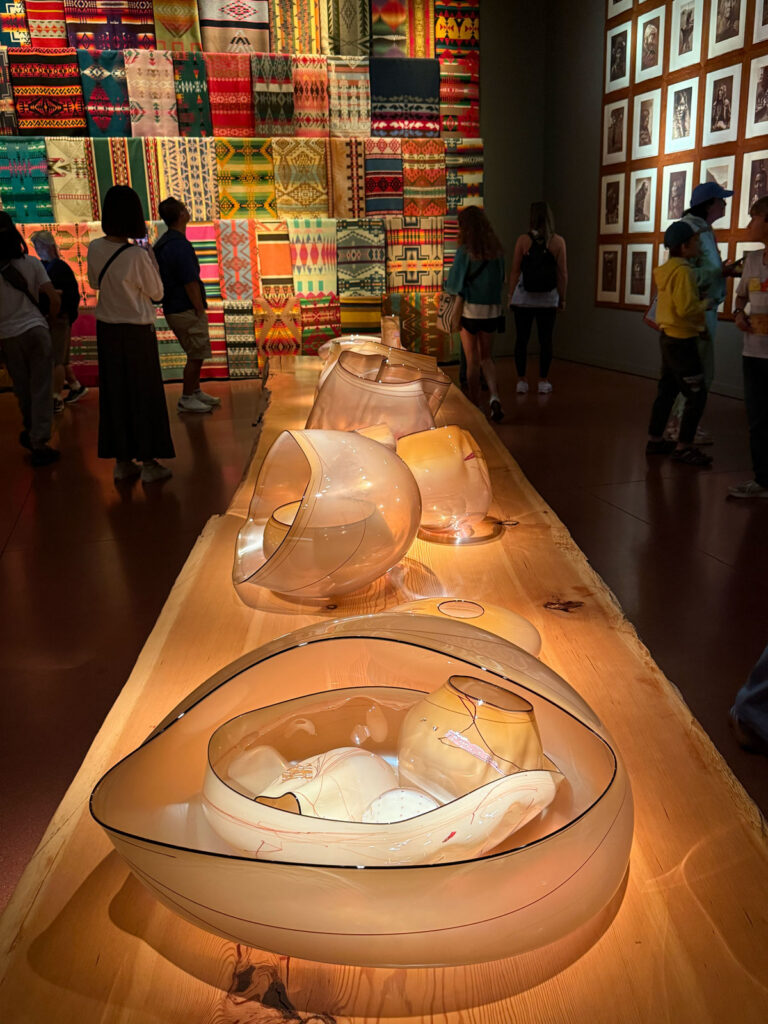
The Glass Baskets Room is one of the most intimate and fascinating galleries at Chihuly Garden and Glass. Dale Chihuly began creating his iconic Basket series in the late 1970s after being inspired by Northwest Coast Native American baskets. Unlike his larger, more dramatic installations, these pieces are smaller and incredibly delicate, featuring uneven rims, soft curves, and vibrant colors that resemble flowers, shells, and sea creatures. The room invites visitors to slow down and appreciate the remarkable craftsmanship and creativity that transformed glass into one of Chihuly’s most celebrated art forms.
Chandeliers
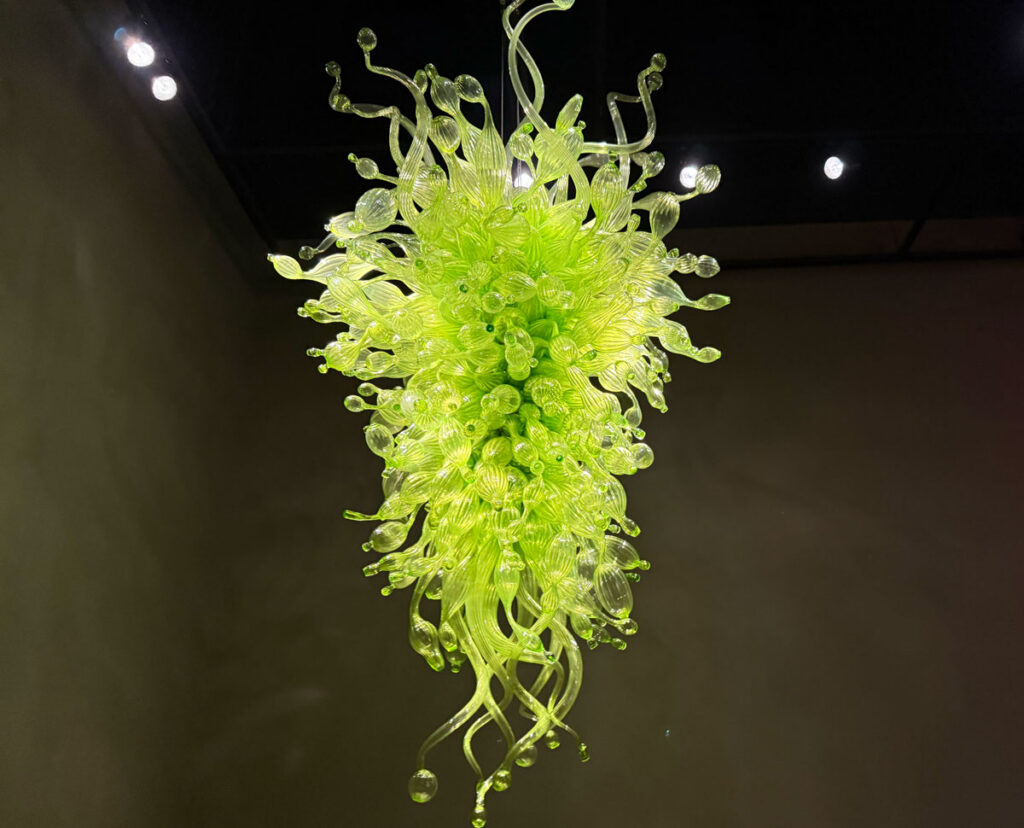
Inside the exhibit, towering blown-glass forms hang like frozen fireworks, each piece catching and reflecting light in shifting patterns. The installation transforms the room into a surreal, almost weightless environment where color and transparency blend into a single immersive experience.
Read more: A Day at Boeing Future of Flight: Plan the Perfect Visit
The Garden
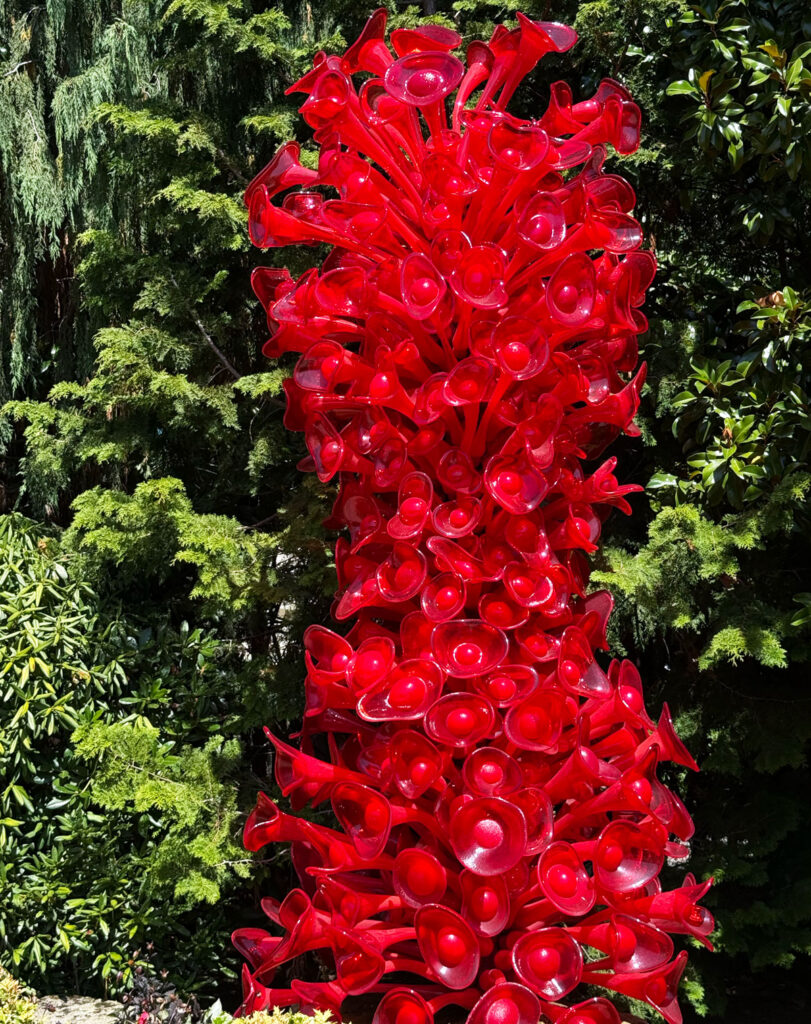
The outdoor garden takes the glass out of gallery lighting and puts it into natural Pacific Northwest daylight — a fundamentally different experience than the interior rooms. Morning light makes the translucent pieces glow from within. Overcast light flattens the color but adds depth to the textures. Direct afternoon sun turns certain installations almost blinding.
The garden paths wind through planted beds of grasses, ferns, and flowering perennials, with glass installations placed directly in and among the plantings. The contrast between organic growth and manufactured glass is the point: Chihuly has consistently described natural forms — coral, sea creatures, plant structures — as direct influences on his work, and the garden makes that conversation literal.
The Space Needle is visible from most of the garden, and the relationship between the two is at its most photogenic here — especially from the north end of the garden path.
Visiting in the Evening
The evening hours at Chihuly Garden and Glass are meaningfully different from daytime — different enough to justify coming back, or planning your first visit specifically for late afternoon into evening if you have the choice.
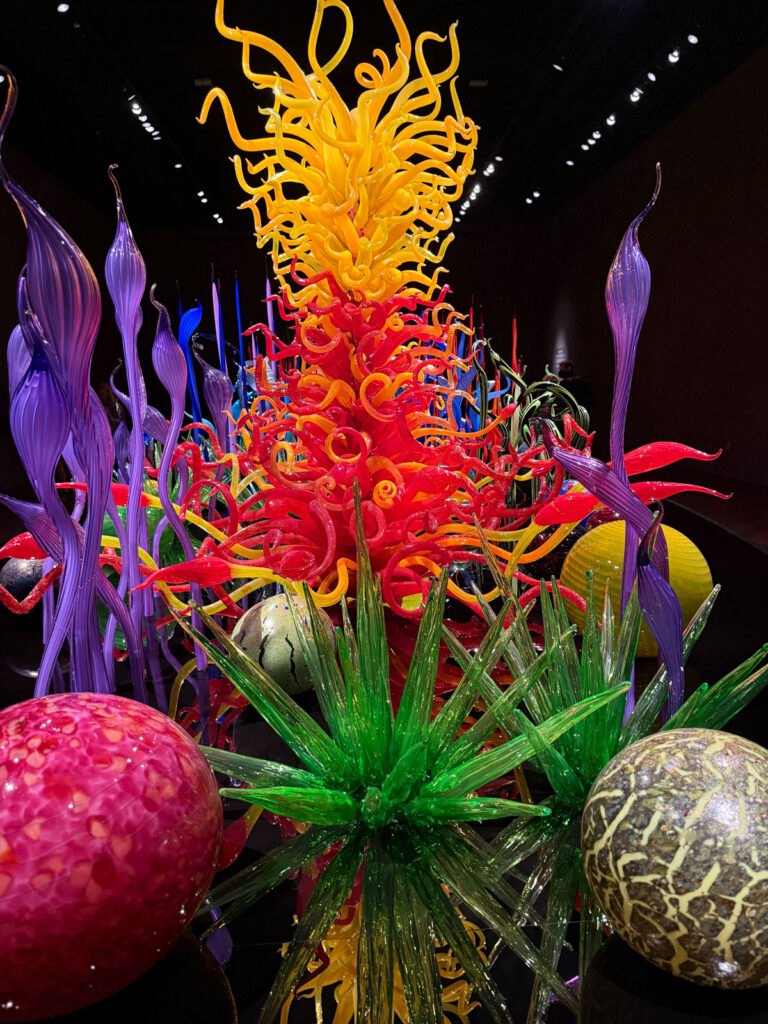
In the interior galleries, the shift from mixed daylight-plus-artificial to pure artificial lighting changes how the pieces read. Cooler-toned works — the Persian Cycle, the Sealife Room — become more saturated. The warm amber of the Glasshouse chandelier deepens toward copper.
In the garden, the glass pieces are spot-lit from below after dark, which reverses the daytime logic entirely — they glow outward against the darkness rather than catching ambient light. The Space Needle, illuminated at night, becomes a more active presence in the garden composition. Friday and Saturday evening hours extend to 9 PM.
Tips for Getting the Most Out of It
Chihuly Garden and Glass is smaller than its reputation suggests — it’s possible to move through everything in 90 minutes if you push. The visitors who find it transformative are usually the ones who slow down deliberately. Here’s what actually helps.
- Buy tickets in advance. Walk-up tickets are available but the entrance queue can be significant on weekends and in summer. Online purchase is the same price with no surcharge, and the timed-entry window keeps the galleries from getting overwhelmed.
- Go late afternoon or evening for the best light. The Glasshouse faces west, and the late-afternoon sun hits the glass at an angle that intensifies the amber tones considerably. Morning visits are quieter; evening visits have the best atmosphere.
- The Persian Ceiling bench is there for a reason. Lie on it. The overhead installation is designed to be viewed from directly below, horizontally. Standing and craning your neck misses most of it.
- Photography is allowed and encouraged. No tripods, no flash, and no touching — but otherwise the exhibition is remarkably photography-friendly. The Glasshouse is the hardest room to expose correctly; shoot toward the glass ceiling and you’ll blow out the highlights. Shoot with the glass behind you and you’ll get the chandelier properly lit.
- Visit the garden twice. Walk it at the beginning and at the end of your visit. The light changes, your eye is more trained after seeing the interior rooms, and you’ll notice things on the second pass that you missed on the first.
- The Space Needle combo ticket saves money if you’re doing both. They’re literally adjacent — you can see one from the other — and the bundled ticket is less expensive than purchasing separately.
Seattle CityPASS Includes Chihuly
The Seattle CityPASS bundles Chihuly Garden and Glass with the Space Needle and three additional attractions of your choice — Woodland Park Zoo, Museum of Pop Culture, Pacific Science Center, or Argosy Cruises. At roughly $129 per adult versus $255 at the door, it typically saves $60–80 for anyone visiting two or more included attractions. Valid for 9 days.
What Visitors Ask Most
- How long does Chihuly Garden and Glass take?
Most visitors spend 90 minutes to two and a half hours. If you move quickly through the galleries without stopping, you can cover everything in under an hour — but you’ll miss most of what makes the exhibition worthwhile. Two hours is a comfortable pace that allows time in each room and two passes through the garden. - Is Chihuly Garden and Glass worth the price?
At roughly $32 per adult, it sits in the mid-range of Seattle attraction pricing. The value depends on what you’re comparing it to: it’s a more focused, more intimate experience than a large natural history or science museum, and the work itself is genuinely difficult to see anywhere else at this scale. If you’re interested in art, glass, or simply want a beautiful and unusual hour and a half in Seattle, yes. If you’re primarily bringing young children, consider that there’s nothing to touch and the experience is largely visual — it’s better suited to kids over 7 or 8. - What is the best time to visit Chihuly Garden and Glass?
Late afternoon on a weekday is the sweet spot — crowds are thinner than weekends, and the light is at its best for the Glasshouse and the outdoor garden. If evenings appeal, Friday and Saturday are open until 9 PM, and the spot-lit garden after dark is a different experience entirely from daytime. - Can you take photos inside Chihuly Garden and Glass?
Yes — photography for personal use is permitted throughout the exhibition, including in all gallery rooms, the Glasshouse, and the outdoor garden. Tripods and flash are not allowed. The exhibition is unusually accommodating for a collection of this caliber, and the lighting in most rooms is designed to make photography relatively straightforward. - Is Chihuly Garden and Glass good for kids?
It depends on the child and the age. The work is visually spectacular and tends to capture the attention of children who respond to color and scale — many kids are genuinely transfixed by the Glasshouse. That said, the exhibition is not hands-on, and younger children may lose interest in the gallery rooms. Ages 7 and up tend to get more from it than younger visitors. - How do you get to Chihuly Garden and Glass?
The Seattle Monorail from Westlake Center runs directly to Seattle Center in about three minutes and costs $3.50 each way — it’s the fastest and most enjoyable option from downtown. Alternatively, the Seattle Center Monorail Station is a short walk from the Seattle Center Link Light Rail station. Street parking near Seattle Center exists but fills quickly on busy days; the Monorail or rideshare is usually faster.