
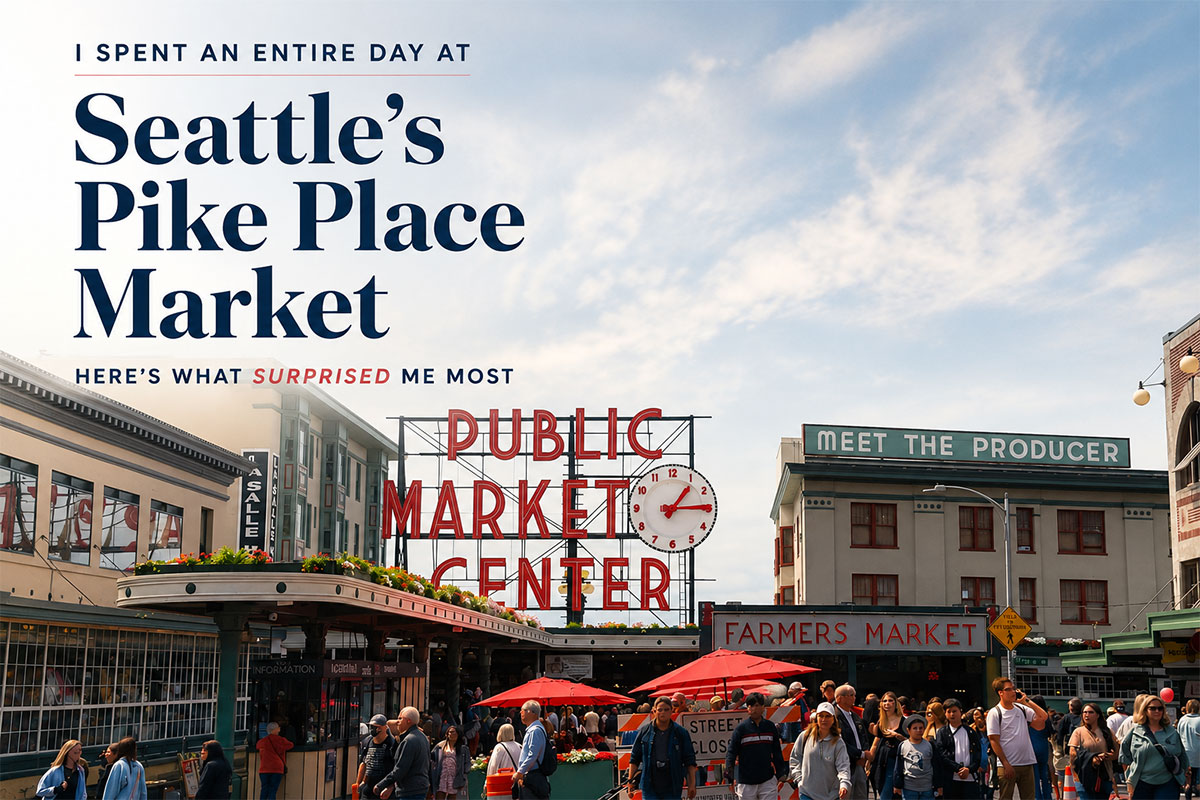
I Thought I Knew What to Expect. I Didn’t.
I’ve seen Pike Place Market in a hundred photos before ever standing in it myself — the red neon clock, the flying fish, the wall of gum everyone talks about. I figured I had a pretty solid mental picture going in. Spend an actual day there, though, moving slowly instead of rushing through for a five-minute photo op, and the place reveals itself differently. It’s noisier, smellier, weirder, and somehow more emotional than I expected from what is, at the end of the day, just a really old farmers market.
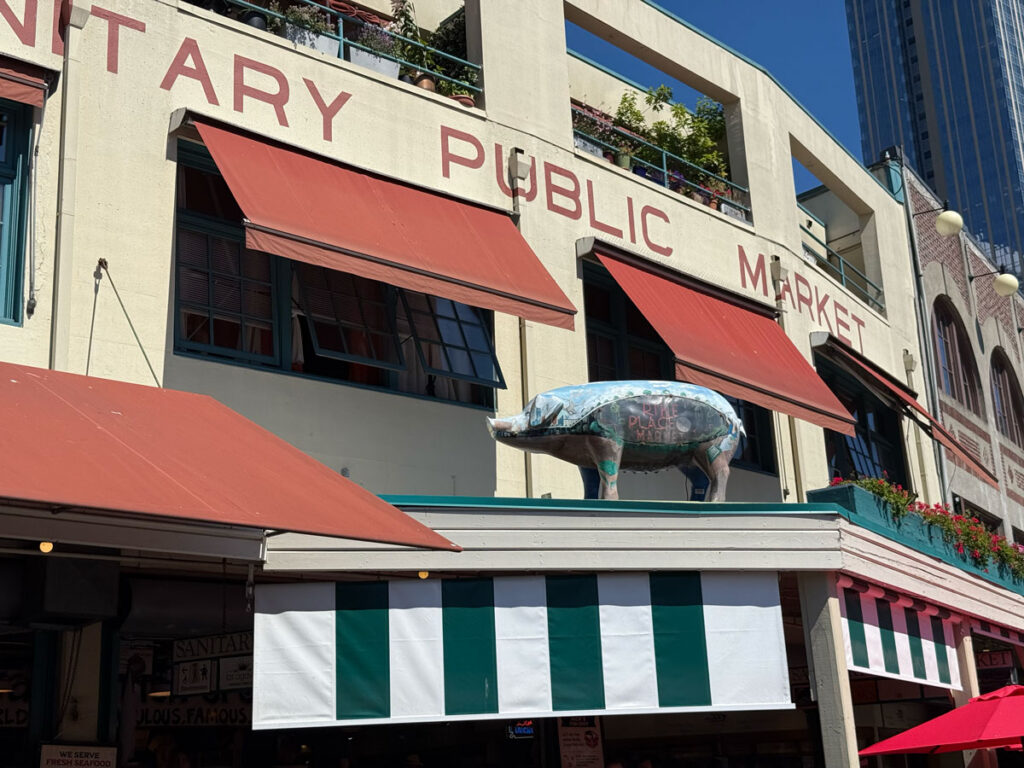
This isn’t a polished press-release version of Pike Place. It’s what actually surprised me after roughly seven hours of walking, eating, getting lost in alleys I didn’t know existed, and standing in more lines than I’m proud to admit. If you’re planning your own trip to Seattle, I’m hoping this saves you some time and points you toward the things actually worth your morning.
SURPRISE NO. 1
It’s Much Bigger Than the Postcards Suggest
Everyone shows you the same forty feet of Pike Place Market: the sign, the fish guys, maybe the gum wall if they’re feeling adventurous. What nobody mentions is that this stretches across nine acres and multiple levels, and the famous part most tourists photograph is genuinely a small fraction of what’s actually here.
I didn’t fully grasp this until I’d already spent two hours wandering and still hadn’t found the lower level everyone online calls the DownUnder. There’s an entire warren of small shops tucked beneath the main floor — comic book stalls, oddity shops, a place selling nothing but magic tricks. Most people walking through at street level have no idea it exists.
The lesson here: don’t treat this as a fifteen-minute photo stop on your way to somewhere else. Block out real time, or you’ll leave having seen maybe a third of what’s actually there.
Read more: Seattle Travel Guide: The Perfect Adventure in the Emerald City
SURPRISE NO. 2
The Lines Are Real, and They’re Mostly Worth It
I’m generally allergic to waiting in line for food. Life is short, and I’ve walked away from plenty of “iconic” spots elsewhere because the wait didn’t match the hype. Pike Place broke that rule for me almost immediately.
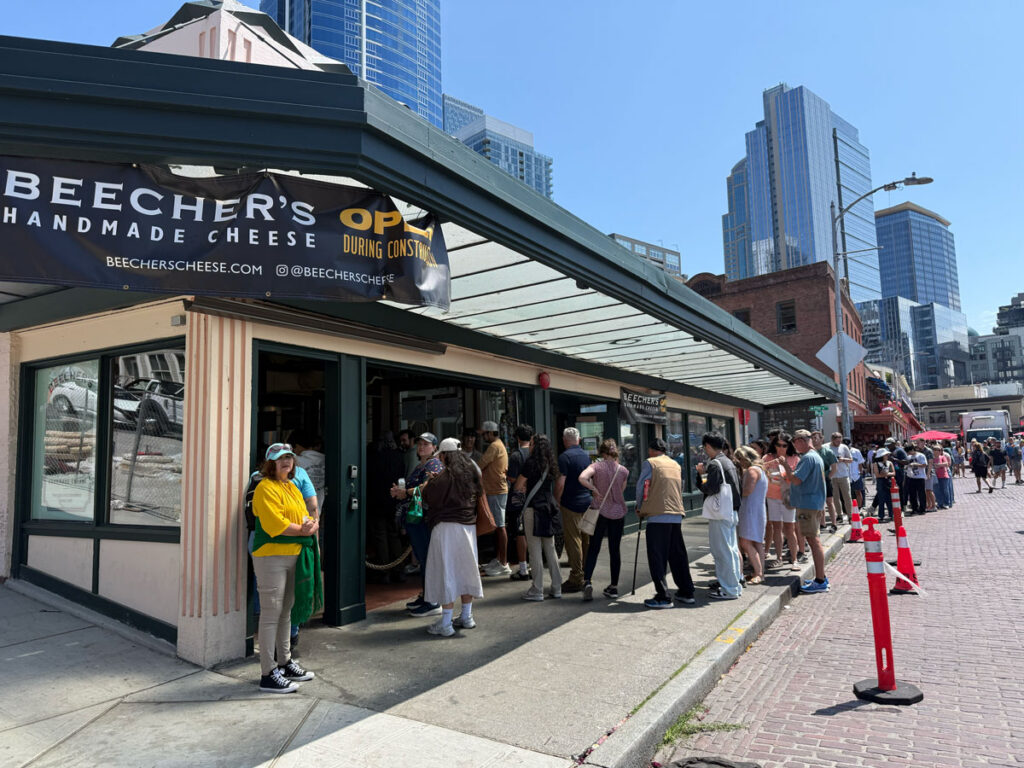
That’s the line outside Beecher’s Handmade Cheese, and it looked exactly like that for most of the day, snaking well past the storefront and down the block. I waited about eighteen minutes. The mac and cheese, made from cheese they’re literally producing in the window behind the counter, was good enough that I understood the loyalty immediately. Watching the actual cheese-making process while you wait does help pass the time, to be fair.
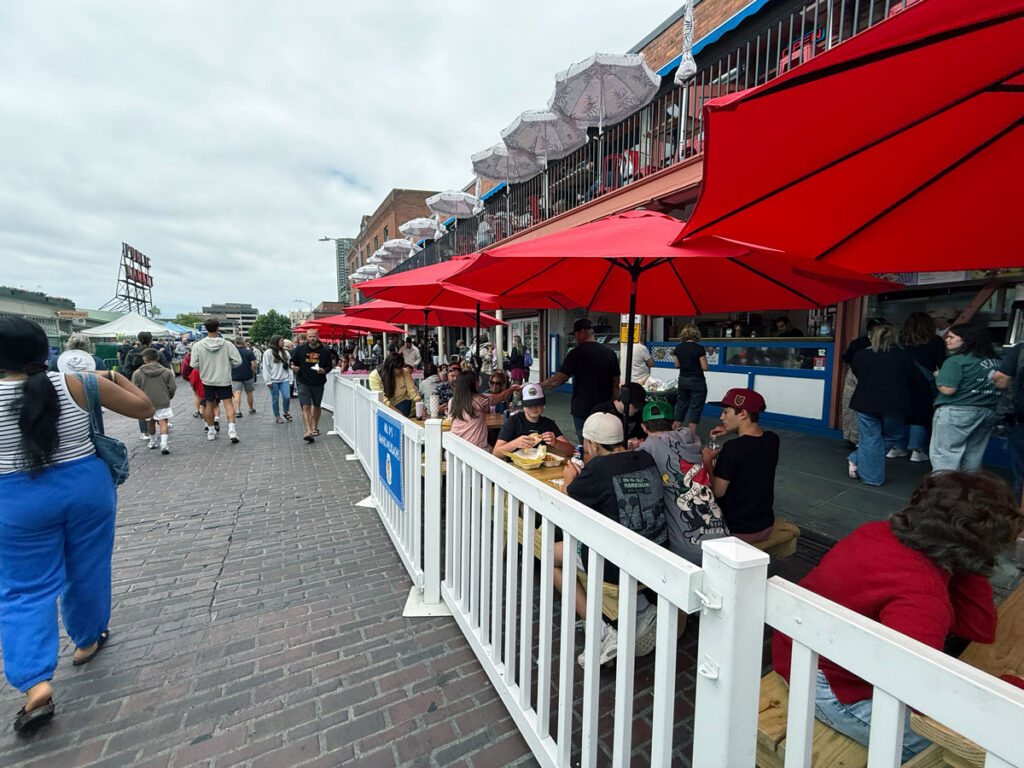
Piroshky Piroshky was the same story — a line that looked intimidating from a distance but moved fast enough that I had a smoked salmon pâté piroshky in hand within fifteen minutes. The lesson I took from this: the lines that wrap around a corner are usually the ones worth joining. The market self-selects pretty efficiently for quality.
Read more: Seattle Aquarium: an Honest Guide to Every Exhibit
SURPRISE NO. 3
The Seafood Counters Are More Theater Than I Expected
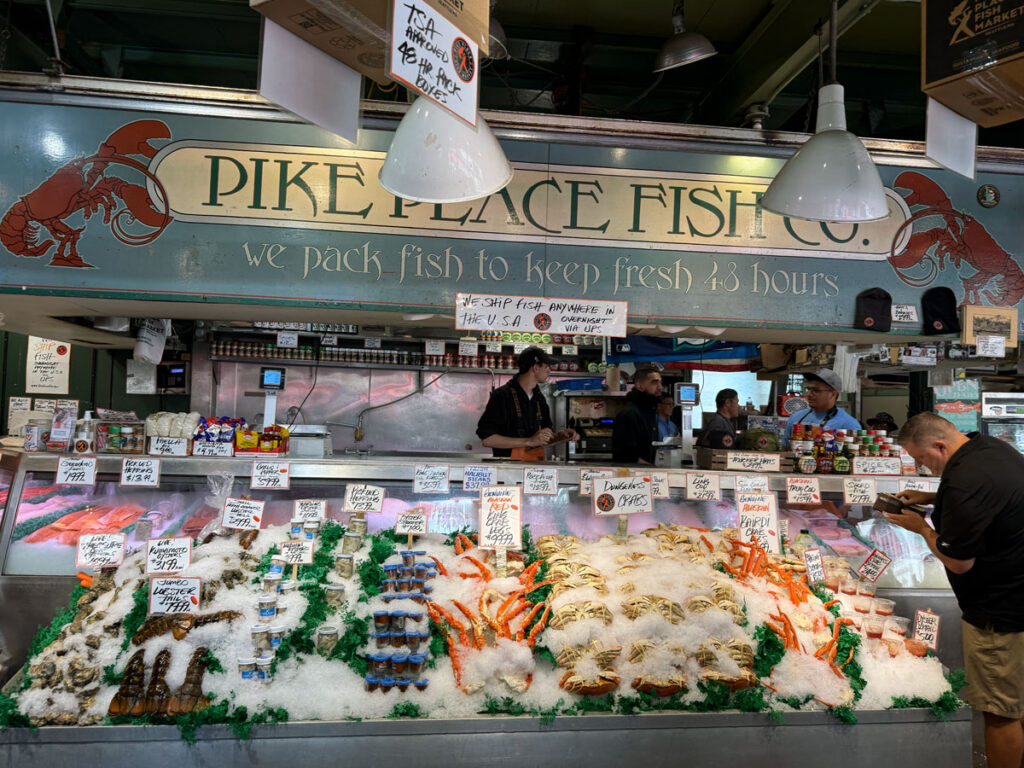
I knew about the fish throwing going in — it’s the single most famous thing about this market. What I didn’t expect was how much personality lives in every seafood stall, not just the one everyone photographs.
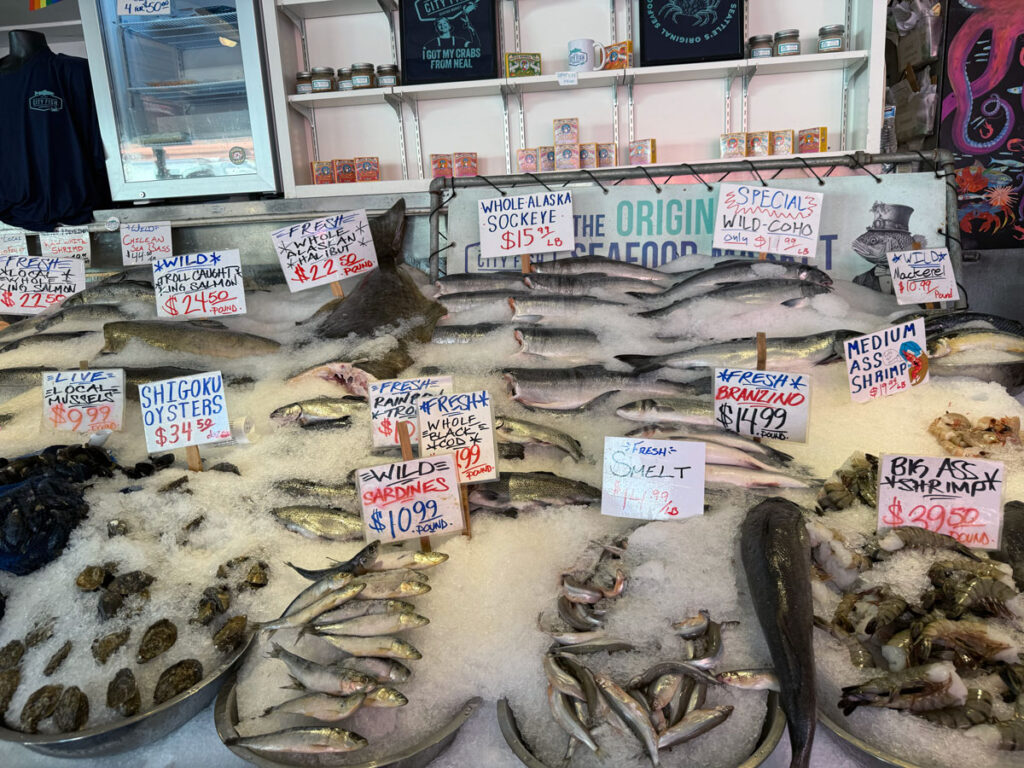
Pure Food Fish Market has been doing this since 1911, and you can feel that history in how confidently the staff handle the displays. The vendor working the counter when I walked by was mid-joke with a family of four, hat backward, completely in his element. Alaskan King Crab legs were going for around ninety-plus dollars a pound, which sounds steep until you realize people are shipping this stuff across the entire country because it genuinely doesn’t get fresher.
Read more: Why Pacific Science Center Still Earns a Full Day of Your Seattle Trip
What got me was the handwriting. Every single price sign across every seafood stall is hand-lettered, slightly different, slightly imperfect, and somehow that makes the whole display feel more honest than a printed menu ever could. Oysters, mussels, whole branzino, sardines stacked in fan patterns — it’s clearly curated for visual impact, but the fish itself is the real deal, not a prop.
GOOD TO KNOW
Most seafood counters will pack fish for travel or arrange shipping if you’re flying home and want to bring something back. Ask before you buy — it’s a normal request here.
SURPRISE NO. 4
The Produce Stalls Quietly Steal the Show
Nobody flies to Seattle specifically to look at vegetables, and yet the produce stalls ended up being one of my favorite parts of the entire day. I wasn’t prepared for how the displays are arranged — not just stacked for function, but composed almost like still-life paintings.
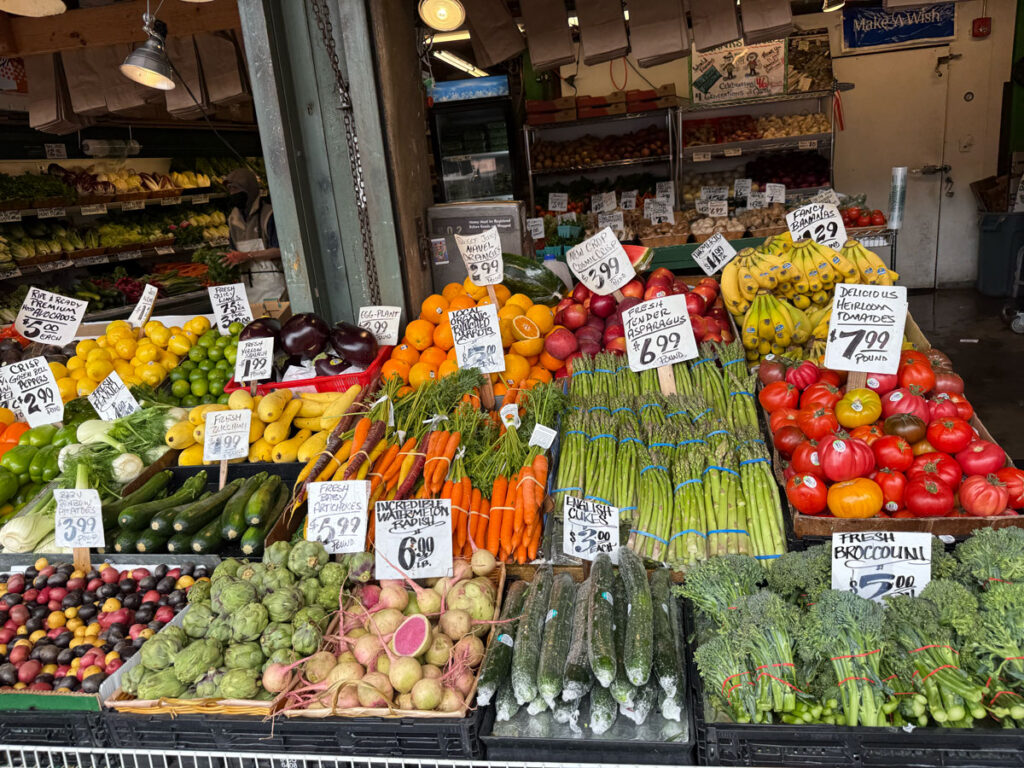
This particular stall had rainbow carrots fanned out like a sunburst, wild chanterelle mushrooms piled high enough to bury your hand in, and morels going for nearly fifty dollars a pound with a handwritten note offering to pack them for travel. Sea beans and pea vines I’d genuinely never heard of were sitting next to tomatoes in five different colors. None of it felt staged for tourists — this is just how the vendors who’ve been doing this for decades present their work.
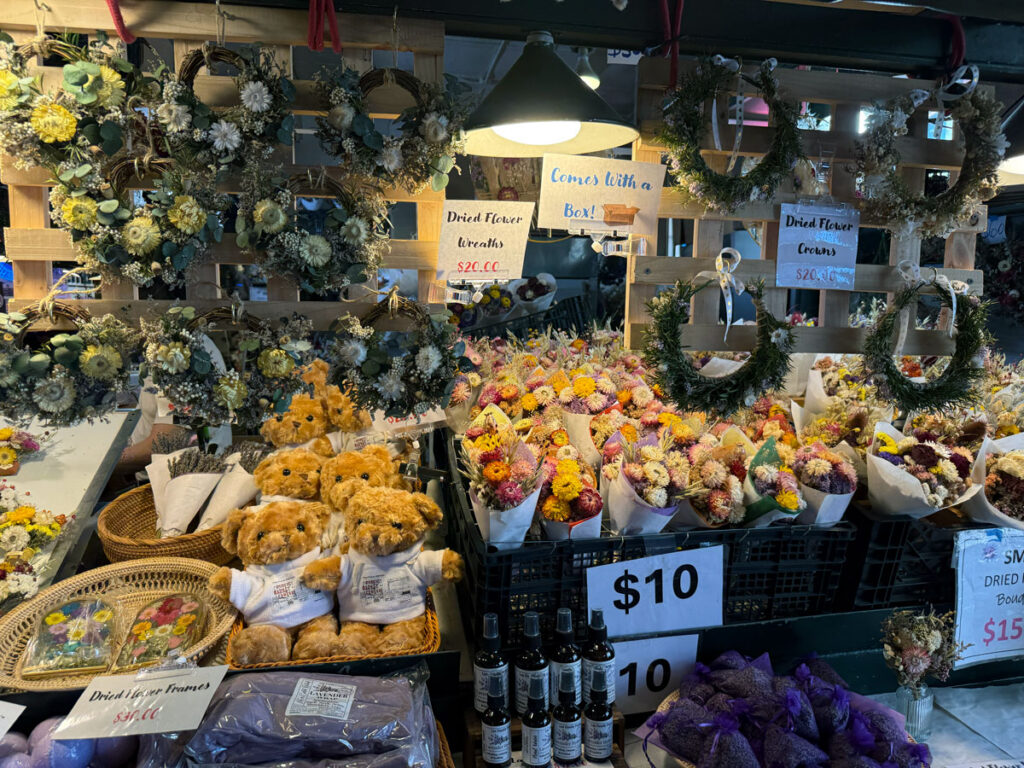
Then there are the flowers, which somehow get even less hype than the produce despite being arguably more photogenic.
SURPRISE NO. 5
The Best Finds Aren’t the Famous Ones
The original Starbucks and the gum wall get all the attention online, and sure, they’re worth a quick look if you’re already there. But the shops that actually made me stop and pull out my phone to take notes were ones I’d never heard of before walking past them.
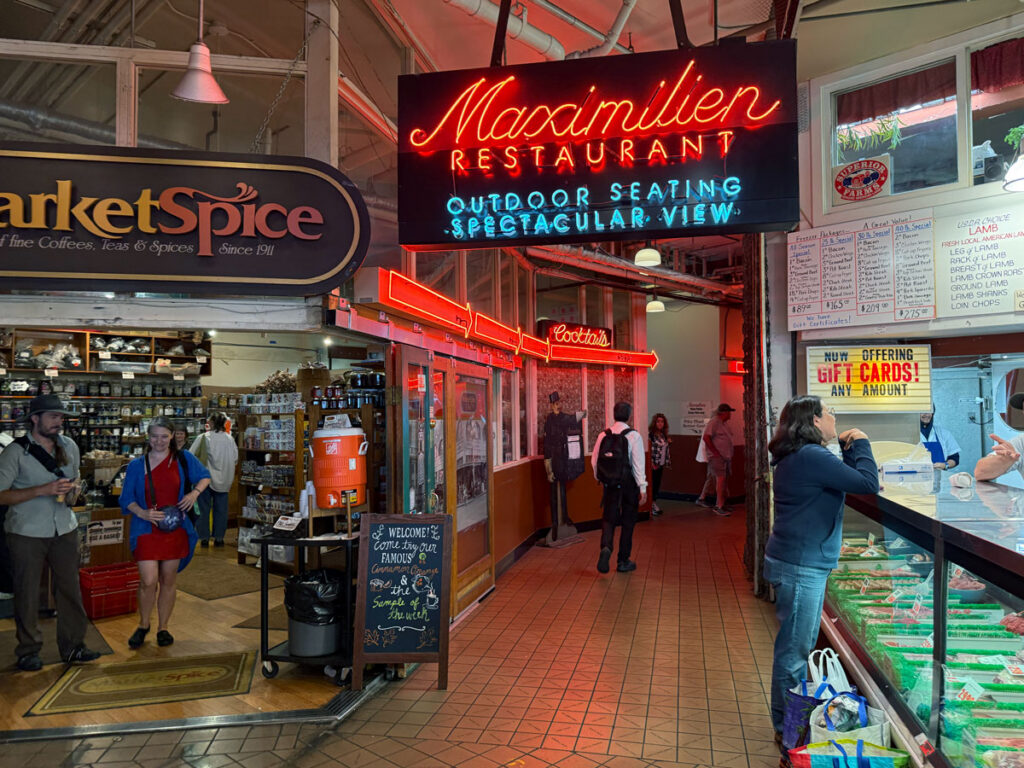
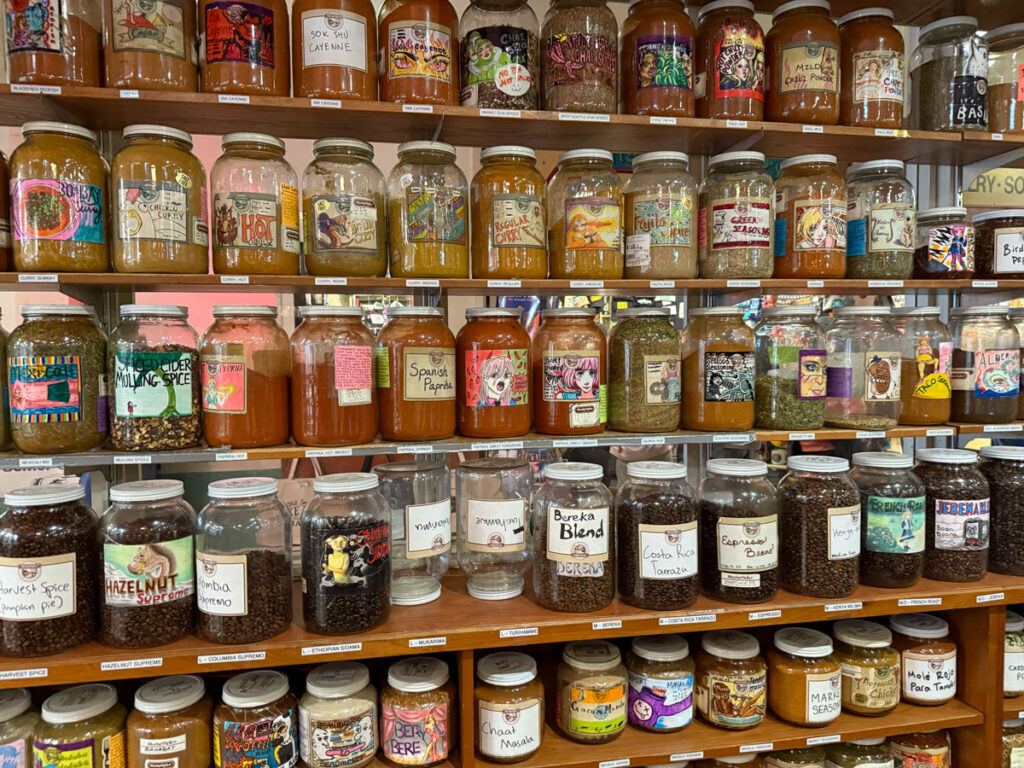
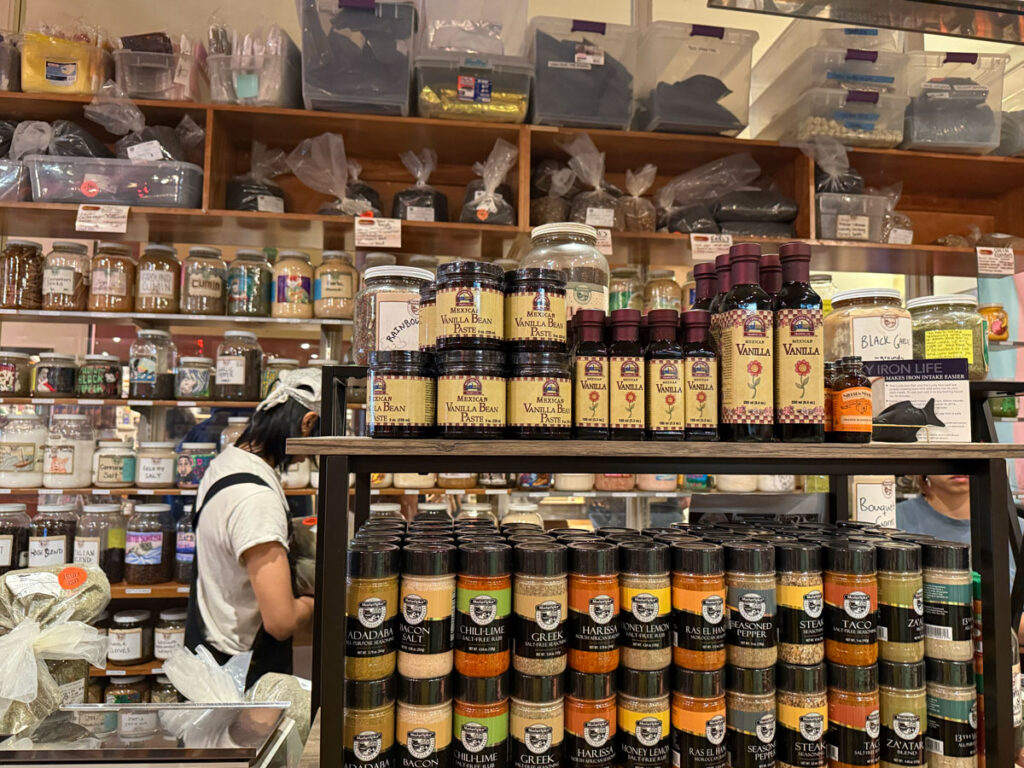
MarketSpice has been here since 1911, slinging loose-leaf tea, spices, and a famous orange-cinnamon blend that’s apparently been a local staple for generations. I walked in expecting a gift-shop version of a spice store and instead found wall-to-wall apothecary jars and an actual line of regulars who clearly weren’t there for souvenirs. There’s something grounding about a shop that’s outlasted a century of trends just by doing one thing reliably well.
I also stumbled onto a small jam and pepper jelly shop tucked into a corner I wasn’t paying attention to, run by a family who’s apparently been making the same recipes since the early 1980s. No line, no signage trying to pull tourists in, just shelves of jars and a woman quietly restocking behind the counter. Those are the moments that make this market feel less like an attraction and more like an actual neighborhood.
LOCAL HACK
If a shop looks slightly worn-in and isn’t trying hard to grab your attention, that’s usually a good sign. The market’s longest-running vendors rarely need flashy signage — their regulars already know where to find them.
What I’d Do Differently Next Time
- Arrive earlier than I didI showed up around 9:30 and the crowds were already noticeably building by 10:30. Vendors start setting up as early as 7 AM, and the difference between a 9 AM visit and an 11 AM visit is night and day.
- Skip breakfast beforehandI made the mistake of eating before I arrived, which meant I was too full to properly enjoy half the food stalls by the time I reached them. Go hungry. You’ll want room for at least three different things.
- Actually find the DownUnder levelI almost missed it entirely and only found it by accident near the end of the day. Look for stairwells heading down from the main level — it’s an entirely different, much quieter version of the market.
- Bring cash for the smaller stallsMost places take cards now, but a few of the smaller farm and craft tables still run cash-preferred. I got caught short once and had to backtrack to an ATM.
- Wear shoes you don’t mind getting a little wetBetween the ice melt near the seafood counters and a light drizzle that rolled in around midday, the cobblestones got slick fast. Flat, grippy shoes saved me more than once.
Read more: A First-Timer’s Guide to Chihuly Garden and Glass in Seattle
Hours, Cost, and the Basics
One thing that surprised me in a good way: it’s completely free to walk through. You’re only spending money on what you choose to eat, drink, or take home with you.
Hours of Operation
Main Market Hours: Daily, 9:00 AM – 6:00 PM
Restaurants & Bars: Many open later, some past 10:00 PM
Vendor Setup: Starts as early as 7:00 AM
Closed: Thanksgiving & Christmas Day only
Admission: Free
LOCAL TIP
The market is fullest Thursday through Monday, with mornings before noon consistently the quietest stretch of any day. A Tuesday or Wednesday morning visit is about as peaceful as this place gets.
The Food Worth Planning Around
Based on my own day of eating my way through the market, plus what locals kept independently recommending, here’s where I’d point a first-time visitor.
- Piroshky Piroshky
Russian hand pies in over twenty rotating flavors. The smoked salmon pâté version is the one locals mention first. Line moves faster than it looks. - Beecher’s Handmade Cheese
Famous for its mac and cheese, made fresh in the on-site factory you can watch through the window while you wait.
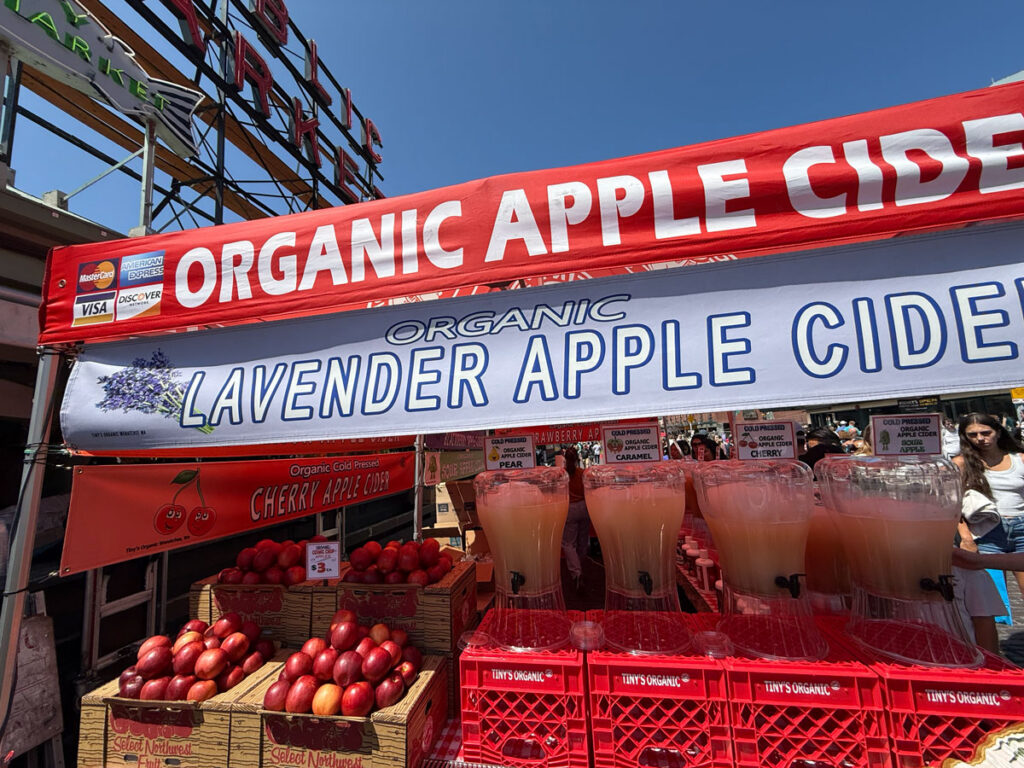
- Tiny’s Organic Apple Cider
Cold-pressed cider in flavors like lavender, cherry, and caramel, served from giant dispensers right under the market sign. - Pike Place Chowder
Multiple award-winning clam chowder. The sampler flight lets you try several varieties, including smoked salmon and lime coconut. - Ellenos Real Greek Yogurt
Thick, creamy yogurt with rotating fruit toppings. A lighter palate reset after a heavy lunch. - Pure Food Fish Market
Operating since 1911, with fresh Alaskan King Crab, halibut, and shipping options if you want to bring fish home.
How I’d Structure a Shorter Visit
I had the luxury of a full day. Most visitors don’t. Here’s how I’d compress the best parts into roughly two and a half hours.
- 9:00 AM
Arrive Right at Opening
Beat the worst of the crowds and get a clean shot of the market sign before it fills with people. - 9:15 AM
Coffee and a Quick Pastry
Grab something fast to fuel up before the real eating begins later in the visit. - 9:35 AM
Fish Market and Seafood Row
Catch the fish throwing and browse the seafood counters while they’re still fully stocked and uncrowded. - 10:00 AM
Flowers and Produce
Walk the flower stalls and produce displays while selection is at its best. - 10:30 AM
Find the DownUnder
Head downstairs for the quieter lower level most tourists miss entirely. - 11:00 AM
Eat Your Way Through
Piroshky, Beecher’s, chowder, whatever you have room for. This is the part worth lingering over.
Parking and Transit, Briefly
I’d recommend skipping the car if you’re staying anywhere downtown. The Link Light Rail and most downtown bus routes drop you within a short walk, and Seattle traffic around the market gets dense fast, especially on weekends.
If you do drive, the Pike Place Market Parking Garage on Western Avenue is the most direct option, with three entrances and discounted rates if you arrive before 9 AM or after 5 PM. Whatever you do, don’t try to drive down the historic Pike Place roadway itself — pedestrians have the right of way and it moves at a crawl.
Already Doing Seattle? Seattle CityPASS Saves You Up to 47%
Pike Place Market is free to walk through — but the Seattle attractions surrounding it aren’t. If you’re planning to hit the Space Needle, Chihuly Garden and Glass, Pacific Science Center, or the Seattle Aquarium on the same trip, Seattle CityPASS bundles five top attractions (including one IMAX film at PacSci) at up to 47% off combined gate prices.
- Space Needle observation deck included
- Pacific Science Center + one IMAX film included
- Seattle Aquarium or Chihuly Garden and Glass included
- Valid for 9 consecutive days from first use
- Mobile ticket — nothing to print