
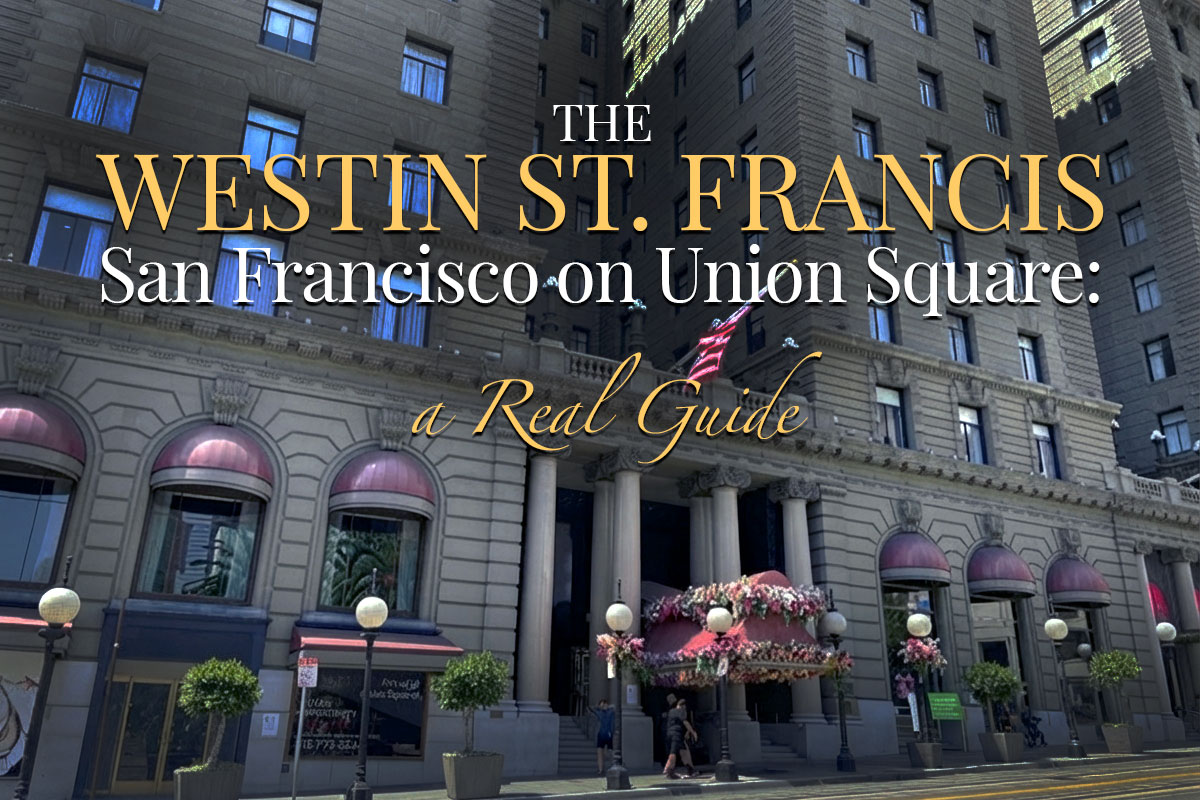
Most hotels don’t have a history worth reading before you book. The Westin St. Francis is the exception. Since opening in 1904 directly on Union Square, it’s survived the 1906 earthquake, hosted a Hollywood scandal that ended a movie star’s career, sheltered an emperor, catered a state dinner for a queen, and had a president nearly assassinated on its front steps. It’s also, more practically, a genuinely well-located, recently renovated place to sleep in downtown San Francisco — and after a firsthand stay, here’s the real breakdown of what it costs, what it’s like, and whether the history is worth the price tag.
The Westin St. Francis at a Glance
- Address: 335 Powell Street, directly on Union Square, San Francisco
- Opened: March 21, 1904; Tower Building added in 1972
- Rooms: 1,195 total across the historic Landmark Building (629 rooms) and the 32-story Tower Building (566 rooms)
- Typical nightly rate: Roughly $200–450+ depending on season, room type, and how far ahead you book
- Destination fee: Around $35 + tax per night, common at large downtown properties, so factor it into your budget
- Getting around: The Powell Street cable car lines stop directly in front of the hotel; Union Square shopping and the theater district are a short walk away
A Hotel With an Actual History
The St. Francis opened on March 21, 1904, built by the family of railroad magnate Charles Crocker at a cost of $2.5 million (something like $87 million today) after the family studied Europe’s grandest hotels for inspiration. On opening night, a line of carriages reportedly stretched three blocks as San Franciscans came to see the city’s newest landmark.
Two years later, the 1906 earthquake and fire tore through the city. The hotel’s structure held, well enough that opera star Enrico Caruso, who’d been staying there, was served breakfast that same morning — though the fire that followed gutted the interior, and the hotel didn’t fully reopen until 1907. It’s been rebuilding, expanding, and adding to its guest list of the famous and infamous ever since.
Read more: Best Free Things to Do in San Francisco + Attractions Worth Paying For
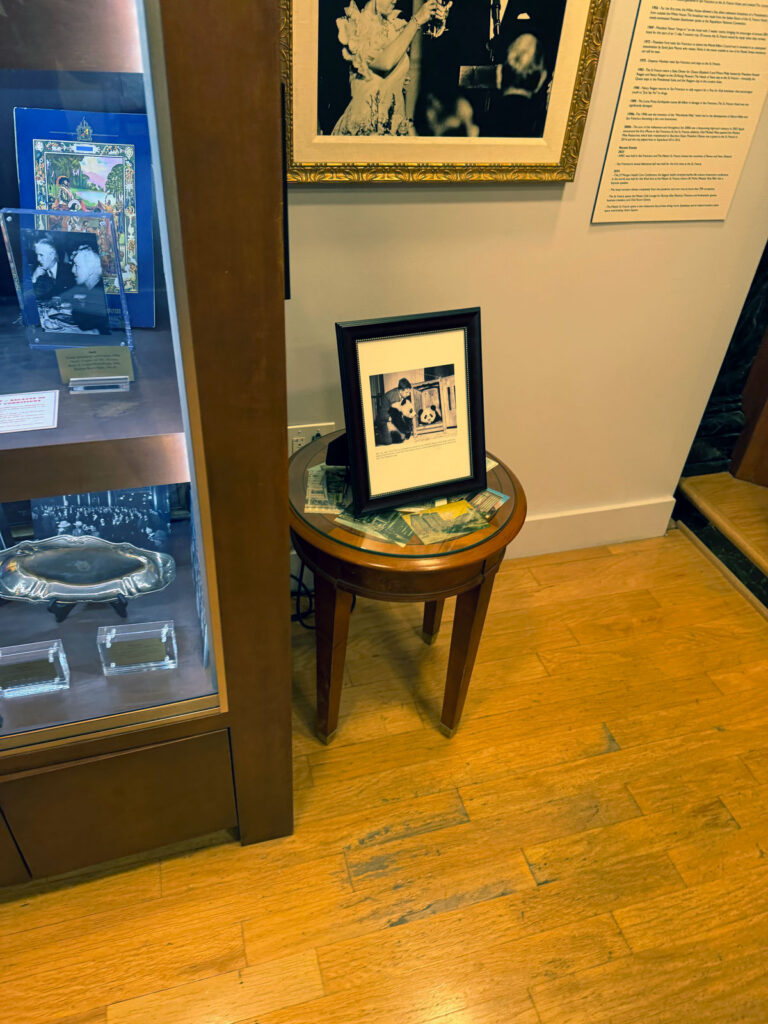
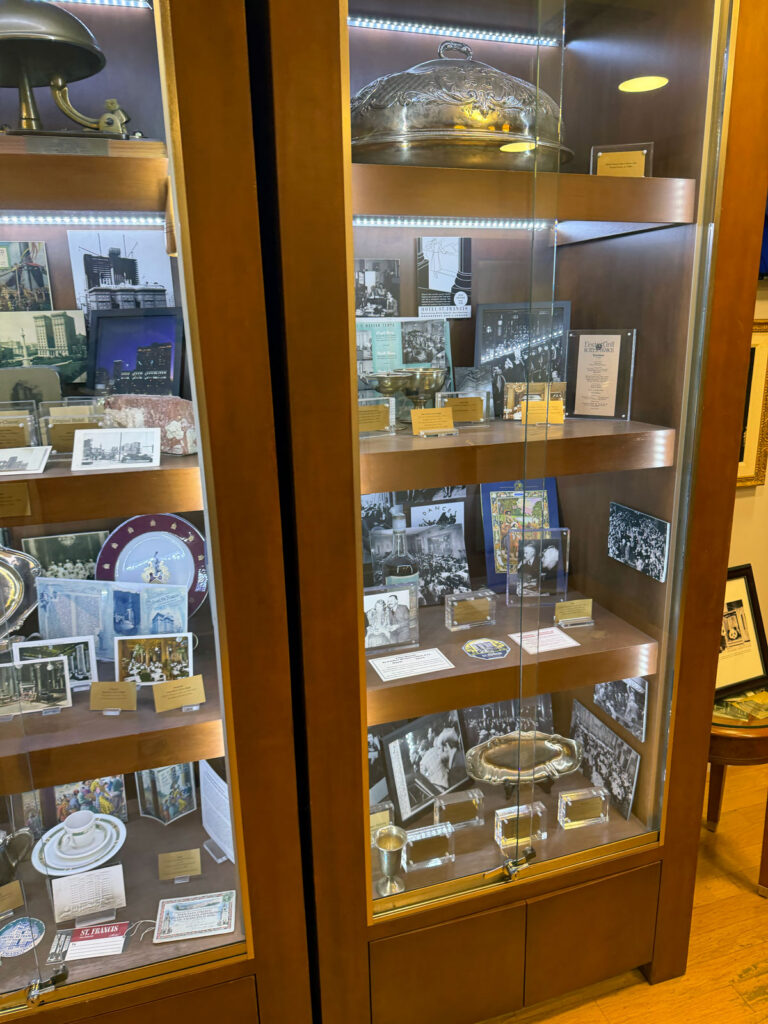
Today, several museum-quality display cases in the Tower Lobby — curated with help from a former de Young Museum curator — hold photographs, china, guest ledgers, and menus tracing the hotel’s full history, free for any guest to browse.
Some of the highlights on that timeline:
- 1921 Actor Roscoe “Fatty” Arbuckle was staying in a suite here when Hollywood’s first major scandal broke, involving the death of actress Virginia Rappe; the case effectively ended his film career even after his eventual acquittal.
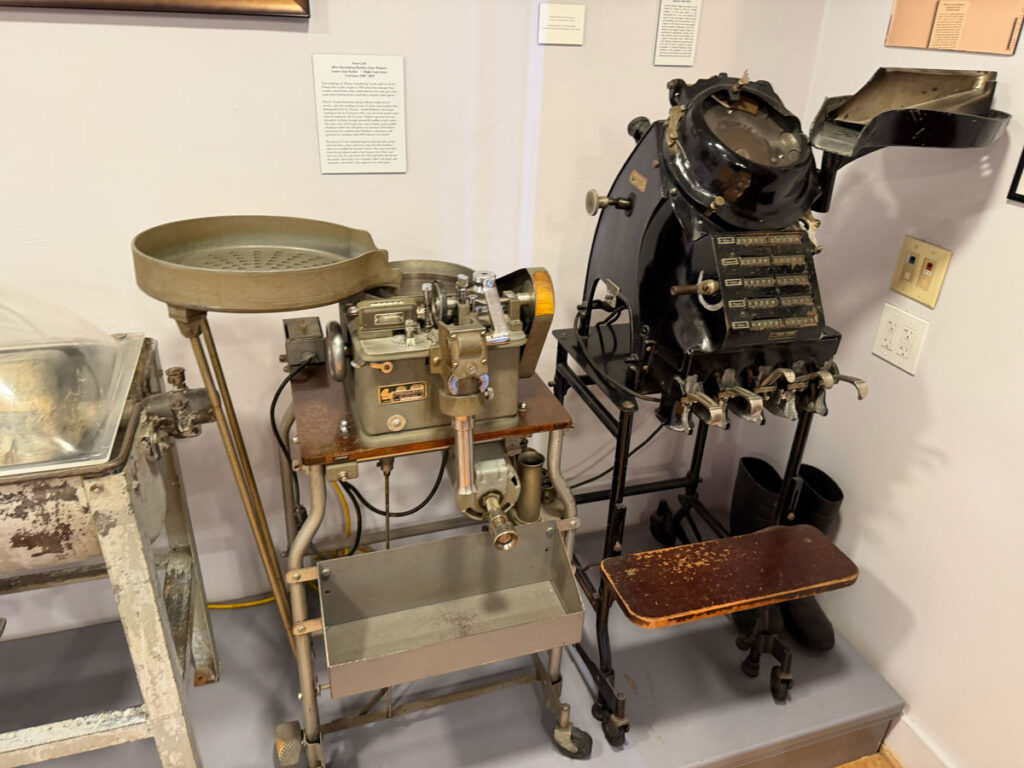
- 1938 The hotel began washing its coins — literally. A general manager noticed that circulating change was dirtying the white gloves fashionable women wore to the hotel’s Monday fashion shows, so the St. Francis started running coins through a silver-burnishing machine before putting them back into circulation. It’s believed to be the only hotel in the world that’s ever done this, and the practice continued for decades.
- 1958 The hotel hosted the first-ever live TV broadcast originating outside the White House, when newly nominated presidential candidate Dwight Eisenhower addressed the Republican National Convention from the hotel’s Italian Room.
- 1975 President Gerald Ford left the hotel after addressing the World Affairs Council when Sara Jane Moore fired a shot at him from the crowd; he was unharmed. Marks from the incident are still visible on the building’s stonework near one of the Powell Street entrances.
- 1983 The hotel hosted Queen Elizabeth II and Prince Philip during their state visit, with the Queen staying in the Presidential Suite while President and Mrs. Reagan, hosting the visit, stayed in the hotel’s London Suite.
The Rooms: What a Renovated Suite Actually Looks Like
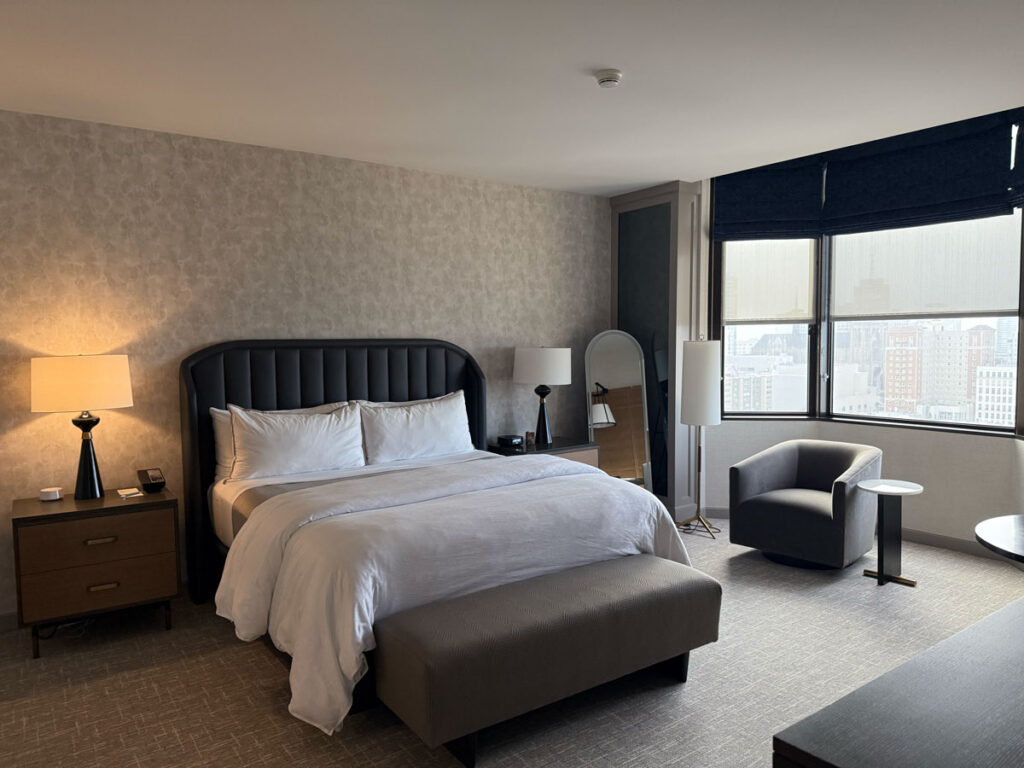
The Tower Building’s guest rooms went through a significant renovation, and the difference shows: modern furniture, a neutral palette, and the Westin brand’s signature Heavenly Bed with a plush duvet and stacked pillows — the kind of bed the chain built its reputation on in the early 2000s and still leans on today.
Read more: San Francisco Bay Cruises: Prices, Best Tours & What’s Worth It

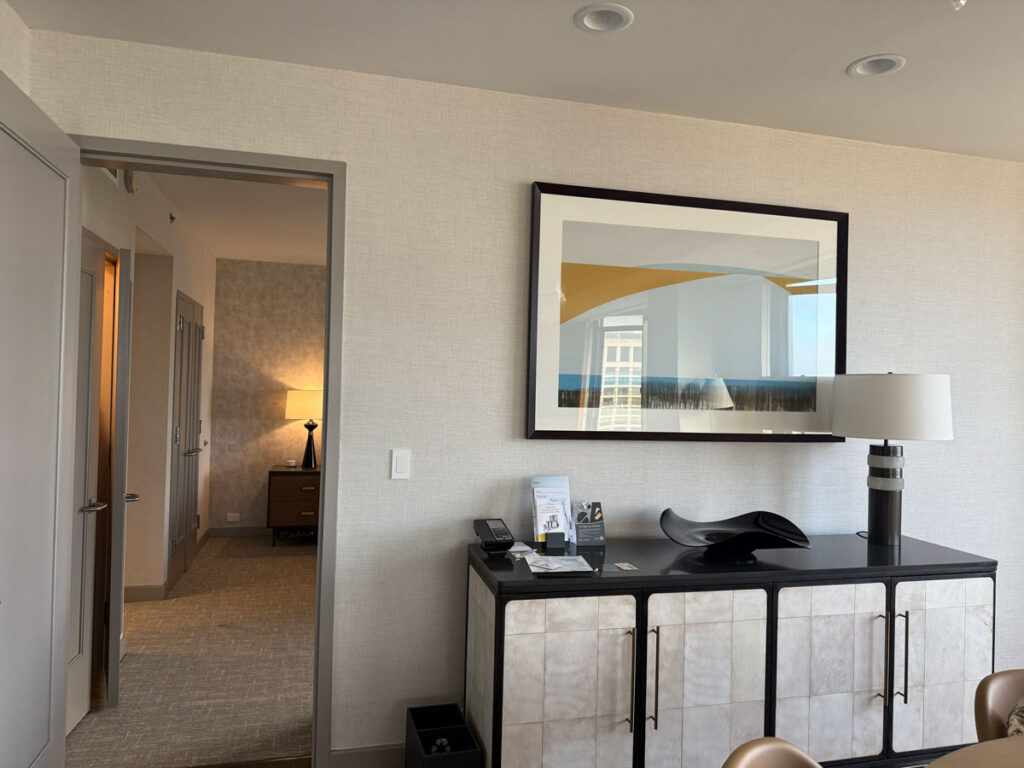
Suite layouts add a separate living area, useful if you’re traveling as a couple or want space to work without doing it from the bed.
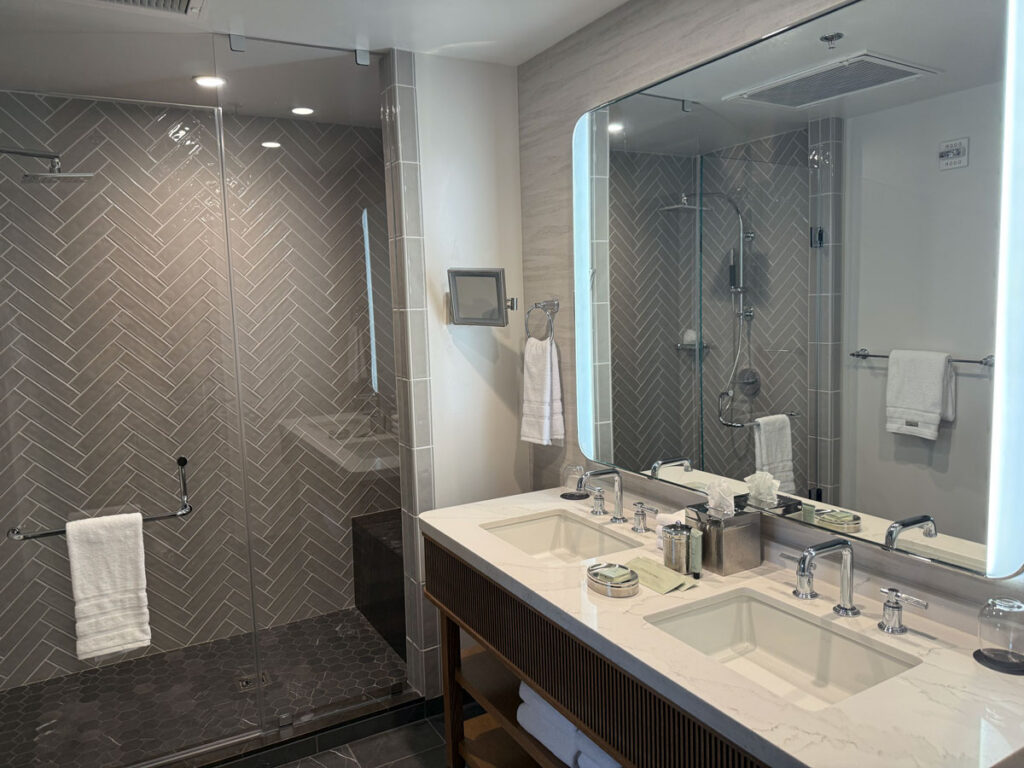
Bathrooms in the renovated rooms are similarly updated: dual vanities, a glass-enclosed shower with herringbone tile, and a large backlit mirror — a noticeable step up from what you’d expect walking into a hundred-year-old hotel.
The View: Why the Tower Rooms Are Worth Requesting
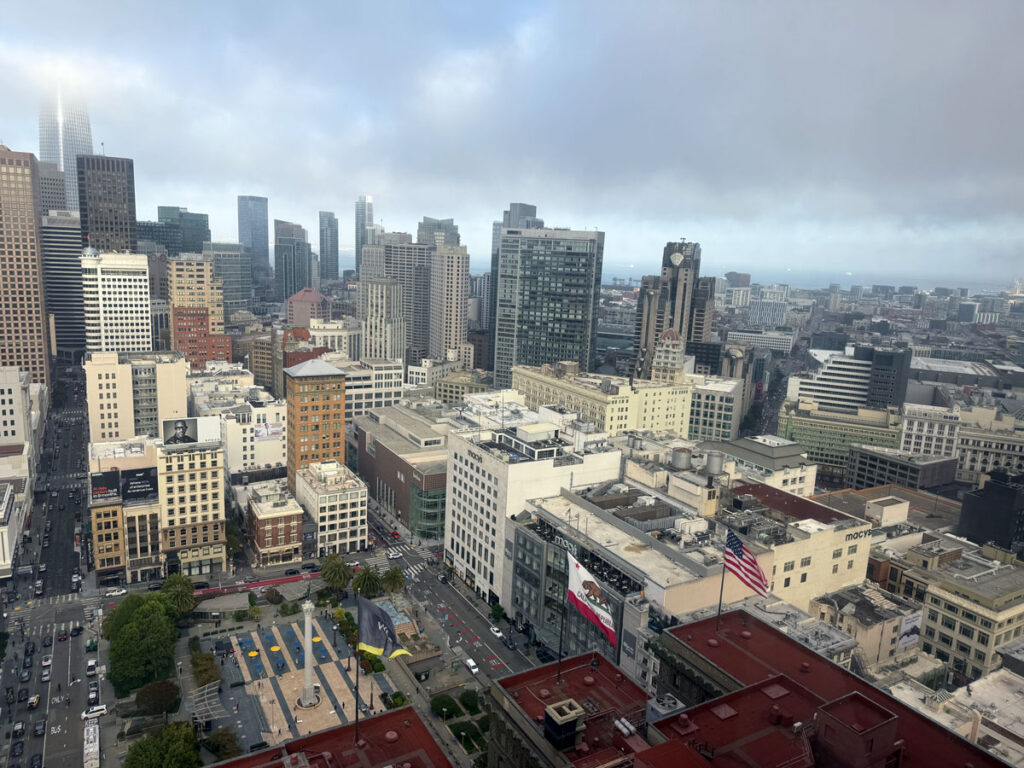
Because the Tower Building rises 32 stories directly behind the historic Landmark Building, upper-floor rooms get genuine skyline views rather than a view of the neighboring building’s wall — and the hotel’s Union Square location means those views come with actual landmarks in frame.

A high-floor room can put Union Square itself, the Dewey Monument at its center, Macy’s, and the Financial District skyline right below your window, with Nob Hill and the top of the Transamerica-era skyline visible depending on which side of the tower you’re on.
Read more: Catalina Island Travel Guide 2026
Tip:
When booking, look for room descriptions mentioning “city view” or a specific high floor in the Tower Building if the skyline matters to you — Landmark Building rooms have more old-world character but generally lower, more obstructed views.
Dining at the Hotel
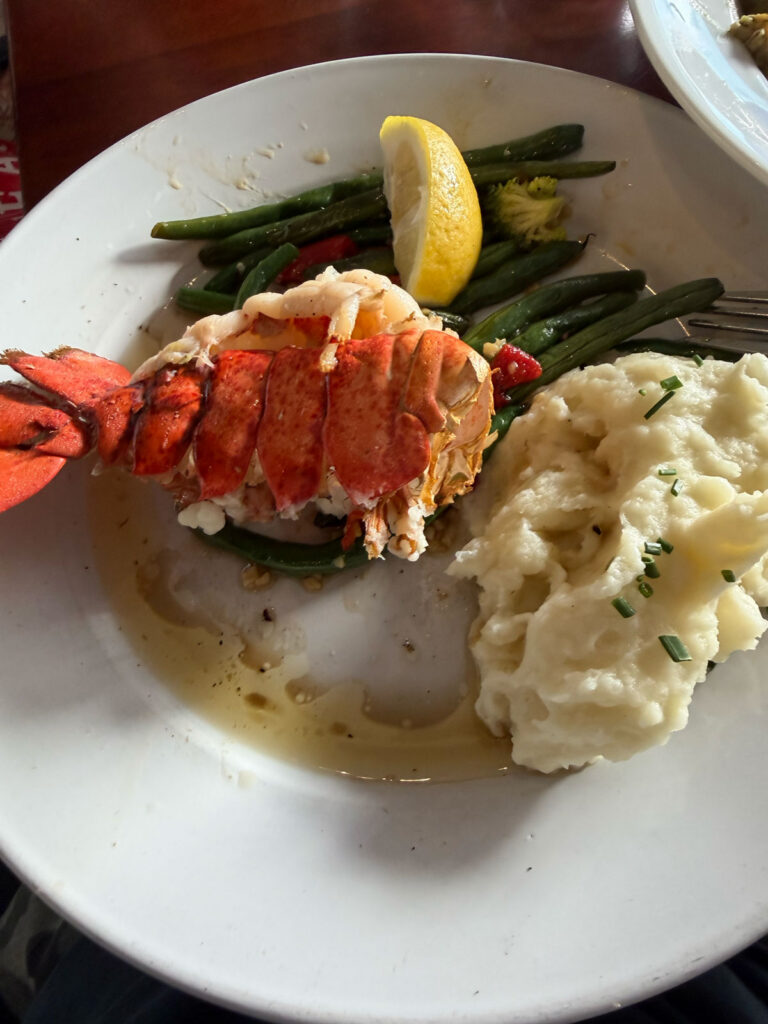
The St. Francis has run notable restaurants under its roof for most of its history, including Bourbon Steak, which took over the space originally opened by celebrity chef Michael Mina in the 2000s, along with the Oak Room and Caruso’s. As part of recent renovations, the hotel has also added a new restaurant with private dining rooms and an indoor-outdoor patio overlooking Union Square, plus a Westin Club Lounge for elite-tier loyalty members and Club Room guests.
Location: Union Square and What’s Within Walking Distance
The single biggest practical selling point of the St. Francis is its address: it’s the only major hotel located directly on Union Square, San Francisco’s central shopping and theater plaza, with the Powell Street cable car lines (Powell-Mason and Powell-Hyde) stopping right in front. That makes it a genuinely convenient base for sightseeing without a car.
Read more: Lido Isle: How to Experience Newport Beach’s Most Exclusive Island
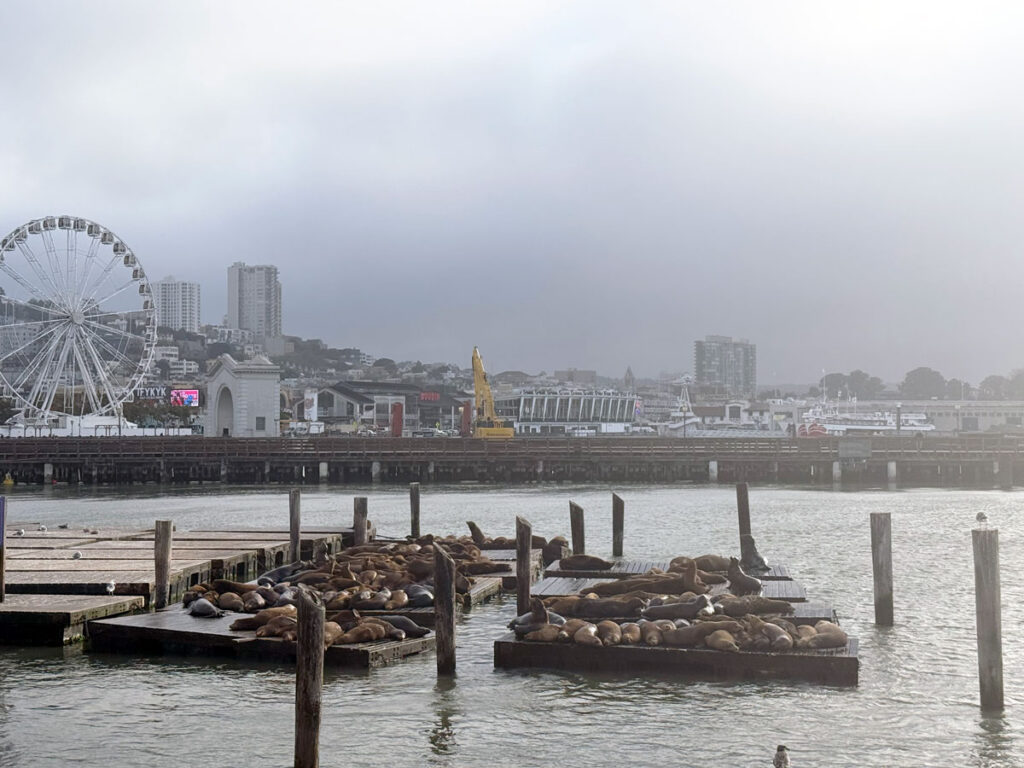
Fisherman’s Wharf and Pier 39 — including the famous sea lions that took over K-Dock after the 1989 earthquake — are a straightforward cable car ride away, making a car-free day trip easy to plan around a stay here.
Booking a stay here or elsewhere in the city? Booking.com discount: up to 20% off travel deals at Booking.com is worth checking before you commit, since rates at a property like this swing hard by season, day of week, and how far ahead you book — comparing a few dates only takes a couple of minutes and can meaningfully change what you pay.
How to Book It for Less
- Watch for the destination fee. Like most large downtown hotels, the St. Francis charges a nightly destination or resort-style fee (commonly around $35 + tax) on top of the room rate — factor it into your real nightly cost when comparing prices.
- Weekday stays are typically cheaper. As a major conference and convention hotel, rates often climb around large events (the city’s annual health care and tech conferences, for example); a midweek stay outside major convention dates tends to run lower.
- Compare Landmark vs. Tower pricing. Landmark Building rooms trade the skyline view for more historic character and sometimes a lower rate — worth checking both if the view isn’t a dealbreaker.
- Loyalty status has real perks here. As a Marriott Bonvoy property, elite members get access to the Westin Club Lounge, which can offset some of the destination fee’s value if you already have status.
- Skip the mini-bar and hotel gift shop. Union Square’s Macy’s and surrounding shops are a two-minute walk for anything you forgot to pack, generally at normal retail prices instead of hotel markup.