
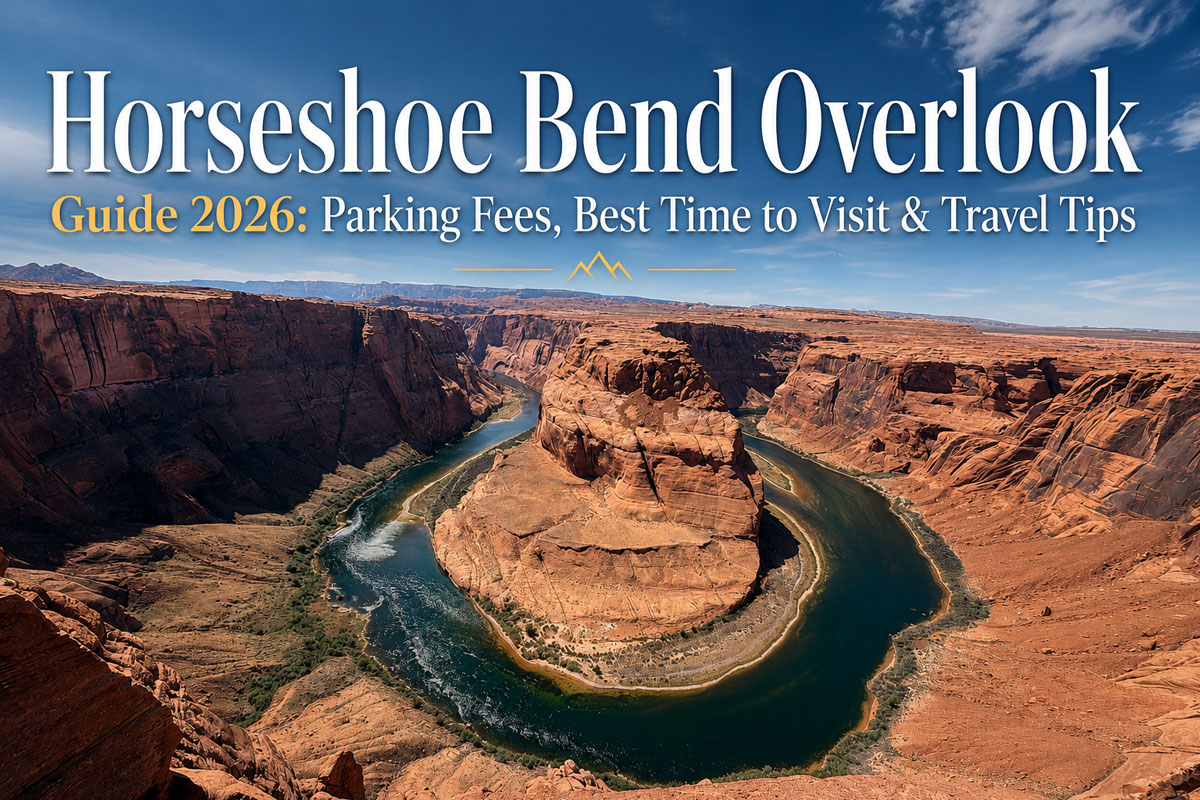
Horseshoe Bend is one of those places that looks almost unreal in person. The Colorado River makes a perfect, dramatic curve through a deep red sandstone canyon, and the view is so iconic that it has become one of the most recognizable stops in Glen Canyon National Recreation Area. It is located about 5 miles south of Page, Arizona, on US-89, and the overlook itself sits inside Glen Canyon NRA even though the parking lot is managed by the City of Page.
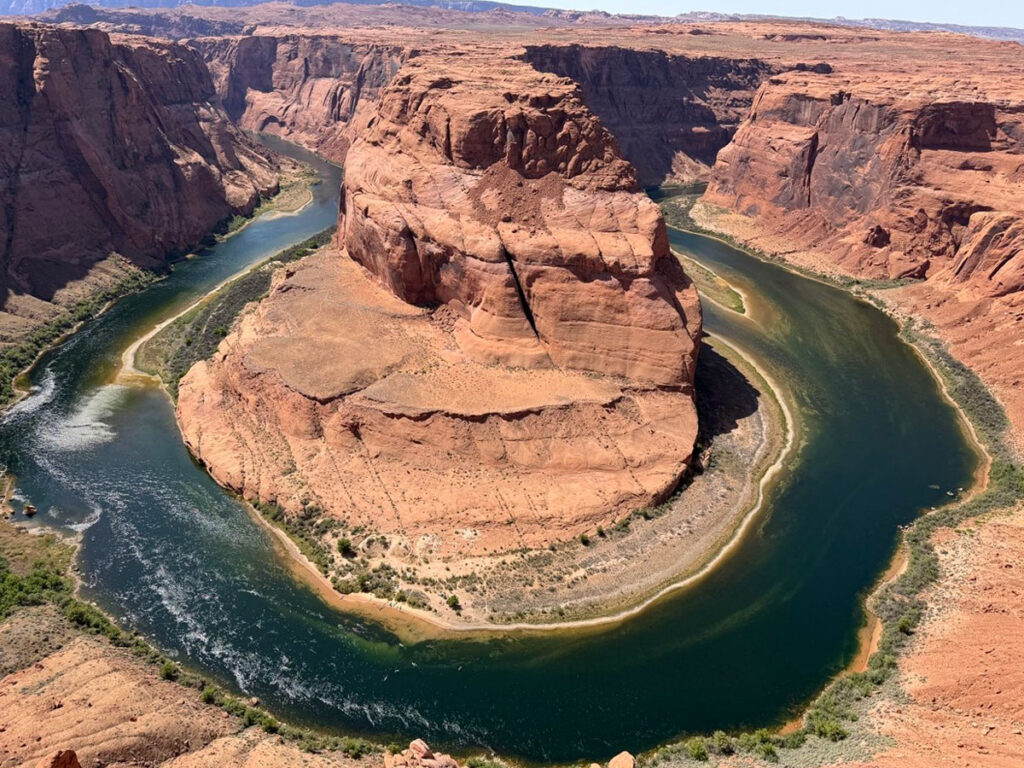
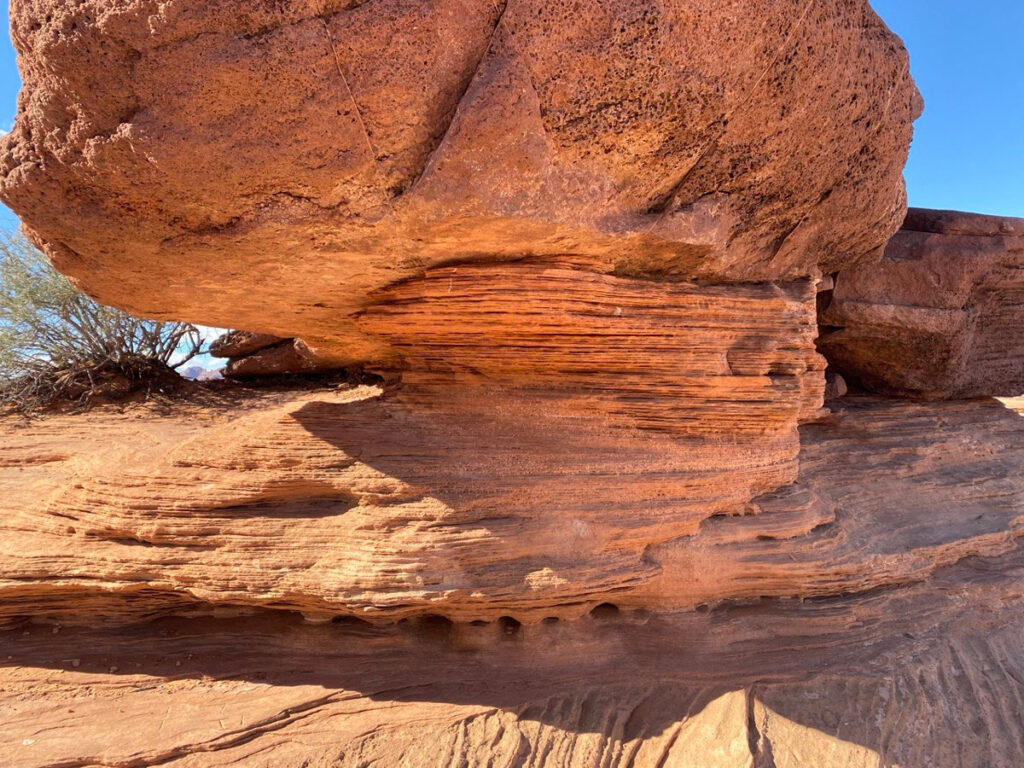
Your photos fit the story perfectly: the first image shows the entrance sign and arrival moment, the second highlights the textured sandstone close-up, and the third captures the classic sweeping view that makes Horseshoe Bend famous. Together, they tell the full experience: the drive in, the desert geology, and the payoff at the rim.
Why Horseshoe Bend is worth the stop
What makes Horseshoe Bend special is how quickly the scenery changes from a simple roadside stop to a huge, cinematic overlook. The trail is short, the destination is dramatic, and the river below appears almost impossibly green against the canyon walls. NPS describes the hike as a hardened path with accessible features, which makes it one of the most approachable big-view experiences in the Page area.
It is also one of the easiest “major view” stops to fit into a Page itinerary. You do not need a tour guide, and you do not need a reservation. That makes it ideal as a first stop after arriving in town or as a quick sunrise visit before heading on to Antelope Canyon or Lake Powell.
Horseshoe Bend fees and hours in 2026
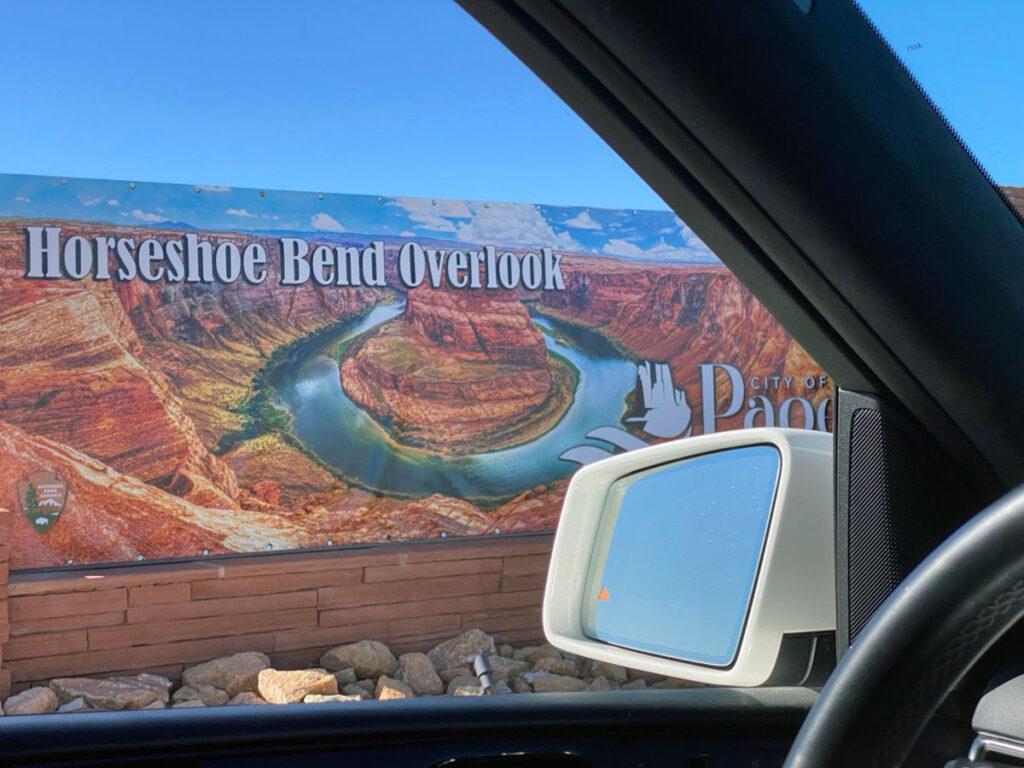
The key thing many travelers miss is that the parking fee is not a National Park Service entrance fee. The overlook is in Glen Canyon NRA, but the parking lot is on City of Page land, so federal passes do not cover it. Current 2026 parking rates are $10 per passenger vehicle, $5 per motorcycle, $35 for commercial vans up to 14 passengers, $70 for mid-size tour buses, and $140 for full-size buses.
The lot operates from sunrise to sunset every day of the year, including holidays, and the gate stops admitting visitors at sunset. The city notes that during peak times the lot can fill up, and if it does, drivers are turned away rather than queued on the highway.
A useful money-saving detail:
Since the parking fee is separate from the park system, America the Beautiful and other federal park passes do not apply here. That is one of the most common surprises for first-time visitors.
Best time to visit Horseshoe Bend
The best time to visit is sunrise or late afternoon. The city recommends arriving right at sunrise for cooler temperatures and smaller crowds, while the busiest period is usually 9 AM to 2 PM, especially from May through September. NPS also confirms that the overlook is open from sunrise to sunset only.
If you are traveling for photography, early light is the sweet spot. The canyon walls glow warmer, the shadows are softer, and the view tends to feel less crowded and more open. Midday still gives you the famous color contrast, but it is also when heat and crowd levels are usually at their highest.
Read more: Sedona, Arizona: Things to Do, Where to Stay, and What Nobody Tells You
What the hike is really like
The hike to the overlook is short but memorable. NPS lists it as 1.5 miles round-trip on a hardened path, and the trail is accessible under ADA regulations. There are two shade structures along the way, but not at the overlook itself, and railings are at the viewing platform edge rather than along the trail. HorseshoeBend.com describes the walk as 0.6 miles each way, about 20–25 minutes per direction.
In practical terms, most visitors should allow 60–90 minutes total for parking, walking, looking around, and returning to the car. If you want time for photos, a slower pace, or a sunrise visit, plan a bit more.
Tips for first-time visitors
The simplest way to make Horseshoe Bend easier is to arrive early, carry water, and assume there is little shade. That matters even more in summer, because the Page area can be hot and exposed. The trail is short, but it feels much longer under direct sun.
A few practical habits make the visit smoother:
- Arrive at sunrise or later in the evening light if you want fewer crowds.
- Bring cash as a backup, because holiday periods may operate cash-only at the fee station.
- Do not try to park on US-89 or use roadside drop-offs. Vehicles parked on the shoulder can be ticketed and towed.
- If the lot is full, come back later rather than waiting on the highway.
How to get there
For directions, look for the dedicated exit lane on the west side of US-89 near mile markers 544–545. The lot is well signed, and the official address is on US-89 in Page, Arizona. Page itself is roughly five hours north of Phoenix and about five hours east of Las Vegas, so Horseshoe Bend works well as a road-trip stop.
What to do nearby
If you are already in Page, Horseshoe Bend is best paired with Antelope Canyon, Glen Canyon Dam, and Lake Powell. Antelope Canyon is the big one to book in advance, because tours are mandatory for both Upper and Lower Antelope Canyon. The NPS also confirms that guided tours are required there through Navajo Nation-approved operators.
Read more: Sedona Weekend Getaway: Top Things to Do
That nearby combo is what makes Page so efficient for travelers: one short overlook, one highly booked slot canyon tour, and then a lake or dam stop afterward. If you are only spending one day in the area, Horseshoe Bend is usually the easiest place to start.
Where to stay and how to save
For an overnight stay in Page, it is smart to compare hotel prices before booking. Expedia is currently promoting up to 40% off select stays, and One Key members can save 10% or more on over 100,000 hotels worldwide with Member Prices. Booking.com is also active with deals: Getaway Deals start at 15% off, and Genius members can unlock instant discounts. Checking both can help you shave real money off a one-night stop on a Southwest road trip.
Read more: One Day in Arches National Park
For Page specifically, saving money usually comes down to timing. Book lodging early for spring and summer, avoid arriving after the crowds have peaked at Horseshoe Bend, and use sunrise visits so you can combine the overlook with another attraction in the same day. That keeps parking, gas, and hotel costs from creeping up.