

Everyone who visits Pike Place Market ends up standing in front of the same counter, watching a whole salmon get thrown across the aisle, phone out, waiting for the crowd to cheer. It’s a fun few minutes. It is not, on its own, a reason to spend $80 on fish. I went back twice this summer specifically to figure out what’s worth actually buying here versus what’s just good theater — and the answer surprised me a little. Some of the best seafood in the market isn’t at the stall everyone photographs.
QUICK FACTS: PIKE PLACE MARKET SEAFOOD
LOCATION: 85 Pike St, main arcade, Seattle
HOURS: Most seafood counters run 7 a.m.–5 or 6 p.m. daily
BEST TIME TO GO: Before 9 a.m., especially on weekdays
MAIN COUNTERS: Pike Place Fish Market, Pure Food Fish Market, City Fish, Jack’s Fish Spot
TYPICAL SPEND: $15–20 for a shareable chowder, $35–90+ for salmon or crab to take home
SHIPPING: Most counters ship nationwide, flat rate around $20–60
The Main Seafood Counters, and How They’re Actually Different
Read more: I Spent an Entire Day at Seattle’s Pike Place Market – Here’s What Surprised Me Most
People tend to assume “Pike Place Market” means one seafood stall. It doesn’t — there are several, clustered along the main arcade, and they’re not interchangeable.
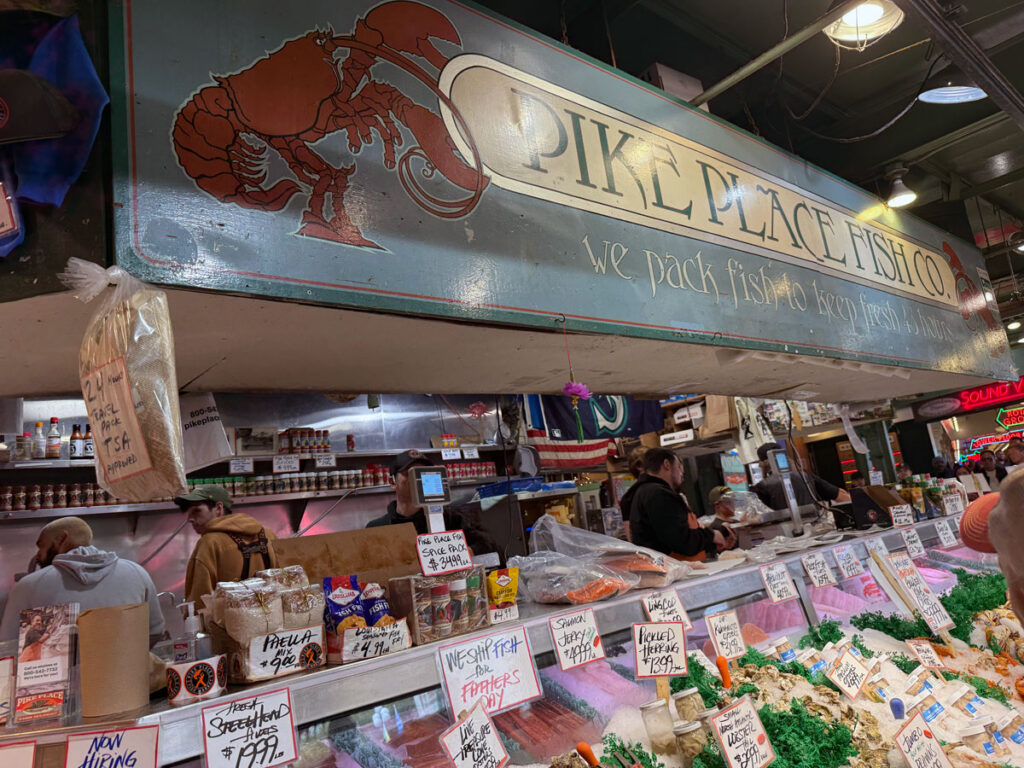
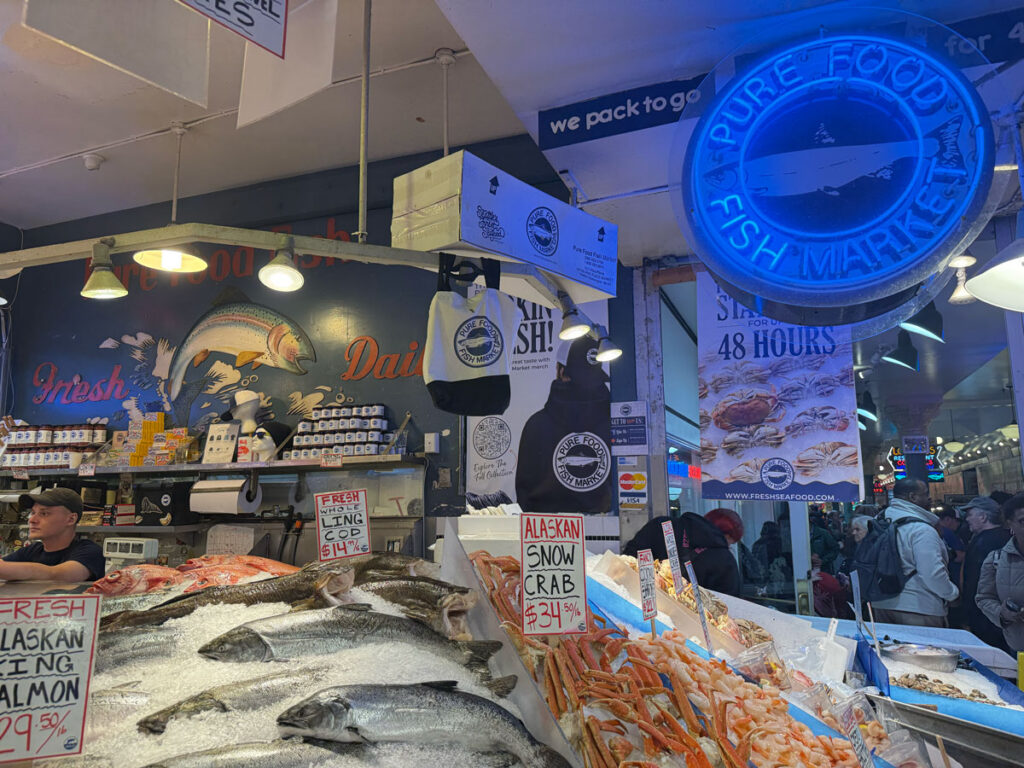
- Pike Place Fish Market — the one with the fish-throwing crew, founded in 1930. This is the famous stall, the one on every postcard. Big selection of wild salmon, king crab, halibut, and shellfish, plus nationwide shipping.
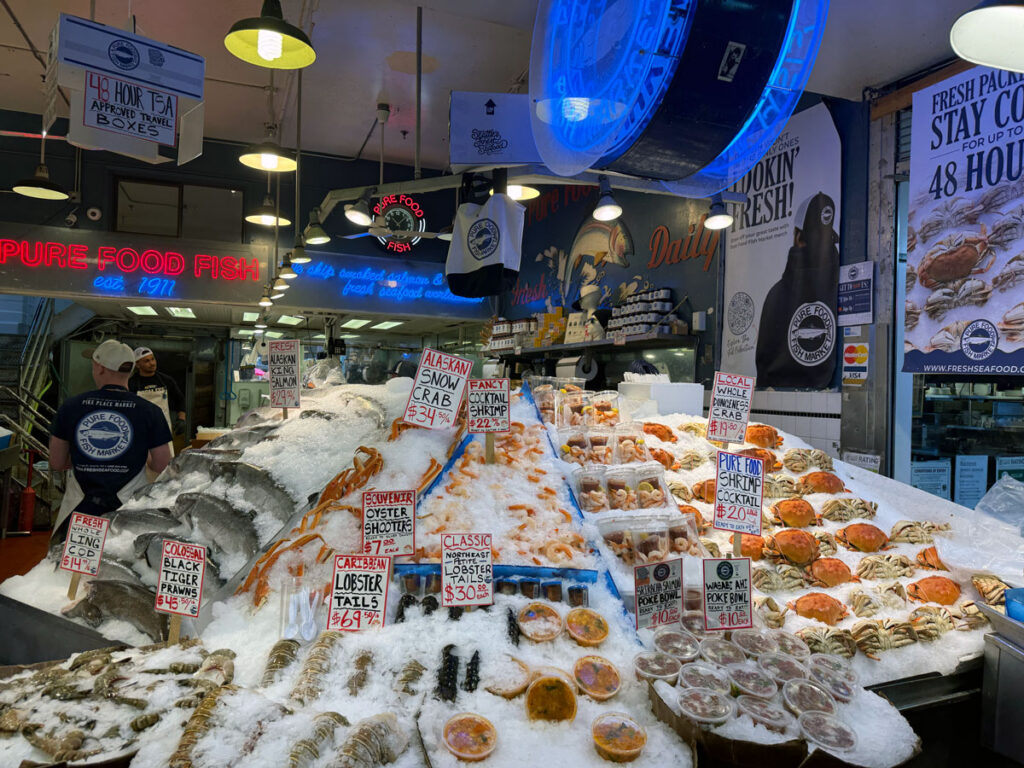
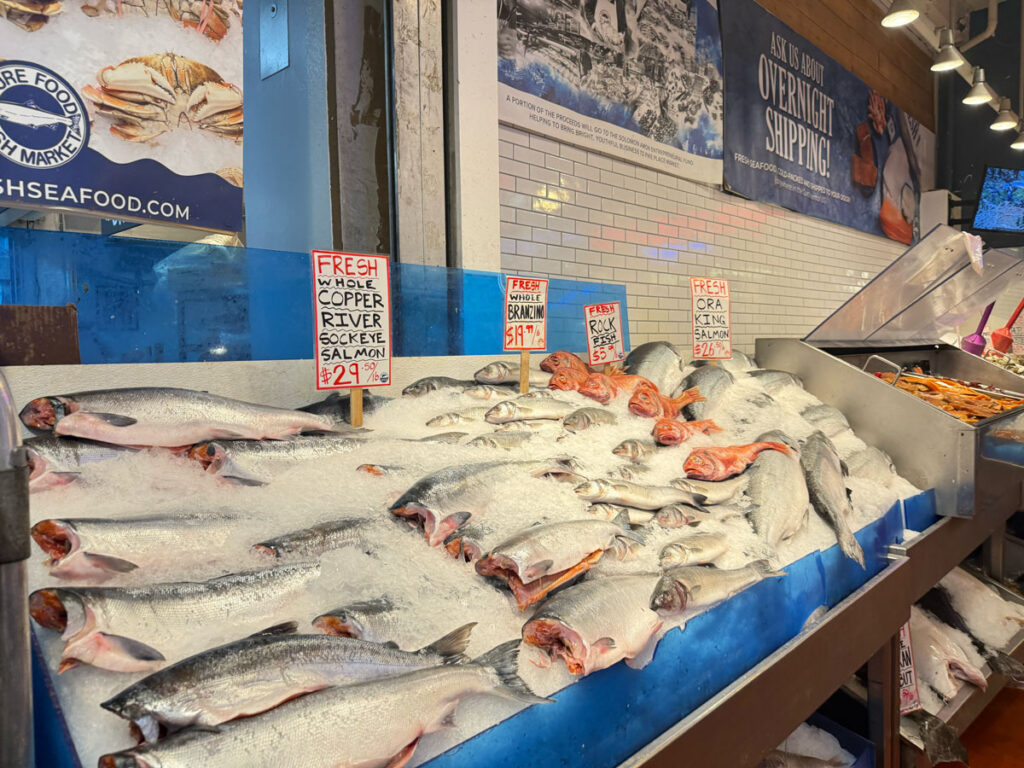
- Pure Food Fish Market — the market’s oldest seafood business, running since 1911 and still family-run, now four generations in. Slightly less theater, arguably just as good a selection, and usually a shorter line. If you’re ordering online, you can save $15 on purchases over $100 with coupon code LL-J9DX02PG.
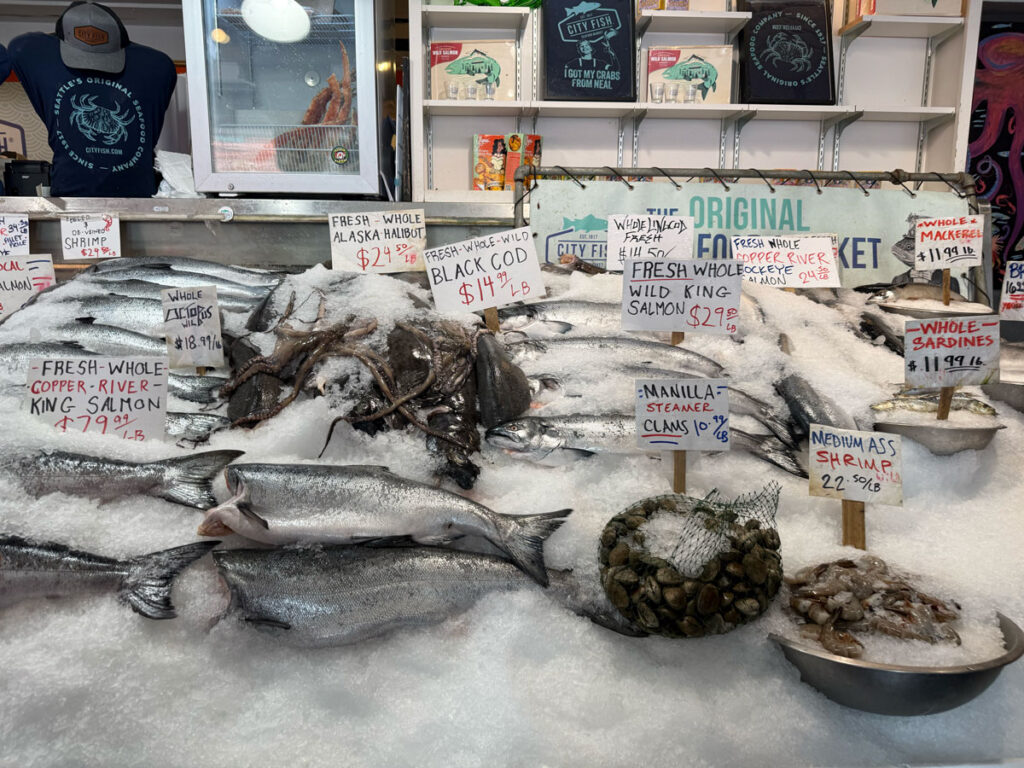
- City Fish — Seattle’s original seafood company, also over a century old, known locally for smoked king salmon and halibut cheeks.
- Jack’s Fish Spot — less a market stall, more a seafood bar. This is where you go to eat oysters or fish and chips on the spot rather than take something home.
TIP
If the line at Pike Place Fish Market is wrapped around the corner (it often is by mid-morning), Pure Food Fish Market a few stalls down usually has the same quality with a fraction of the wait. Locals tend to go there specifically to skip the crowd.
What’s Actually Worth Buying
This is the list I wish someone had handed me the first time I visited. Ranked roughly in order of “yes, actually buy this.”
1. Wild King (Chinook) Salmon
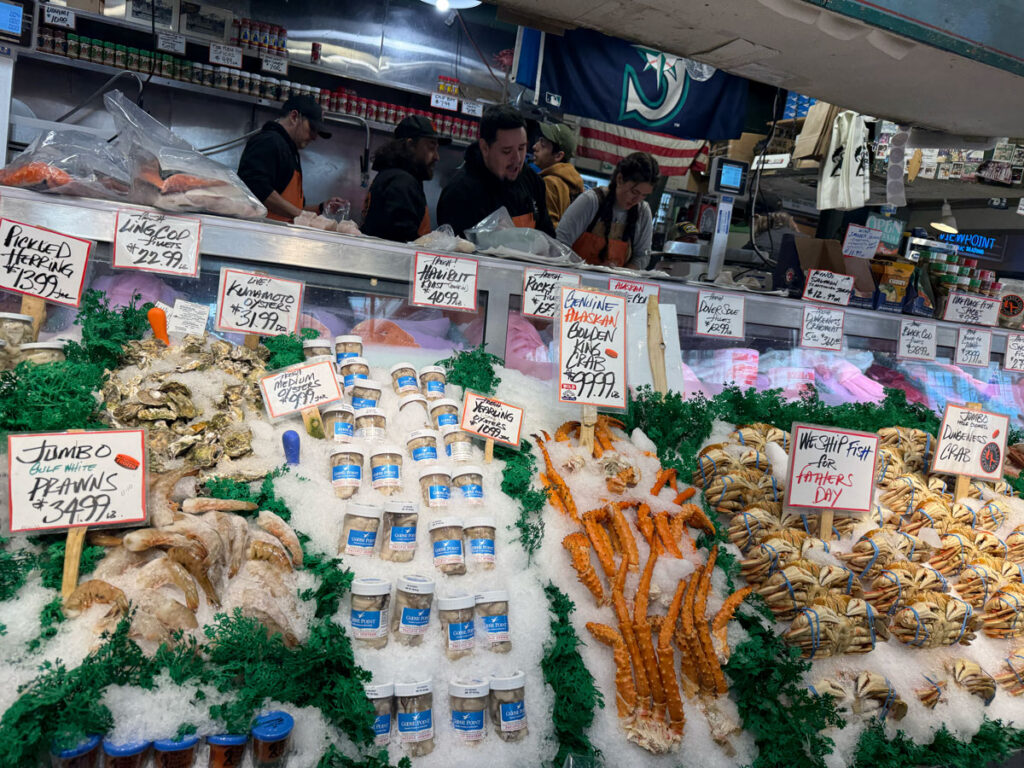
This is the one thing every counter agrees is their best seller, and for good reason. Wild king salmon here is never farm-raised, and the fishmongers will fillet it in front of you. It’s not cheap, but it’s genuinely a different product from what’s sitting in a grocery store case.
Roughly $30–45/lb fresh, whole fillets often $150–250
Red more: Why Pacific Science Center Still Earns a Full Day of Your Seattle Trip
2. Dungeness Crab
Pacific Northwest Dungeness crab is sold whole, fully cooked, and ready to eat chilled or lightly steamed. It’s sweeter than most crab most Americans grow up eating, and it travels well if you’re taking it back to a hotel to crack open that night.
Whole crabs typically run $25–40 depending on size and season
Read more: A First-Timer’s Guide to Chihuly Garden and Glass in Seattle
3. Alderwood-Smoked Salmon
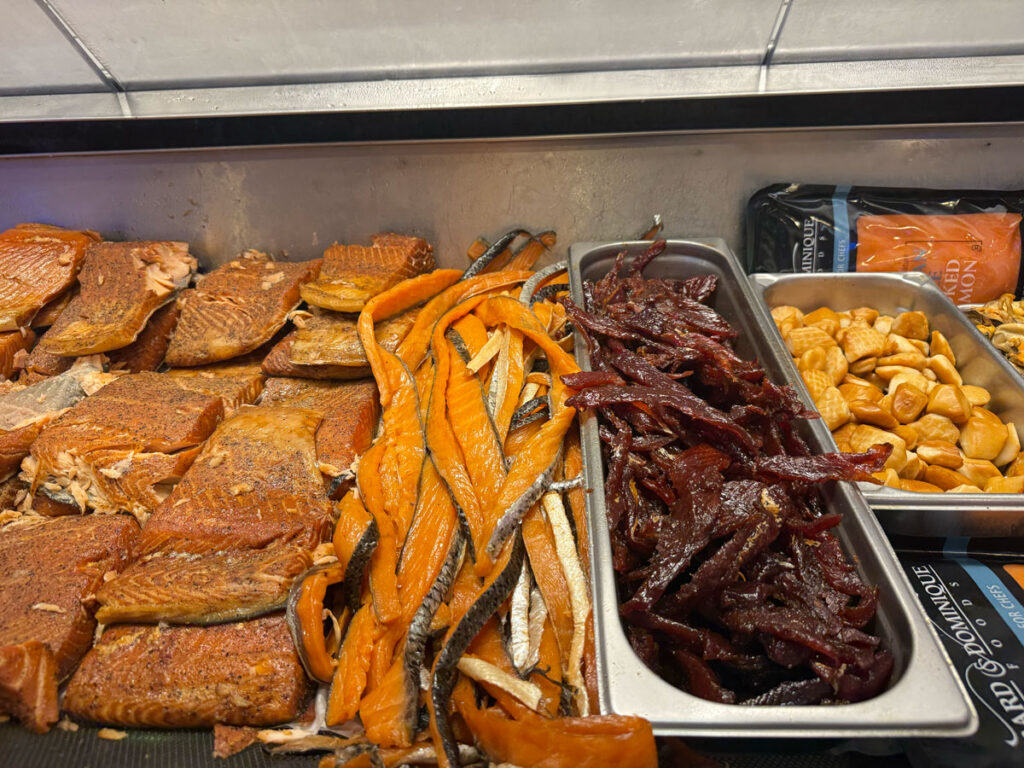
If you’re not planning to cook anything, this is the easiest win in the entire market. It’s shelf-stable enough to survive a flight home in a carry-on, and it’s the kind of thing that actually tastes like where you bought it — smoky, rich, nothing like the vacuum-sealed stuff at the airport gift shop.
Around $18–25 for a ¾-lb package
4. Fresh Oysters, by the Half Shell
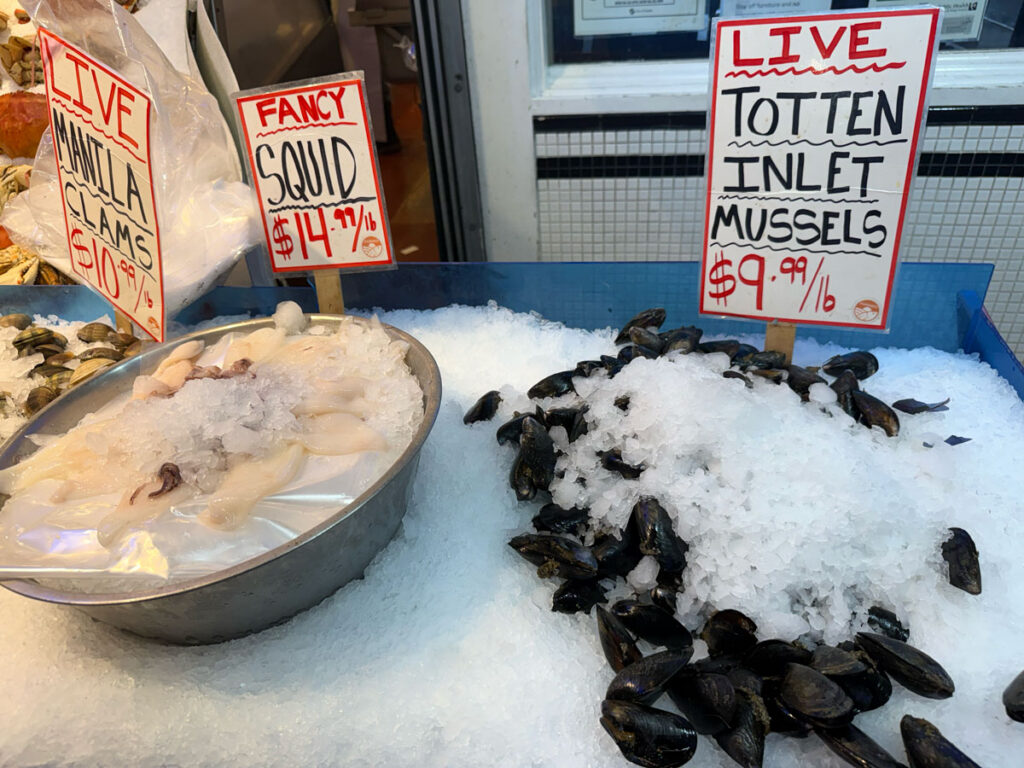
Jack’s Fish Spot and a couple of the counters sell oysters fresh, shucked to order. If you’re only going to eat seafood once while you’re at the market rather than pack it home, this is where I’d spend the money — a half-dozen with a squeeze of lemon, standing at the counter, is one of the better cheap-ish market experiences in Seattle.
Roughly $3–4.50 per oyster
Read more: Seattle Aquarium: an Honest Guide to Every Exhibit
5. Alaskan King Crab Legs
Not native to Puget Sound, but the counters bring it in and it’s consistently good, especially if you want something more dramatic for a special dinner than Dungeness. It’s the priciest thing on this list, so it’s the one I’d only buy if I had a kitchen (or at least a hotel with a decent stovetop) waiting for me.
Around $40–60/lb
What I’d Skip (or at Least Not Overpay For)
HONEST TAKE
The fish-throwing show is genuinely fun to watch, but don’t let the spectacle rush your decision on what to buy. A few things worth being cautious about:
- Pre-packaged “souvenir” seafood snacks near the entrance — salmon jerky and similar grab-and-go items are fine, but they’re priced more like souvenirs than food, and you can usually find better versions at a regular Seattle grocery store for less.
- Buying on impulse mid-crowd — the energy of the fish toss makes people buy faster than they’d normally shop. Take a lap of two or three counters before you commit; prices and quality genuinely vary stall to stall.
- Anything you can’t actually get home safely — gorgeous as it looks, fresh whole fish isn’t worth buying if you’re flying out in six hours with no cooler. Ask before you buy, not after.
Read more: Seattle Travel Guide: The Perfect Adventure in the Emerald City
Should You Carry It Home or Ship It?
This is the part almost nobody explains clearly, so here’s what I found out the hard way and through a few phone calls.
- TSA allows fresh and frozen seafood in both carry-on and checked bags, as long as any ice packs are fully frozen when you go through security. That said, one counter’s own team told me that whether a wrapped fish package clears a carry-on scan smoothly can come down to the individual TSA agent — some travelers have had their packages opened and manually inspected. If you’re flying same-day, it’s the safer bet to check it rather than carry it on.
- Most counters will pack it specifically for travel if you tell them you’re flying, usually double-bagged with gel ice, good for about 48 hours outside refrigeration.
- Shipping is genuinely the easier option if you’re more than a few hours from home. Flat-rate overnight shipping typically runs $20–60 depending on the counter, and it arrives packed in ice, guaranteed fresh or frozen depending on what you ordered.
TIP
If you’re checking a fish package in your luggage, ask the counter to vacuum-seal it if they offer the service — it’s a small add-on that saves you from opening your suitcase to the smell of the ocean three states later.
If You Just Want to Eat Seafood Right Now
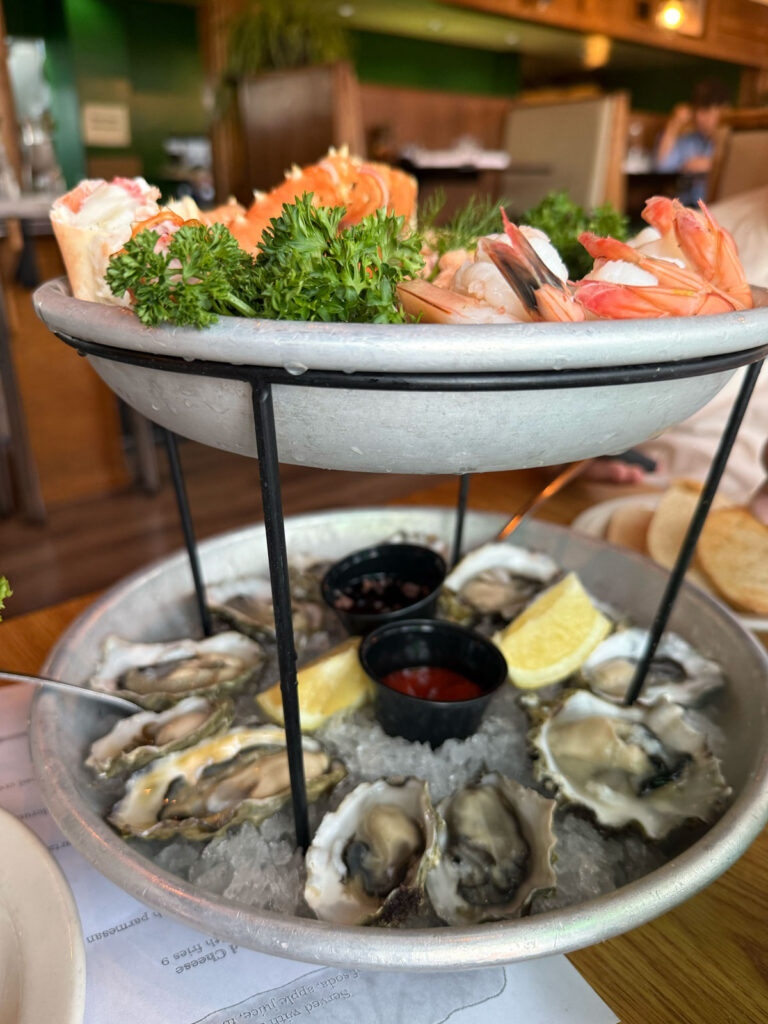
Not everyone wants to haul fish home — plenty of people just want lunch. For that, skip the counters entirely and head to:
- Pike Place Chowder — the market’s most famous line, and it moves faster than it looks. The New England clam chowder is the one to get; the smoked salmon chowder is worth trying if you’re doing a flight of a few sizes.
- Jack’s Fish Spot — raw oysters and fish and chips, eaten standing at the counter.
- Athenian Seafood Restaurant and Bar — if you want to sit down, the Dungeness crab benedict is a local favorite for a reason.
Planning the rest of your Seattle trip?
If Pike Place Market is part of a bigger Seattle weekend, it’s worth locking in a hotel before prices climb closer to your dates — Seattle fills up fast in summer. Booking.com — Get Up to 20% off with a Getaway Deal at Booking.com, which is where I book most of my own U.S. city trips when I want a place walkable to downtown without paying rack rate.
See Booking.com Deals →
Tips to Save Money and Avoid the Worst Crowds
- Go before 9 a.m. The seafood is freshest first thing, and you’ll get to actually talk to the fishmongers instead of shouting over a crowd.
- Weekdays beat weekends, no contest. Saturday afternoons at Pike Place are genuinely difficult to move through.
- Compare two counters before buying. Prices for the same cut of salmon can vary a few dollars a pound stall to stall — not a huge gap, but worth a quick look if you’re buying in bulk.
- Ask what’s “today’s catch.” A fishmonger at one counter told me straight up that early morning is when the freshest seafood comes out, before the day’s crowd and heat start working against quality.
- Bring a small cooler bag if you’re driving. It sounds excessive until you’re the person standing in a parking garage repacking ice around a salmon fillet.
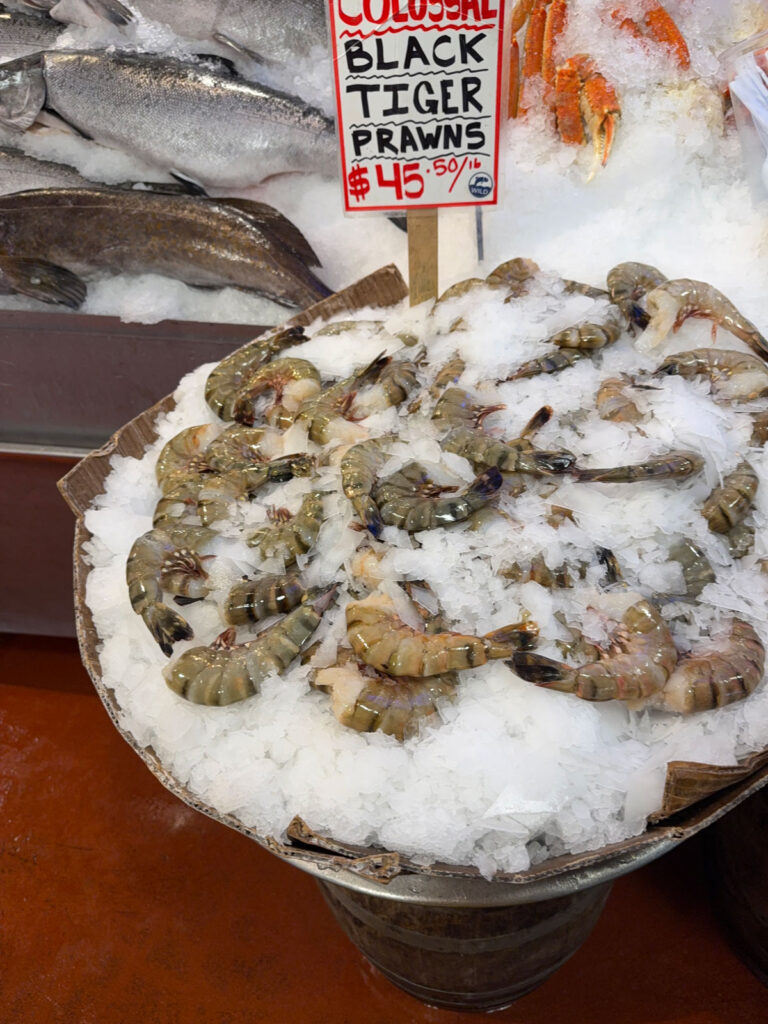
Pike Place Market earns its reputation honestly — it’s just that most of what makes it worth the trip isn’t the part everyone photographs. Skip the impulse buy at the busiest counter, walk the full arcade first, and spend your money on the salmon, crab, or oysters you’ll actually be excited to eat later. That’s the whole trick.